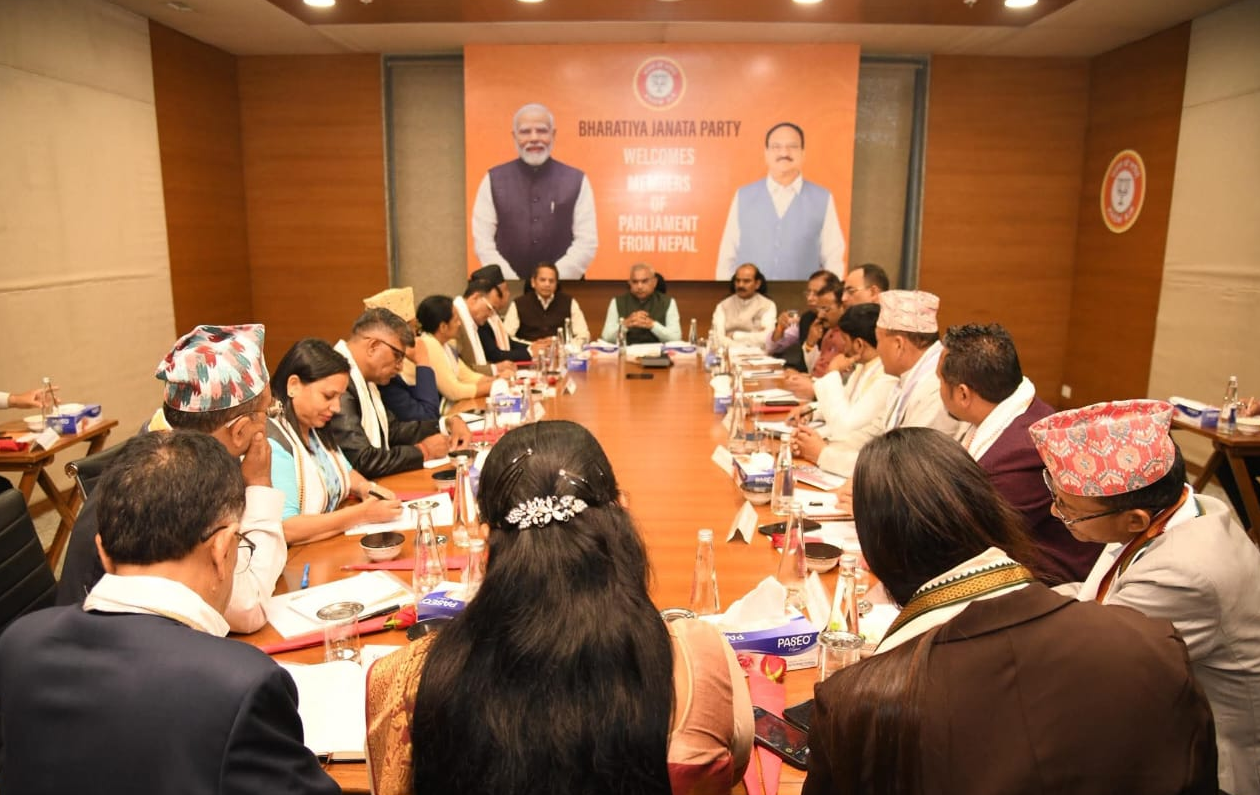

Kathmandu: A multi-party delegation of Nepali parliamentarians visited the Bharatiya Janata Party (BJP) headquarters in New Delhi on Monday, in a significant diplomatic and political exchange between the neighbouring countries.
The visit comes at a time when both Nepal and India have been seeking to deepen their bilateral and inter-party engagements.
The delegation was warmly welcomed by senior BJP leaders, including Shiv Prakash, a key national-level BJP functionary, who presented an overview of the party’s organizational structure, ideological roots, and nationwide activities.
Prakash, who is credited with playing a pivotal role in the BJP’s expansion across Indian states, elaborated on how the party functions from the grassroots to the national level, emphasizing its cadre-based system and its use of technology for political mobilization.
Several prominent BJP figures also participated in the interactive session, including Ajay Tamta, Minister of State for Road Transport and Highways, Dr. Sanjay Jaiswal, Member of Parliament and former Bihar BJP President, Dr Satish Dwivedi, former Minister in the Uttar Pradesh government, and Dr Vijay Chauthaiwale, head of BJP’s Foreign Affairs Department.
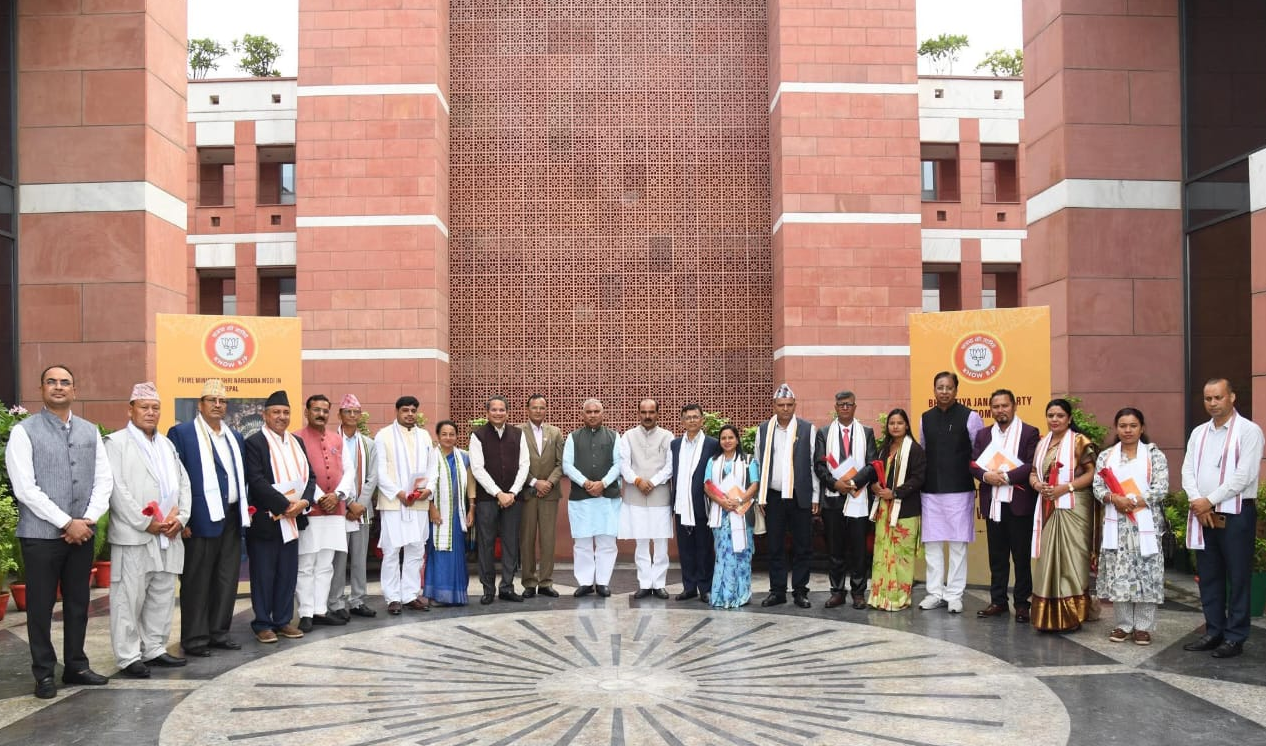
The discussions were described as “lively and engaging,” covering topics such as regional cooperation, political party strengthening, youth mobilization, and democratic governance. Dr. Chauthaiwale, who leads the BJP’s foreign outreach, noted the importance of such inter-party dialogues in fostering greater understanding and collaboration between India and its neighbours, particularly Nepal.
The Nepali delegation, which mostly consisted of leaders with communist backgrounds, was advised at the BJP headquarters not to follow Marxism and Leninism but to embrace the principles of Integral Humanism and Cultural Nationalism.
The visit is being viewed as part of India’s continued efforts to engage with South Asian democracies at the party-to-party level, beyond traditional government-to-government channels. Nepal, which shares deep historical, cultural, and political ties with India, has often seen its internal politics intersect with developments in New Delhi.
This latest outreach follows a growing trend of political delegations and think tanks from Nepal visiting Indian institutions to better understand the operational frameworks of India’s political system and governance models.
Analysts suggest that such visits could help build institutional understanding between the political ecosystems of the two nations, which, despite being democracies, often operate under differing political pressures and party structures.
As India eyes a larger role in South Asian regional leadership and as Nepal continues to navigate its democratic consolidation, such engagements are expected to increase in both frequency and significance.

Comment Here