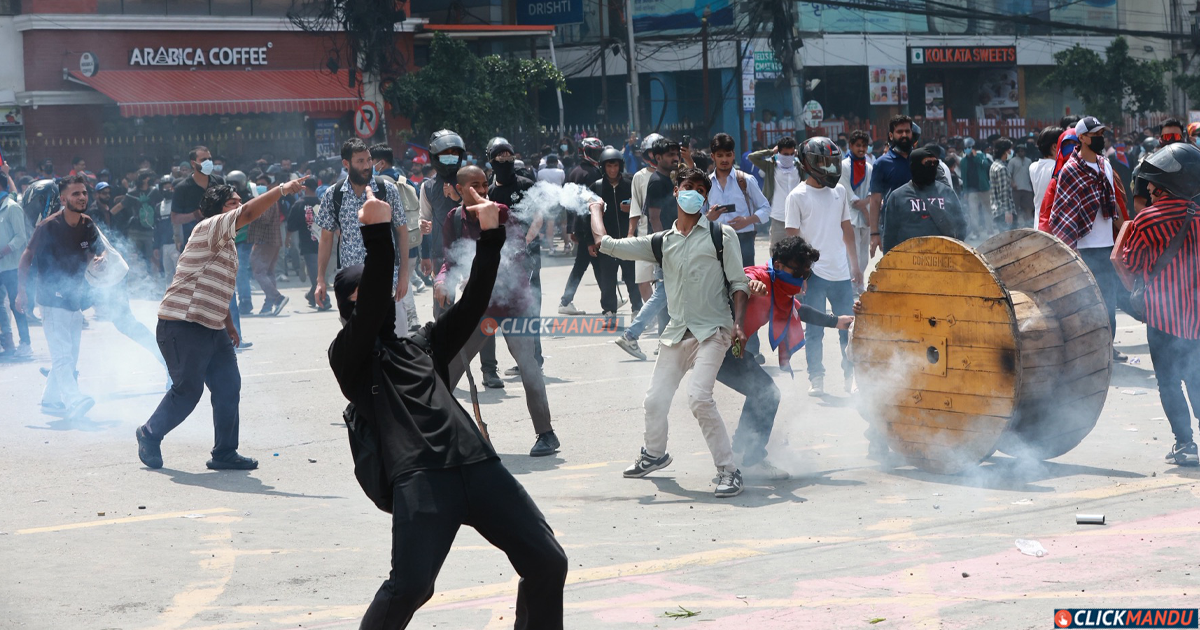

Kathmandu: At least 16 people have been killed and dozens more injured as nationwide protests led by Nepal’s Gen-Z youth movement spiralled into deadly confrontations with security forces.
The demonstrations, triggered by the government’s controversial shutdown of social media platforms, have plunged the country into its most serious political and civil crisis in years.
The death toll rose Monday evening after the National Trauma Centre in Kathmandu confirmed two more fatalities, bringing the number of deaths at that hospital alone to eight. Civil Hospital reported three deaths, Everest Hospital three, while KMC Hospital and Tribhuvan University Teaching Hospital each confirmed one. Authorities said many of the victims died from gunshot wounds sustained during clashes near the national parliament building in New Baneshwor.
Earlier in the day, protesters breached security perimetres and attempted to storm the parliament, vandalizing one of its gates. Police responded with tear gas, baton charges, and eventually rubber bullets, but the confrontation turned deadlier when live rounds were reportedly fired.
Hospitals across Kathmandu quickly became overwhelmed, with Civil Hospital appealing publicly to other facilities to take in the growing wave of injured.
In an extraordinary move to contain the unrest, authorities declared curfews across multiple cities, including Kathmandu, Pokhara, Bhairahawa, and Butwal. District administrations prohibited gatherings of more than five people, imposed strict movement restrictions, and sealed off key intersections and government zones.
Despite the orders, protests continued in defiance, spreading to other towns such as Itahari and Damak, where Prime Minister KP Sharma Oli’s hometown witnessed gunfire and casualties.
The Gen-Z movement itself issued a statement blaming “infiltrators” for violence and insisting its campaign remained committed to peaceful, lawful protest. Leaders stressed their struggle was directed not against institutions but against corruption, misuse of public funds, and betrayal of trust.
Meanwhile, Nepal’s abrupt social media blackout has backfired. With platforms like Facebook inaccessible, tens of thousands of young people resorted to VPNs and alternate DNS routes, causing severe congestion in international internet gateways. The Internet Service Providers’ Association of Nepal (ISPAN) warned that the country’s network could collapse entirely if the ban continues, citing unprecedented pressure on the system. Meanwhile, the government has unofficially lifted the ban on Facebook.
Facing mounting casualties, hospital crises, and intensifying public anger, Prime Minister Oli has called an emergency cabinet meeting for Monday evening. The agenda is expected to focus on internet restrictions, security measures, and the spiraling Gen-Z protests that have already claimed 16 young lives.
The violence has shocked Nepal, a country already struggling with economic stagnation and political mistrust. Parents mourning their children now symbolize the heavy toll of the state’s failure to balance crowd control with protection of fundamental rights. As the Gen-Z movement pledges to continue its campaign for justice and accountability, the government faces one of its gravest tests in recent memory.

Comment Here