
Dear GenZ friends,
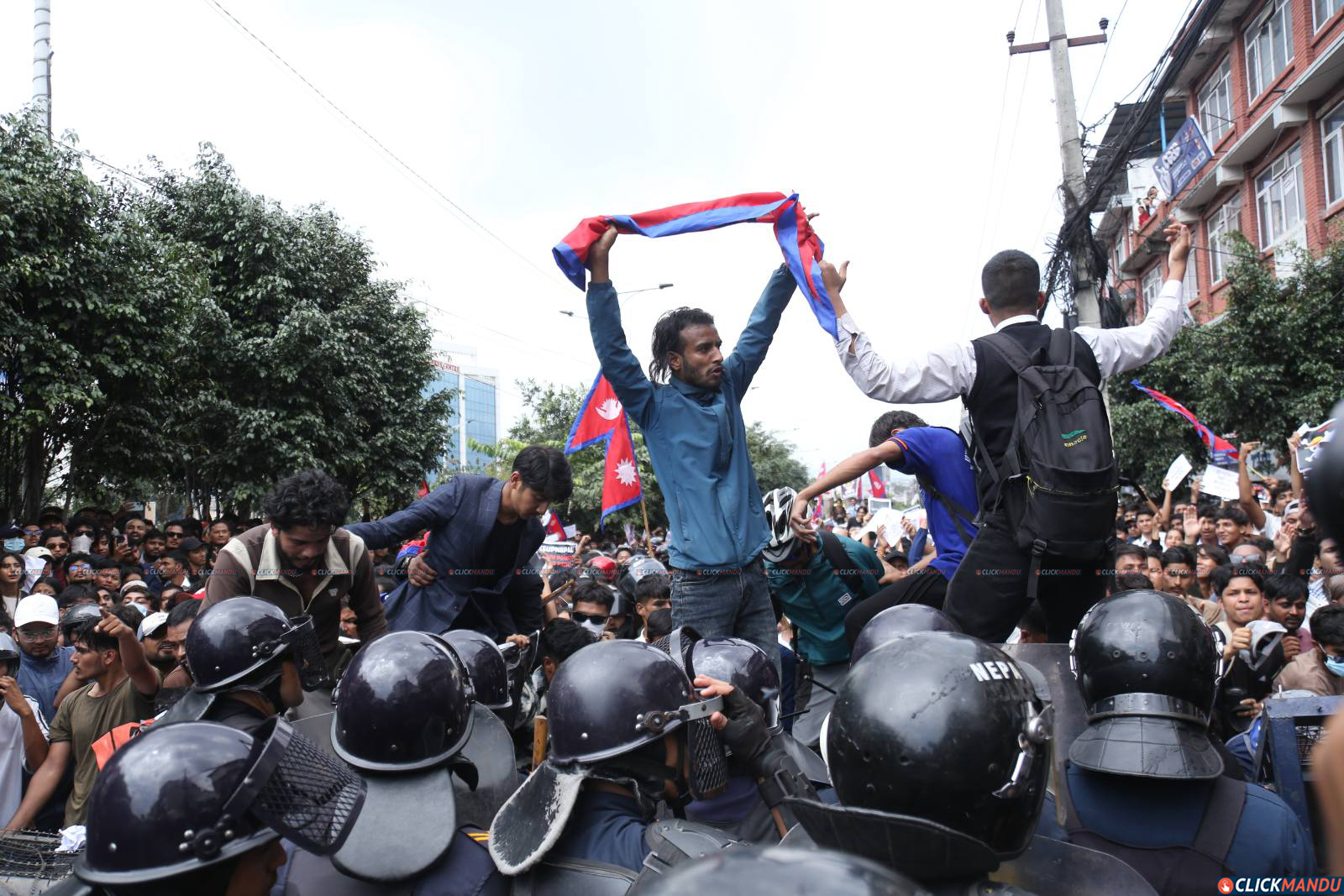
We salute your movement that succeeded in toppling a corrupt government and shaking the conscience of Nepali society. You proved that you have real power and established GenZ as a key stakeholder in Nepali politics. You have also set an example for the rest of the world.
We pay tribute to those who lost their invaluable lives and send prayers for the speedy recovery of the wounded. We strongly condemn the excessive use of force against peaceful protesters. We also call for a thorough, prompt, and effective investigation of all incidents—including the unjustified destruction of government property—even after GenZ youth made it clear that your policy is not to cause violence.
You understand better than our generation what progress is, and the consequences of regression. You are sharp, aware, and globally connected. But let us remind you: real progress does not happen overnight. It requires patience, wise decisions, and well-thought-out plans.
Nepal’s current Constitution is not perfect, but it is a foundational document born out of long struggles, huge sacrifices, tough negotiations among political, ethnic, and regional forces, and significant resources during the terms of two Constituent Assemblies. We must not throw away all these achievements, knowingly or unknowingly. Rather, we must improve on it so that our federal democratic republic—chosen collectively by the Nepali people—can work better.
This Constitution should be our baseline to move forward. If shaped and implemented well, it would no doubt make our collective dream of a prosperous and peaceful Nepal possible—a country where everyone can pursue happiness and dignity.
We are aware of your frustrations. Corruption, bad governance, and socio-economic injustices prevail. These problems affect you the most. But remember: the Constitution itself is not the problem. It should not be blamed for failures caused by political actors. The real problems lie in the absence of democracy within parties, weak institutions, abuse of constitutional appointments, and the culture of impunity. These problems must be confronted directly through constitutional, legal, and institutional reforms.
Worldwide, Nepal’s Constitution is praised for its strong framework on human rights and justice. What truly needs fixing are our electoral system and governance structures. These reforms can and should be done through constitutional amendments—not by abandoning the whole system.
The natural way forward should always begin within Parliament. If Parliament fails, and trust in political parties is fully broken, then an exceptional but temporary extra-constitutional arrangement may be necessary: a non-partisan, widely accepted leadership from within GenZ or beyond to run an interim government, hold fair elections, and hand power back to a newly elected Parliament.
This Constitution should be our baseline to move forward. If shaped and implemented well, it would no doubt make our collective dream of a prosperous and peaceful Nepal possible—a country where everyone can pursue happiness and dignity.
Then, the interim government can form a Constitutional Review Commission to review both implementation and normative flaws and propose amendments for the new Parliament to consider. This would build on past achievements and create further progress, honouring the sacrifices that you, the youth, have already made.
It is equally important to ensure that any interim arrangement has wider legitimacy. This means not only GenZ and its supporters, but all political forces represented in Parliament must be part of the negotiation. We agree: the old leaders who have repeatedly failed the nation and engaged in corruption cannot be acceptable to you, and neither are they acceptable to us.
But the reality is that their parties still hold support among sections of society. Ignoring this fact will only weaken further progress. The solution is not to erase these parties but to reform them. Leadership rejected by the people should step down and hand over power to newer, relatively acceptable leaders within their respective parties. Multiparty democracy is non-negotiable, and political party reform must be one of the main agendas of your movement.
Finally, young Nepalis must keep in mind that the politics of negation is not a solution. Real solutions lie in dialogue, consultation, and multi-stakeholder engagement. We urge you to always choose the path of dialogue, not negation. If you lead with wisdom, patience, and clarity, you can turn this crisis into a real opportunity. You can lead Nepal toward true progress.
Our hopes and solidarity are with you.
The writers are constitutional experts.
Views are personal.

Comment Here