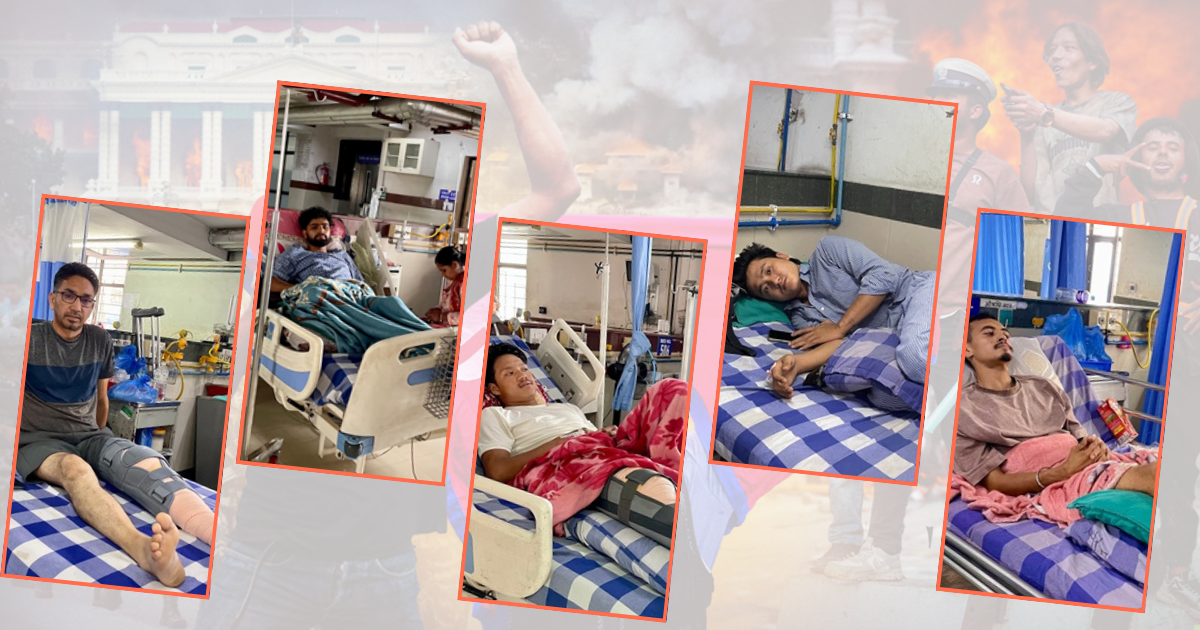

Kathmandu: Outside the Parliament building in the heart of the federal capital, chants grew louder through the morning last Monday. Suddenly, the air was filled with smoke, tear gas, and gunfire. Thousands of young people had taken to the streets demanding “change,” but in an instant, bullets dropped many of them to the ground.
From that day, the “Gen Z Movement” pushed Nepal onto a new path. On one day, blood flowed on the streets; the next, on September 9, the government was toppled.
But the story of the movement is not confined to political seats. It now extends into the wards of the National Trauma Centre—where young people, wounded in the legs, arms, and waist by bullets, lie waiting not only for their bodies to heal but also for their faith in the future to recover.
Shot while filming a video
Fifty-three-year-old Laxman Dipkar was not a typical protester. On his way to the office, he joined the demonstration after the road was blocked. While recording a video on his phone, a bullet struck him.
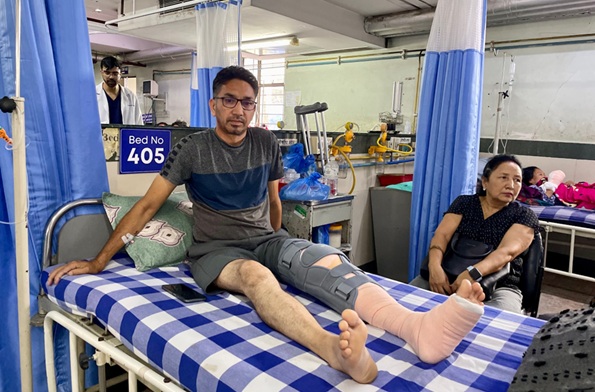
“The Gen Z brothers carried me to the hospital and brought me here,” he recalled. With thick bandages wrapped around his leg, he added calmly: “Nepal has changed now. The country must become better.”
“51 lives lost, nothing to fear anymore”
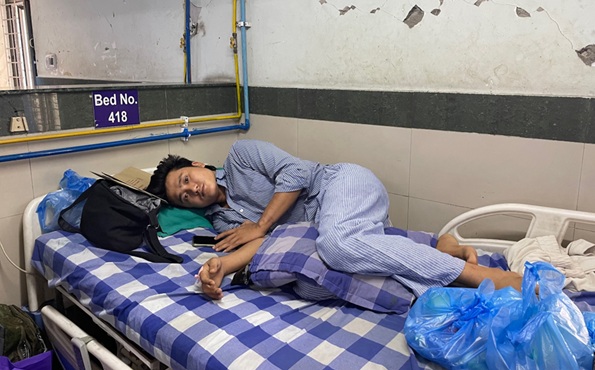
Abhishek Shrestha, 22, was among the protesters outside Parliament. “My friend was shot. I tried to cover him, then I was shot too,” he said.
His voice carried more fury than pain. “Fifty-one lives have already been lost. There is nothing to fear anymore,” he shouted.
Shrestha said the experience had hardened him: “Be careful now. We have already shown—we won’t stay silent. Don’t get trapped in political games, in ‘this party, that party’ slogans. Talk about the nation, dream of the country. If not, we’ll return to the streets. Even if we face bullets again, we are not afraid. We are Gen Z. We cannot be stopped.”
Shot in peaceful protest
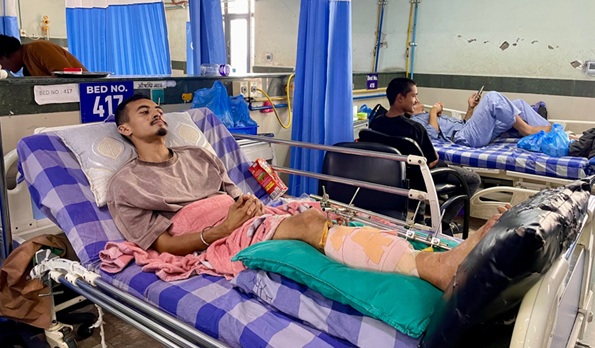
Deepraj Rai, 23, insists he was part of a peaceful rally. “We were in a small group, even asking police not to fire,” he said from his hospital bed. But at 1:30 p.m., he was shot. “We marched step by step into the streets for the future. I only want that it never happens again.”
Nearby lay another wounded youth, 22-year-old Navin Tamang from Chabahil, who still shudders recalling the moment. “We were at Gate No. 1 of Parliament. A friend collapsed from a bullet. I went to lift him—and then I was hit,” he said. After initial treatment at Civil Hospital, he was transferred to the Trauma Center. “Now I believe nothing is impossible for this country. But the new generation must not repeat the mistakes of the old.”
Just days earlier, on September 9, the Prime Minister and ministers were removed from office. Many hailed this moment as the “first achievement of the Gen Z revolution.” But it came at a high cost.
“The stitches hurt, but we opened the door to change”
Holding his stitched waist wound, 21-year-old Suresh Pokhrel whispered: “The pain is intense. But we have opened the door to change. Society must improve by remembering the sacrifices of the wounded and the dead.”
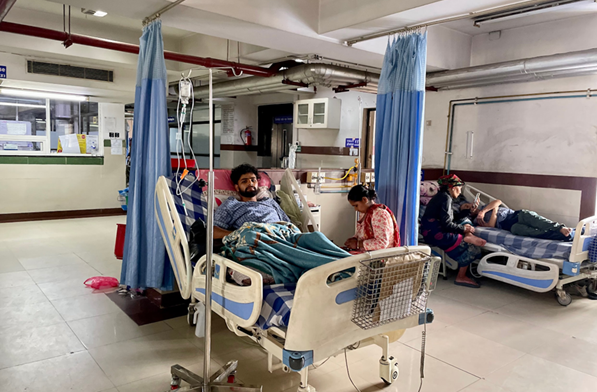
Hospitals overloaded with victims
According to the National Trauma Centre, about 150 people were admitted following the shootings of September 9. While many have since been discharged, 30–35 remain under treatment, some in the ICU.
Between pain and hope
The September 9 shootings proved one thing: this movement was never just about slogans. The blood spilled on the streets, the saline drips in hospitals, and the cries of the wounded reveal its true face.
The government has fallen, but the suffering of those who fell on the streets lingers. Abhishek’s words still echo: “I took one bullet today. I’m not afraid of the next. My only wish is that our children never have to endure the mistakes we lived through.”
Nepal has begun a new political chapter. But the stories of these wounded youth are reminders: change has not come cheap. It has been bought with blood, tears, and sacrifice.
Photo: Mamun KC

Comment Here