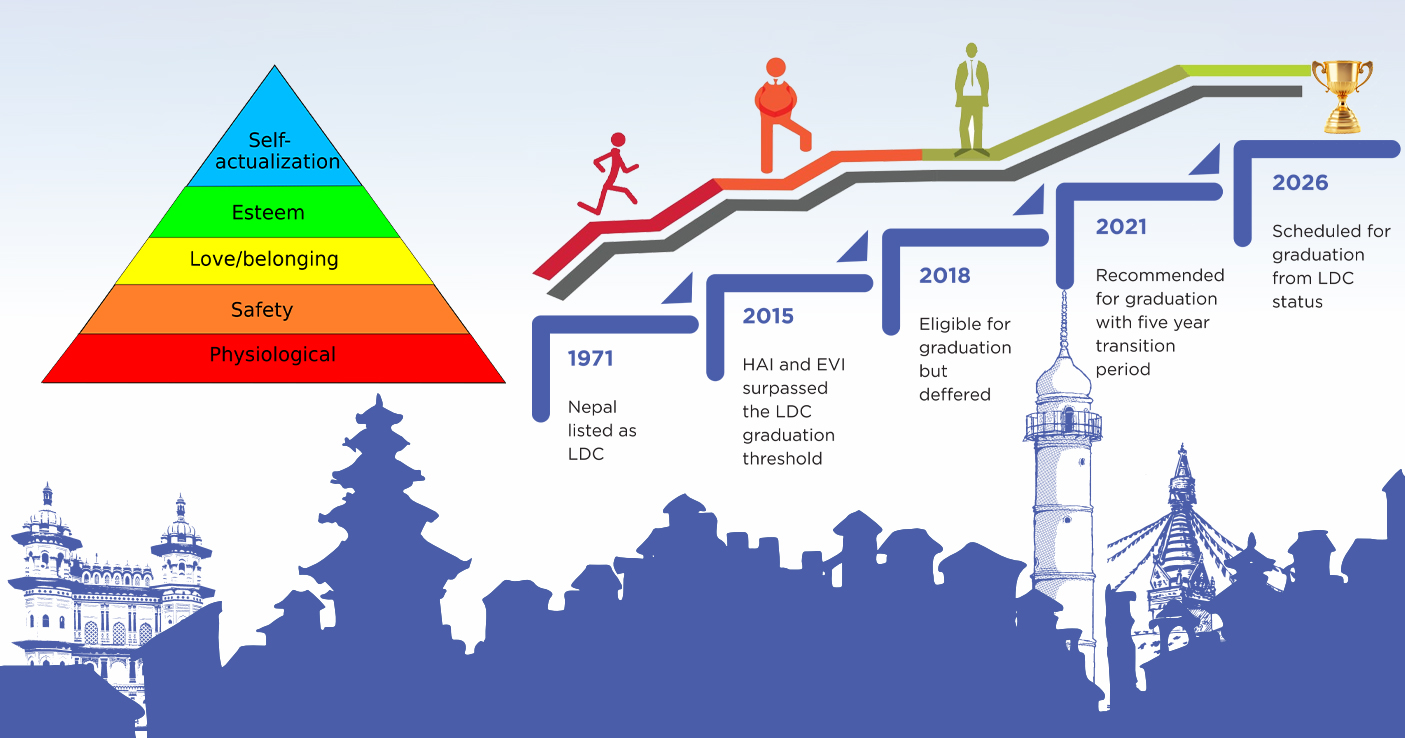

Kathmandu: The Government of Nepal is set to appeal to the United Nations to postpone its scheduled graduation from Least Developed Country (LDC) status to developing nation status, originally slated for November 2026. Nepal, having met the required criteria for LDC graduation, now seeks to push back this transition by several years.
Nepal has fulfilled the stipulated standards for listing as a developing country from the LDC category, paving the way for its impending graduation and inclusion among developing nations.
Upon graduating from LDC status, Nepal will face reductions in grants, loss of trade preferences and concessions, potential market erosion for Nepali products, and stricter international compliance requirements as a perceived wealthier nation. The loss of duty-free tariff benefits and WTO privileges could lead to a decline in exports. Considering these implications, Nepal is reconsidering its graduation timeline.
Chief Secretary Ek Narayan Aryal stated that the government is rethinking the graduation and working to delay it. Recent disasters and protests have caused significant damage, necessitating reconstruction and an economic boost. “Therefore, some reconsideration is needed regarding LDC graduation,” Aryal said. “Efforts are underway from the government’s side.” He added that additional work is required to achieve Sustainable Development Goals.
Bangladesh, also graduating from LDC status alongside Nepal, requested a re-evaluation of its graduation on September 25.
To qualify for LDC graduation, improvements are needed in the Human Asset Index, Economic and Environmental Vulnerability Index, and per capita Gross National Income. Nepal has met all three criteria, though meeting just two is sufficient for transition from LDC to developing status.
Nepal was previously eligible for graduation but repeatedly requested extensions. In 2021, it sought a five-year preparation period, leading to the current November 2026 timeline. The government now aims to further postpone this date.
Although the graduation decision was made in 2021, Nepal was granted five years for preparation. Bangladesh and Laos, graduating alongside Nepal, will also complete their five-year preparations and exit LDC status in 2026.
Nepal has long strived for graduation from LDC to developing status. On 18 November 1971, the UN General Assembly listed Nepal as an LDC; 55 years later, it has earned this opportunity.
Graduation will strengthen Nepal’s indicators and create a more favourable investment environment. UN assessments in 2015, 2018, and 2021 highlighted Nepal’s progress in the Human Asset Index and Economic and Environmental Vulnerability Index.
Nepal recently improved its per capita Gross National Income, securing the 2026 graduation opportunity. Three years ago, it stood at US$ 1,335; now it has risen to US$ 1,496. The World Bank considers nations with over US$ 1,361 per capita as graduated from low-income status, providing sufficient grounds for Nepal’s entry into developing nation ranks.
Graduation implies enhanced debt repayment capacity. As a wealthier nation, donor agencies increase interest rates on concessional loans. With rising per capita income, the World Bank and Japan International Cooperation Agency (JICA) have already raised rates.
Currently, Nepal’s average interest on concessional loans from various donors is below 2 percent, but this is expected to rise.
Chandra Prasad Dhakal, President of the Federation of Nepalese Chambers of Commerce and Industry, warns that graduation will end grants and international market opportunities for Nepali products. “Exporters’ subsidies will also stop,” Dhakal said. He noted that Nepal is not alone in wealth gains—other nations have progressed similarly. “This is not artificial wealth,” he added. “Nepal should follow Bangladesh’s lead, postpone graduation by at least three years, and reinstate export subsidies.”
Graduation will enhance Nepal’s credibility and trust, shift toward production-oriented self-reliance, improve credit ratings for better foreign investment conditions, have minimal impact on grants from the World Bank and development partners, and increase capacity to borrow and repay.
Concerns over grant cuts post-LDC graduation are rising, but Ministry of Finance officials argue that nations do not grow rich on grants alone; they must create result-oriented projects, borrow, and repay to build wealth.
Post-graduation, Nepal faces the challenge of boosting exports. A study by the International Trade Centre (ITC) estimates a potential 4 percent drop in exports after 2026 graduation.
LDCs receive duty-free access for all products in certain markets, a benefit Nepal will lose after 2026. It may also forfeit special WTO facilities and exemptions.
Officials from the ministries note that aid from the World Bank, Asian Development Bank, and bilateral donors is based on income criteria, so the impact on Nepal will not be substantial.

Comment Here