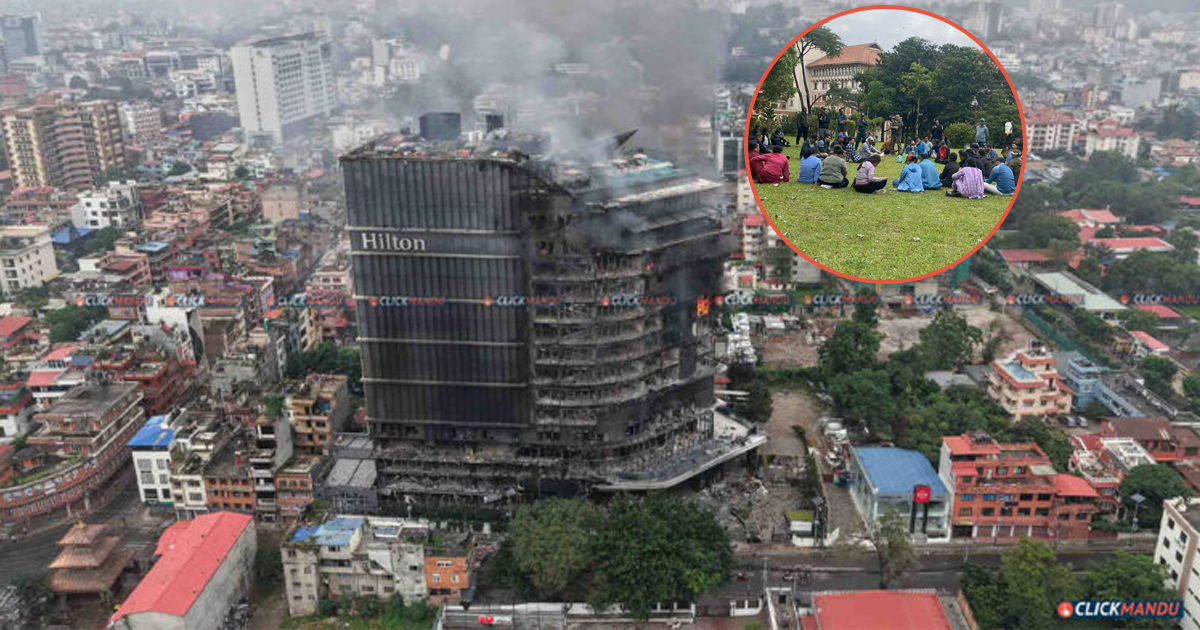

Kathmandu: In the wake of the Gen-Z protests on September 8 and 9, which toppled the government of Prime Minister KP Sharma Oli and resulted in over 76 deaths, 15 hotels across Nepal engaged in tourism services have been targeted in attacks on physical infrastructure.
According to a study report commissioned by the Nepal Tourism Board, four hotels in Kathmandu and a total of 15 nationwide suffered damage during the unrest.
The most severe losses from the hotel damages were inflicted on the international chain Hilton Hotel in Naxal, Kathmandu. The Hilton sustained complete destruction, incurring losses estimated at Rs 7 to 8 billion. Built at a cost of Rs 8.5 billion, this hotel, which began operations only in July 2024, featured 172 rooms.
Among Nepal’s hotels, the Hilton holds a five-star deluxe classification, with just two others sharing this elite status. The remaining 28 hotels are classified as five-star.
Due to damage to machinery, operational equipment, and movable assets, the Hilton has been fully closed since September 9. Its insurance company and surveyors are currently assessing the extent of the damage.
Even amid the closure, the Hilton management is striving to preserve employee jobs by temporarily transferring staff to other branches in the Asia-Pacific region, as noted in the study report.
The Gen-Z protests not only caused massive structural damage to the Hilton but also eliminated its daily revenue of Rs 2.5 million, according to the report obtained by Clickmandu. Beyond the Hilton, the next significant financial hit was to another international five-star chain, the Hyatt Regency.
Arson and vandalism at the Hyatt Regency led to a loss of Rs 140 million in revenue in September alone, as disclosed by the hotel in the report. The Hyatt has been closed since September 9, with workers pressuring management to prevent job losses.
The Hyatt issued a notice stating full closure after Dashain (Tihar festival). Consequently, permanent staff have demanded no termination of employment and adherence to labour laws for paid leave. Employees have been arriving daily at the hotel premises post-Dashain, staging sit-ins in the parking area throughout the day before returning home in the evening.
The report also mentions minor damage to Kathmandu’s Barnabas Museum Hotel and Aloft Hotel. According to the findings, hotels in Kathmandu, Pokhara, Bhairahawa, and Jhapa were most severely impacted by the Gen-Z protests.
In Pokhara, hotels such as Sarovar, Barahi Resort, Godavari Hotel, Edamas Hotel, and Bagaincha Resort were affected by the unrest, the study report states.
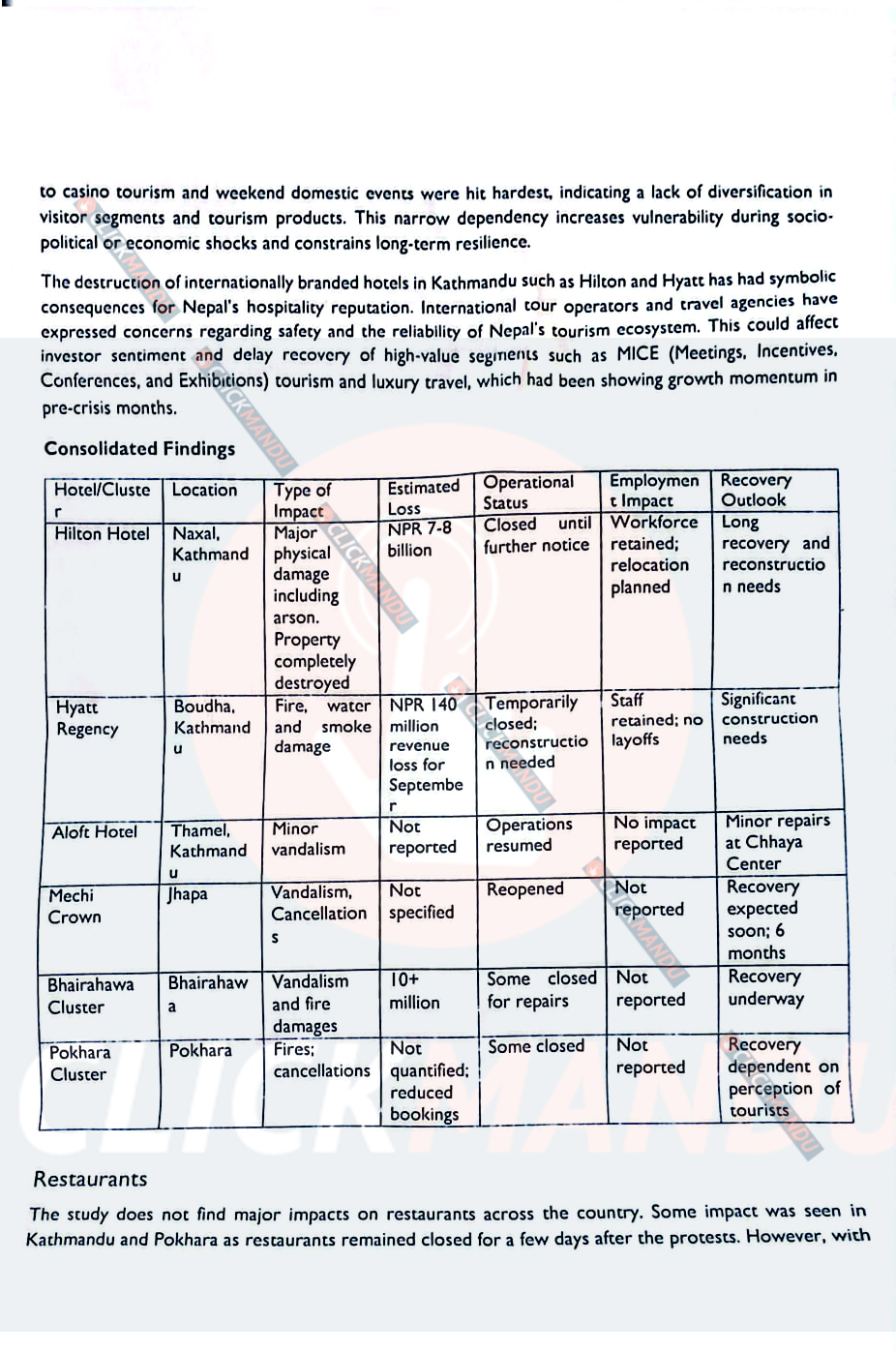
Among the impacted hotels in Bhairahawa are Dreamland International, Dreamland, Tulip, Maurya, and Redisson Hotel. In Jhapa’s Dhulabari, the Mechi Crown Plaza is also listed as protest-affected.
Per the study report, damage at Bhairahawa’s Dreamland Hotel is estimated to exceed Rs 10 million. During the protests, the hotel suffered vandalism, arson, and smoke damage. Bookings have been cancelled at 90 pecent capacity. Tourist arrivals to Lumbini have notably declined post-protests, directly impacting Bhairahawa’s entire tourism sector, the report highlights.
The Gen-Z protests also damaged the Mechi Crown in Jhapa. This first five-star deluxe hotel in eastern Nepal saw vandalism and arson affecting its restaurant, spa, and swimming pool. The report indicates broken glass and structural damage in about 15 rooms.
The protests caused the five-star Soaltee Hotel to lose Rs 200 million in revenue, the report notes. Additionally, the Kathmandu Marriott and Aloft Hotel reported substantial revenue shortfalls due to cancelled tourist bookings.
Hoteliers express grave concerns that the attacks on the sector will have long-term repercussions for tourism services. They interpret this crisis in the hospitality industry as a signal of structural vulnerabilities. According to them, political instability, lack of security, and disorganized management heighten the risk of such incidents recurring.
Hotel business owners have urged the government to formulate a long-term recovery plan for the tourism and hospitality sector. They emphasize that without restoring investor confidence, ensuring security guarantees, and improving Nepal’s international image, full revival will be challenging.

Comment Here