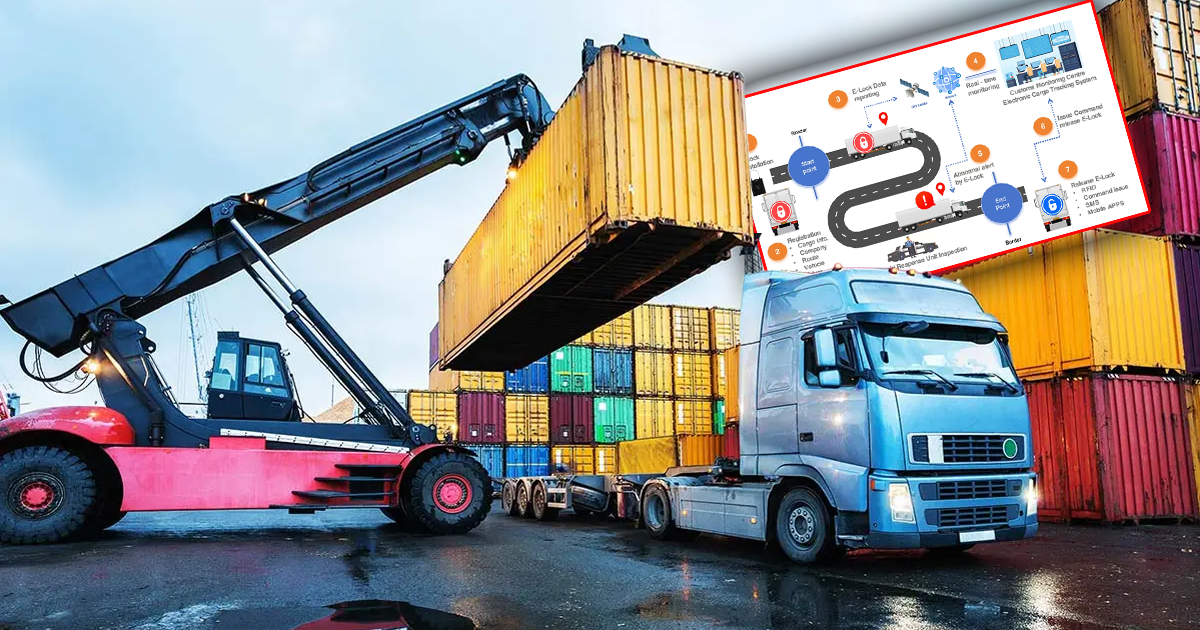

Biratnagar: India has expanded its Electronic Cargo Tracking System (ECTS) for cargo shipments destined to Nepal, a move expected to reduce transportation costs for industrial and commercial goods while streamlining imports, according to business leaders. They believe the initiative will lessen reliance on the congested Kolkata-Birgunj route.
The system is currently operational only on the Kolkata-Birgunj corridor. Industrialists and traders complain that the lack of necessary infrastructure on other routes means it cannot be implemented immediately at alternative border points.
Although the Jogbani border has a ready cargo rail link, the absence of actual rail-based cargo movement means the ECTS cannot be applied there in the short term.
India’s Central Board of Indirect Taxes and Customs (CBIC) amended the “Regulations on Electronic Cargo Tracking System for Nepal-Bound Cargo Transit,” originally introduced in 2019, and issued a new notification a week ago to bring the changes into effect.
Under the new provisions, transit cargo can now be sent via additional Indian ports and combined rail-road routes.
Indian officials expressed confidence that the step will simplify shipping processes, cut transit times, ease pressure on major ports, and enhance cargo security more effectively.
According to Indian media reports, the inclusion of Visakhapatnam port and additional transit routes has opened alternative gateways for exporters from India’s southern and eastern regions to reach Nepal.
This will reduce long-standing dependency on the overburdened Kolkata-Birgunj corridor.
The Electronic Cargo Tracking System is a technology-driven platform that enables real-time monitoring of cargo location and security during transit.
Through GPS or GPRS-enabled electronic seals and sensors installed on containers, customs officials and traders can track shipments online. Business leaders from the Sunsari-Morang industrial corridor say this brings transparency to trade, minimizes tax evasion risks, and boosts shipping efficiency.
As per the CBIC’s new notification, cargo can now be dispatched by rail from Kolkata, Haldia, and Visakhapatnam ports directly to Birgunj in Nepal. Additionally, combined rail-road transport via India’s Bathnaha border to Biratnagar, or road transport from the Indian customs yard at Jogbani, will be possible. Direct rail cargo arrivals from India to Biratnagar have also been facilitated.
Transshipment cargo refers to the process of transferring goods from one mode of transport to another when a direct route is unavailable. In such cases, items are offloaded at an intermediate port and reloaded onto another ship, train, or truck for onward journey to the destination.
Trade and logistics professionals note that under the electronic tracking system, container cargo was previously limited to the Birgunj Integrated Check Post. With cargo now able to reach Biratnagar directly, imports via Visakhapatnam port will become easier and faster. This will particularly benefit industrialists and traders in eastern Nepal, they say, though they express disappointment that the system is not immediately applicable at eastern Nepali borders.
Nandkishor Rathi, president of the Morang Industry Organization, said the system’s expansion will reduce risks of goods damage, minimize paperwork hassles, and save transit time. The new amendments align with India’s obligations under the India-Nepal Transit Treaty, which grants Nepal the right to use various alternative trade routes through Indian territory. The system also ties into India’s technology-based customs reform commitments under the World Trade Organization’s Trade Facilitation Agreement.
According to officials at Biratnagar Customs, the system has been operational for rail shipments to Birgunj for six years, but since no rail cargo movement occurs to Viratnagar, it cannot be implemented at the Jogbani border immediately.
Although a rail line exists up to the Biratnagar Integrated Check Post (ICP), rail transport has not yet commenced. The system has not been applied to Indian trucks and containers, and having started just a week ago, it has not yet reached Biratnagar Customs, officials said.
Nepal began using the Electronic Cargo Tracking System in February 2019. It allows third-country imports to clear customs directly at Nepal-India border offices without opening and inspecting containers at Indian ports.
Developed with support from the Asian Development Bank, the system has proven effective in controlling smuggling and transit-related fraud, according to reports.

Comment Here