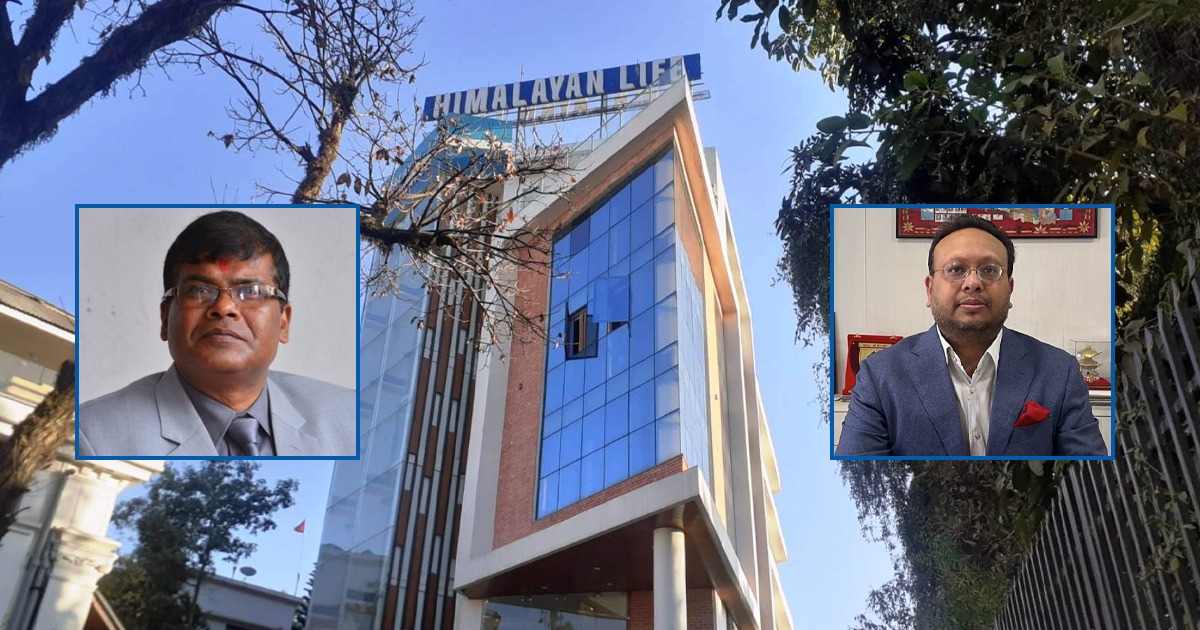

Kathmandu: Himalayan Life Insurance, one of Nepal’s newest life insurers formed after a high-profile merger, is teetering on the edge of a full-blown governance crisis, insiders and documents reveal.
At the centre of the storm is Sulabh Agrawal, the powerful Managing Director of Shankar Group and Chairman of Himalayan Life, who stands accused of treating the publicly listed company as his private empire.
The immediate trigger was the controversial exit package handed to the former CEO, Manoj Kumar Lal Karn. After weeks of protests by agents angry over low policy bonuses and poor investment returns, Karn, widely seen as Agrawal’s handpicked executive, was forced to resign.
Yet instead of a quiet departure, the board (under heavy pressure from Chairman Agrawal) approved an eye-watering compensation package of Rs 22.6 million (roughly US$ 170,000) plus transfer of a company vehicle to Karn, even though he cited “personal reasons” for stepping down.
The decision has split the board itself. Several directors either boycotted the 12 October 2025 meeting or refused to sign the minutes. Despite lacking a clear majority of signatures, Agrawal allegedly instructed staff to process the payment, deepening internal rifts. The current CEO, Kapil Dahal, has publicly distanced himself, telling media the payout has been put on hold.
Critics say the episode exposes deeper rot. Himalayan Life was created from the merger of the former Union Life (where Karn was CEO and Agrawal was chairman) with another insurer. Post-merger, the same duo continued to dominate decision-making while Nepal’s Insurance Authority (Beema Pradhikaran) looked the other way, repeatedly relaxing rules to accommodate the company.
One glaring example: Himalayan Life had already breached the previous 10 percent cap on stock-market investments (as a percentage of total investable funds) by pouring heavily into shares of Nepal Reinsurance Company — a move that conveniently benefited Agrawal and his business associates who hold large personal stakes in the reinsurer.
Rather than face penalties, the company saw regulators quietly raise the ceiling to 15 percent in early September 2025, retroactively sanitizing the violation. As of mid-2025, Himalayan Life’s stock portfolio stood at 13.96 percent of total investments, with more than half of that concentrated in a single stock — Nepal Re.
Documents and market sources also point to potential conflicts of interest. Trades for Agrawal family members and their partners were allegedly routed through Bhrikuti Stock Broking Company, owned by the wife of none other than the former CEO Karn.
Agents and minority shareholders now fear the company’s reputation is taking a lasting hit at the worst possible time when policyholders are already grumbling about low returns and the broader industry is under scrutiny for weak governance.

Comment Here