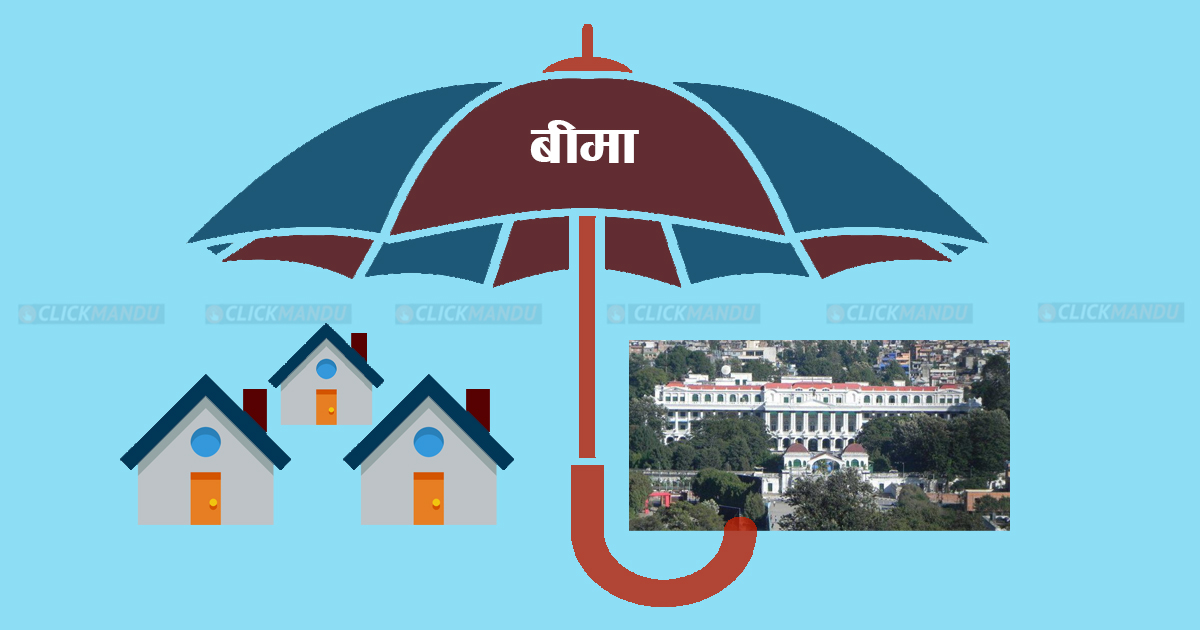

Kathmandu: Nepal government has officially kicked off its long-announced plan to insure public property by fully insuring 20 four-wheeled vehicles owned by the Ministry of Finance through Nepal Insurance Company. This marks the first concrete step toward bringing all government assets under insurance coverage.
Under the new policy, these vehicles now have comprehensive coverage, meaning the government can claim compensation to repair or replace them in case of accidents, fire, theft, or other risks.
Officials say the initiative will gradually extend to government buildings and other fixed infrastructure, though expanding the programme won’t be quick or easy. Insuring large public structures requires significant budget allocation, detailed technical valuation of each asset, and clear policy guidelines – none of which are fully in place yet.
Ministry of Finance spokesperson and Joint Secretary Tanka Prasad Poudel explained: “We announced that all government properties would eventually be insured, but due to budget constraints and procedural hurdles, we can’t do everything at once. We’ve started this year with vehicles and will scale up in coming years.”
He added that no funds were allocated in the current fiscal year’s budget specifically for paying insurance premiums on buildings. Moreover, every government building and facility must first undergo a professional technical valuation to determine its current market value, which will then set the premium amount – a process that takes considerable time.
“Everything from budget approval and valuation to creating the right mechanisms and policies means this has to be done phase by phase,” Poudel said. “Next fiscal year, we aim to finalize the policy framework and secure adequate funding.”
The Insurance Authority of Nepal (Beema Pradhikaran) says it is fully prepared to support the rollout whenever the government is ready. Information Officer Purna Bahadur Thapa confirmed that separate insurance rates for public and private assets have long been in place. “As soon as the government gives the green light, we’re ready to move forward,” he said.
The push for government asset insurance gained urgency after massive protests on 8-9 September 2025, during which key public buildings – including the Supreme Court, Prime Minister’s Office, President’s Office, Parliament, Singha Durbar ministries, and numerous courts across the country – suffered extensive damage. The destruction highlighted the financial vulnerability of uninsured public infrastructure.
On 21 September 2025, the interim cabinet formally decided to begin insuring physical government structures. Two days later, the Finance Ministry issued a circular on expenditure rationalization that explicitly included starting the insurance of public buildings.
While the Ministry of Finance has now successfully insured its fleet, broader coverage of buildings and infrastructure still awaits budget provisions, technical assessments, and coordination between the Finance Ministry, the Insurance Authority, and insurance companies.
For years, Nepal’s insurance industry had been urging the government to bring public assets under coverage. With the first vehicles now insured and policy groundwork underway, the country appears to be finally moving toward protecting billions of rupees worth of taxpayer-funded property from future disasters.

Comment Here