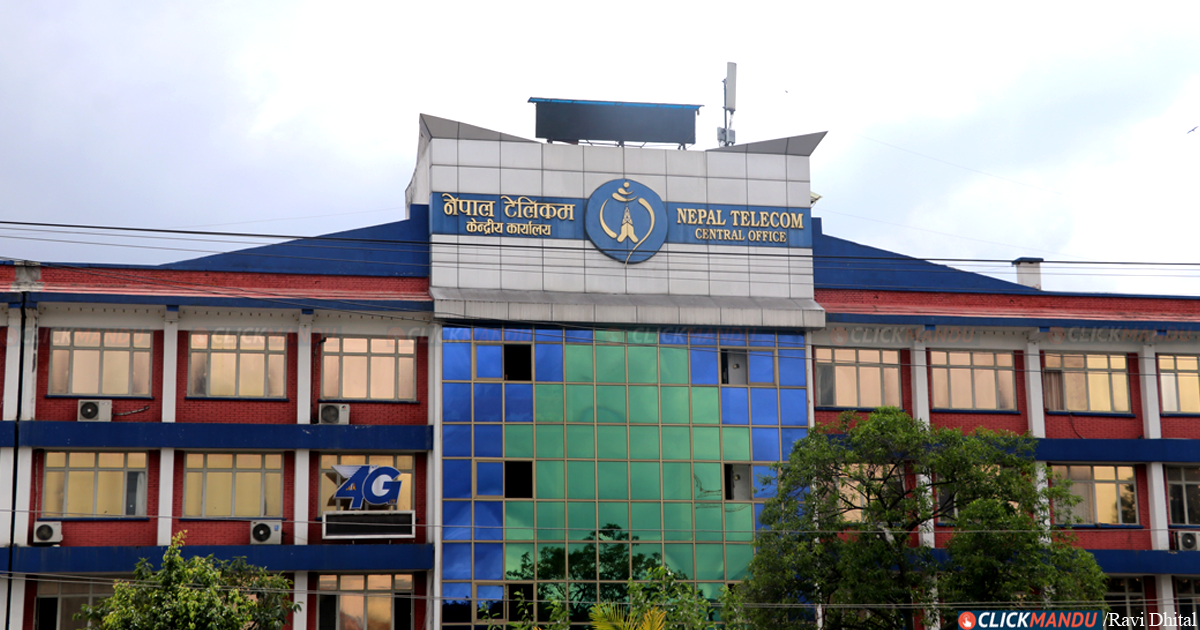

Kathmandu: More than a month after Nepal Telecom suspended its high-stakes tender for a new billing system, the process remains frozen, leaving the state-owned giant facing a ticking clock that could disrupt services for millions of customers.
With the current contractor’s contract expiring in September 2027—just 22 months away—the delay has sparked uncertainty over whether the telecom can onboard a new vendor in time, potentially forcing an unwanted extension of the outdated system.
The tender, valued at around Rs 5 billion, was in its final stages when Nepal Telecom halted it on 25 September, citing “special circumstances.” By then, technical evaluations had cleared only one bidder: China’s Huawei Technologies.
The financial bids were set to open on 15 October, but the suspension notice—issued on 24 October—pushed everything into indefinite limbo without explanation. Acting CEO Savina Maske Pradhan admitted the holdup is creating confusion, noting that a smooth handover typically requires at least 24 months of lead time. “We’re already short on that,” she said, warning of potential service glitches if unresolved.
The snag follows a wave of public complaints and media scrutiny over transparency and potential conflicts of interest, prompting Communications Minister Jagdish Kharel to form a seven-member probe committee in mid-October. Led by former Secretary Maniram Gelal, the panel—tasked with reviewing bid documents, Supreme Court directives, and allegations of favoritism—submitted its report on November 20. Both Kharel and Gelal publicly assured journalists that the findings would not meddle with the process, emphasizing Nepal Telecom’s autonomy in decisions. Yet, no restart has followed, and the ministry has stayed hands-off, leaving the ball squarely in the telecom’s court.
At stake is more than paperwork: Nepal Telecom’s aging billing setup, managed by Chinese firm Asia Info since 2011 (with extensions in 2021 and 2022), processes daily call volumes worth Rs 900 million but routinely misses 10 percent due to inefficiencies—translating to Rs 9 million in daily losses. Experts say a full transition involves three months for financial reviews and contract finalization, plus up to 16 months for data migration.
With just 22 months left, insiders outline two unpalatable paths forward: revive the current tender (risking rushed implementation) or scrap it entirely and reissue bids (but without solid grounds, per procurement laws, and potentially too late). Either way, failure to wrap up could trap the telecom into extending Asia Info’s deal, exposing it to further vulnerabilities like system crashes—as seen in a recent eight-hour outage on 25 September that halted calls and data for prepaid and postpaid users.
A core flashpoint has been customer privacy, amplified by a May 2025 Supreme Court directive. The ruling, from a bench led by Justices Nahakul Subedi and Mahesh Sharma Paudel, stemmed from a petition arguing that awarding billing duties to Huawei—already handling Nepal Telecom’s core network—could create conflicts allowing unauthorized access to personal data. The court mandated safeguards: ensuring no vendor employee with network ties touches billing info, limiting access to telecom engineers only, and incorporating strict clauses for upgrades.
Nepal Telecom claims full compliance, with a senior official explaining that in-house “first-line maintenance,” monitoring tools like IMMS and RAS, and ironclad data localization keep citizen details secure and tamper-proof. “We’re vigilant—upgrades might need vendor input, but never at the expense of privacy,” the official added.
The saga traces back to March 2025, when Nepal Telecom first floated the tender. Only US firm CSG International bid, but it flunked technicals, forcing a cancellation. A follow-up request for proposals from global heavyweights like Huawei, Whale Cloud, Oracle, Amdocs, and Netcracker yielded quotes, but Western firms balked at the fixed budget (citing Supreme Court caps on costs).
Round two in March 2025 drew just Huawei and Whale Cloud; Huawei aced the three-month expert review. Now, with the probe cleared and no fresh hurdles, the unexplained stall risks broader fallout—not just financial leaks, but eroded trust in Nepal’s largest telecom provider, serving over 20 million subscribers.
As of late November 2025, telecom officials hint at internal deliberations, but no timeline has emerged. Maske Pradhan urged patience, stressing the need for a “flawless” handover to avoid nationwide disruptions.

Comment Here