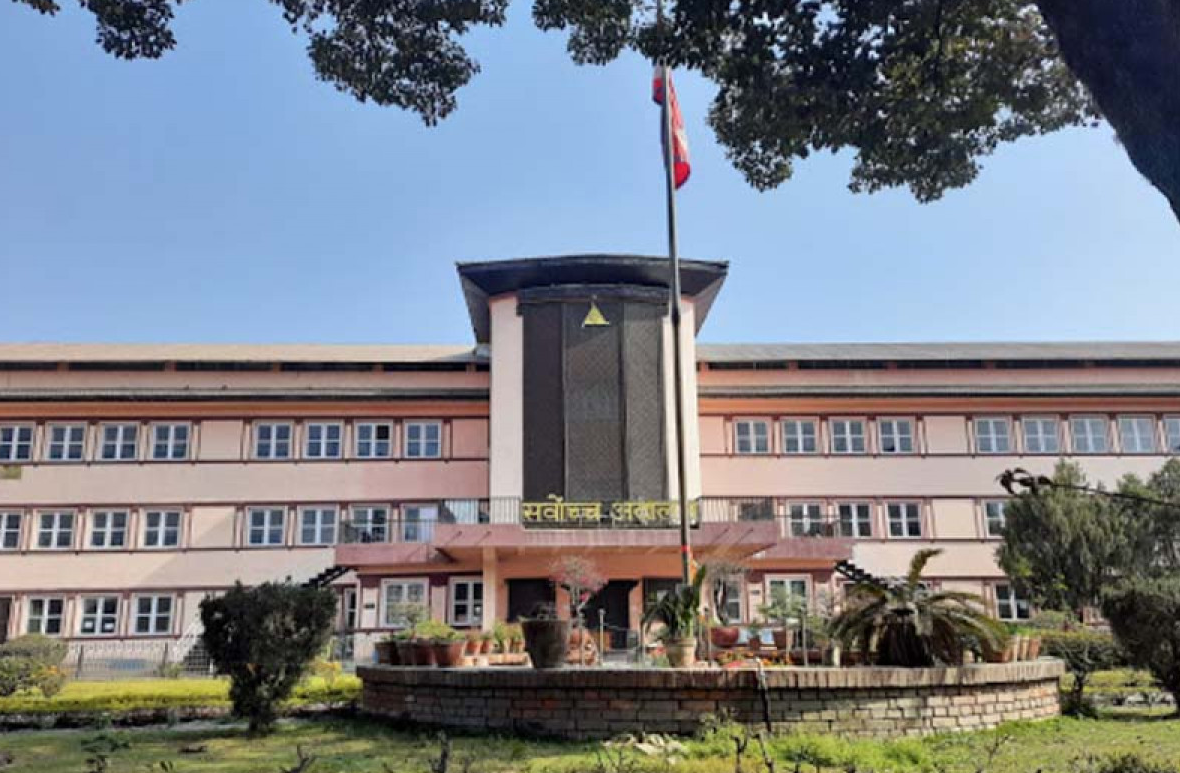

Kathmandu: In a major reprieve for Nepal’s banking sector, the Supreme Court has issued an interim order suspending a controversial provision that required banks and financial institutions to sell repossessed non-banking assets (mostly land taken as collateral) within three years or seek government approval to dispose of them later.
A five-member Constitutional Bench led by Chief Justice Prakash Man Singh Raut, and comprising Justices Kumar Regmi, Hari Prasad Phuyal, Dr Manoj Kumar Sharma and Dr Nahakul Subedi, on 26 November 2025 stayed the implementation of Section 12(Cha) of the Land Act, which was introduced through an amendment published in July 2024.
The rule had forced lenders who ended up owning collateral after failed auctions to offload the property within three years. Failure to do so meant they needed special permission from the government, even if the land exceeded the legal ceiling on holdings. Banks argued this violated their constitutional property rights and could lock billions of rupees in unproductive assets at a time when the economy is already struggling and loan recovery is painfully slow.
Following the court’s stay, banks can now sell these repossessed properties, currently estimated at around Rs 50 billion nationwide, without waiting for government clearance, at least until the case is finally decided.
The Confederation of Banks and Financial Institutions Nepal (CBFIN), which filed the petition, welcomed the order, saying it will ease balance-sheet pressure and help clean up a growing pile of “non-banking assets” that has ballooned amid the ongoing economic slowdown and rising defaults.
The court acknowledged that forcing sales or requiring permission could cause “irreparable damage” to lenders and agreed the provision raises serious constitutional questions that will be settled at the final hearing.

Comment Here