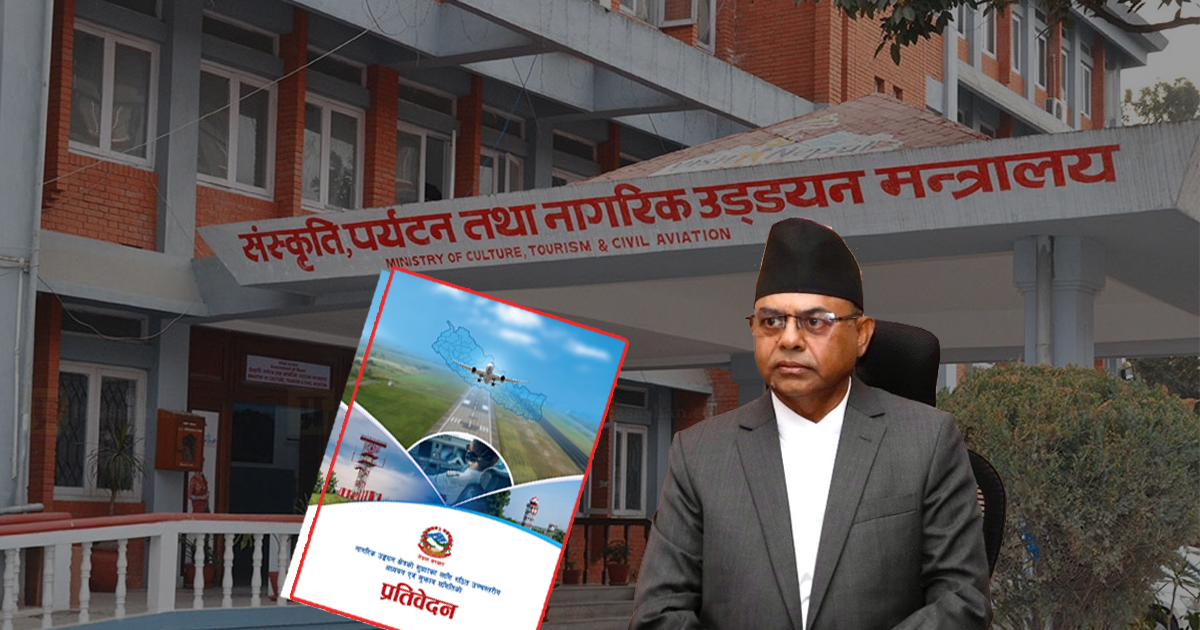
Kathmandu: In a recent cabinet expansion, Nepal’s interim Prime Minister Sushila Karki has opted to entrust the Ministry of Culture, Tourism, and Civil Aviation to Anil Kumar Sinha, who already holds responsibilities for industry, commerce, supply, law, justice, and parliamentary affairs, rather than appointing a new minister.
This marks the third expansion of the cabinet under Karki’s leadership. Sinha, a former Supreme Court justice, previously chaired a high-level committee tasked with studying and recommending reforms in the civil aviation sector. His committee’s report, submitted to the government in late 2024, proposed dividing the national flag carrier, Nepal Airlines Corporation, into three separate entities: one for international flights, one for domestic operations, and one for ground handling services. The recommendations also emphasized separating regulatory and service provider roles to improve efficiency and governance.
Now overseeing the tourism ministry, Sinha is positioned to directly implement those proposed reforms. One of his immediate priorities is appointing a new managing director for Nepal Airlines, a process delayed by a Supreme Court case challenging the age limit set for applicants.
The vacancy arose after 16 candidates applied, but a petition from former employee Achyutraj Pahadi—who exceeds the 65-year age cap—led to a stay order from the court. The ministry has responded, noting Pahadi’s age of 67 and his prior nomination as a National Assembly candidate by the Nepali Congress party, which may expedite resolution.
Once cleared, the appointment will allow Sinha to advance capable leadership aligned with the committee’s vision for restructuring the corporation, including potential public share offerings for two of the new entities and converting accumulated debts into investments.
Broader challenges in the aviation sector include strengthening the regulatory body, the Civil Aviation Authority of Nepal (CAAN), whose director general is currently suspended over corruption allegations related to airport projects. An acting director from the ministry is filling the role temporarily.
Sinha’s experience with aviation reforms positions him well to enhance regulatory independence, address longstanding inefficiencies, and separate oversight from operations—a process that may require legislative changes but can proceed through administrative measures in the interim.
The authority has often been treated as a subordinate department of the ministry, and empowering it as an autonomous entity is seen as feasible without major legal hurdles, allowing Sinha to tackle entrenched issues in the sector.

Comment Here