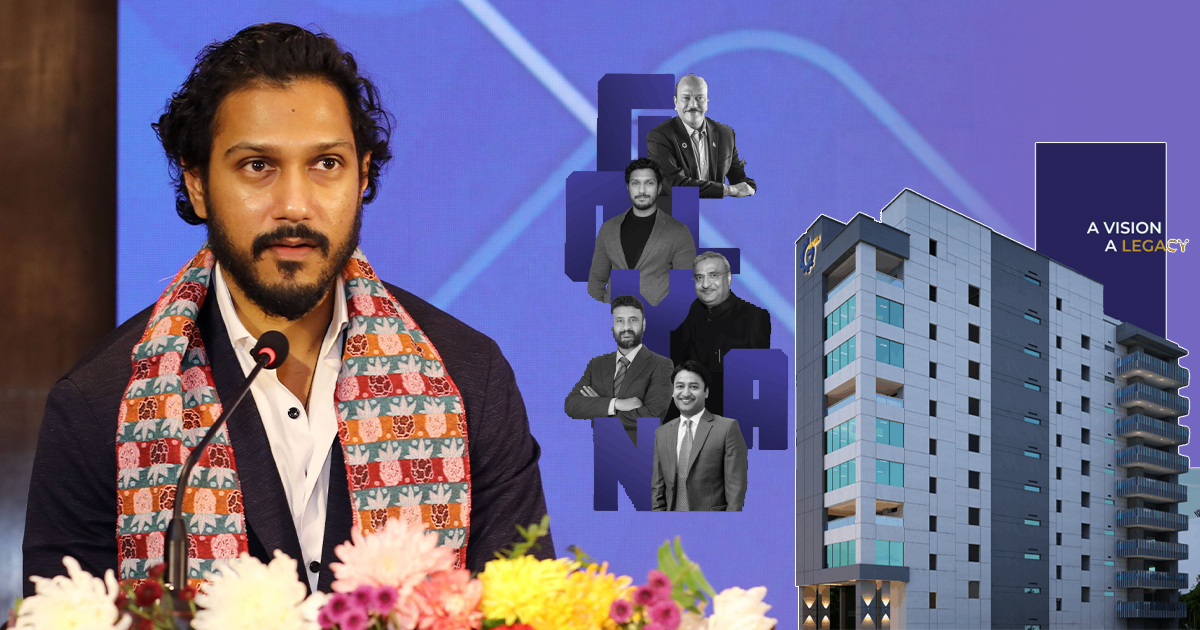

Kathmandu: This is a story from about 60-65 years ago. Industrialization was just beginning to take off in Nepal. At that time, the then-King Birendra made a special request to businessman Sohanlal Golyan: “Come to Nepal, open industries, and contribute to the country’s development.”
That single act of “trust” and “invitation” from the king laid the foundation for today’s vast Golyan Empire. What started as a family business has now become an integral part of Nepal’s economy.
The Golyan Group, which began with jute mills in Biratnagar during Nepal’s industrial revolution, has established a strong presence from textiles to energy, agriculture, and hospitality sectors today.
Times changed, systems changed, but the Golyan family’s commitment to business remained unchanged. Instead, with generational transitions, it became more refined, modern, and expansive. Today, the third generation has begun leading this legacy. Recently, the appointment of 37-year-old Akshay Golyan as chairman of the Golyan Group has rung the bell for a complete transformation from the traditional “Seth” style of business to a fully modern “corporate culture.”
Akshay, who holds a postgraduate degree in Business Studies from the prestigious ESADE University in Spain, will now lead the massive Golyan Group, which has an annual turnover exceeding Rs 56 billion (over US$ 400 million) and employs 10,000 people.
Generational transition
The biggest challenge for any family business is effective succession. Globally, statistics show that most family businesses fragment or fail by the third generation. But the Golyan Group has proven to be an exception. The seed planted by grandfather Sohanlal was nurtured into a giant tree by Akshay’s father, Pawan Golyan. Now, the responsibility for protecting, pruning, and expanding that tree has fallen on Akshay’s shoulders.
Akshay recalls, “There is a world of difference between the era 60-65 years ago and today. In my grandfather’s time, business ran on verbal trust with little competition. People had faith in each other. Today, it’s the age of AI and technology. Each generation thinks differently, but we have bridged that gap through communication.”
In Akshay’s view, business is not just in the “genes.” “Earlier, there was a compulsion for a doctor’s son to become a doctor or a businessman’s son to become a businessman. That’s not the case today. I also didn’t initially plan to join the business,” Akshay says. “I was living a comfortable life abroad, but when I saw challenges in the family and business, a sense of responsibility brought me back to Nepal.”
When Akshay returned to Nepal in 2016-17, both the internal management and external business environment of the Golyan Group were challenging. The post-earthquake situation, slowdown in real estate, booking cancellations, and cash flow issues were pressing the group. Pawan Golyan, the outgoing chairman, was pursuing his passion in agriculture. At that juncture, the group needed strong managerial leadership to chart a new direction. That is when Akshay’s innings began.
From tradition to systems
The biggest transformation in the Golyan Group has been the change in its management structure. Nine years ago, when Akshay took on the role of Managing Director, he observed that decision-making was dominated solely by family members. The group was more person-centric than system-oriented.
“I first reviewed the team. All authority was concentrated with the directors. Lower-level employees had no decision-making capacity developed,” Akshay recalls his early days in the group. “Then we started bringing in experts. Eight to nine years ago, the corporate office had only 15 people; today, there are over 230 employees here. We established departments like CEO, CFO, HR, Legal, and PR to make the group systematic.”
Akshay has a clear plan: in the next 3-4 years, the company will be fully operated through a “professional board,” where the Golyan family will act only as investors or trustees, while daily operations and strategic decisions will be handled by an independent board of experts. Founder Chairman Pawan Golyan will now take on the role of “Honourary Chairman,” and Akshay will lead executive operations—this decision is a significant step in this strategic shift.

Golyan Group standing on four pillars
The Golyan Group has not limited itself to just profit-making businesses. Akshay says, “We have chosen sectors where Nepal has a ‘comparative advantage.’ Wherever we invest, our goal is to be in the top 3.”
According to Akshay, the future of the Golyan Group rests mainly on four pillars:
Industry and exports
Reliance Spinning Mills is the group’s flagship industry. Leading in yarn exports in Nepal, this industry has contributed to reducing the country’s trade deficit. Akshay says, “We are likely number 1 or in the top 3 in the country’s annual exports. Eight years ago, Reliance’s turnover was Rs 5 billion; now it exceeds Rs 10 billion. This is our backbone.” Shivam Plastics and Tricot Industries are part of this industrial pillar.
Renewable energy
The Golyan Group has aggressively advanced in hydropower and solar energy. Currently, with projects in production and in the pipeline, the group has a portfolio of about 600-700 MW. Through companies like Pure Energy and Balephi Hydro, the Golyan Group is contributing to resolving the country’s energy crisis.
Tourism and hospitality
The ‘Hyatt Centric’ at Soalteemod in Kathmandu is now operating at full capacity. Similarly, the group has invested in Hyatt Regency in Lumbini Province.
However, according to Akshay, their future focus is on ‘wildlife tourism’ and ‘luxury mountain tourism’ rather than ‘mass tourism.’ The Golyan Group is building a five-star hotel in Lumbini with a Rs 4 billion investment. Veda Hospitality Pvt. Ltd. is constructing a modern hotel with 177 rooms in Lumbini.
“Rather than large concrete buildings, Nepal’s future lies in eco-friendly, low-footprint boutique resorts with 20-25 rooms inside jungles,” newly appointed Chairman Akshay shares his vision. “We see potential for high-end wildlife tourism in places like Chitwan and Bardiya. If the government allows organized tourism inside national parks or buffer zones, we are fully prepared to invest.”
Agriculture
Agriculture is the dream and passion of Golyan Group President Emeritus Pawan Golyan. Through the ‘Mato’ brand, the group is engaged in organic farming and connecting farmers’ products to markets. Akshay says, “My father’s wish was to do something for farmers. ‘Mato’ was born from that sentiment. This is our emotional investment connected to the country’s soil and farmers, more than profit. We are expanding it further.”
Challenges
From the outside, the Golyan Group—which has a turnover exceeding Rs 50-55 billion, provides direct employment to over 10,000, and indirectly supports income for 25,000 families—appears grand. But inside, there are equally many stories of struggle. While Akshay Golyan acknowledges improvements in Nepal’s business environment, he points to policy instability as the main obstacle.
He says, “There is a severe lack of policy stability in Nepal. The government introduces a policy, we invest accordingly, but it is not implemented or the policy changes.”
Greater opportunities in Nepal than abroad
At a time when thousands of youths migrate abroad daily, 37-year-old Akshay Golyan staying in Nepal to build an empire and taking leadership sends a strong message in itself. He studied abroad, experienced that lifestyle, but saw opportunities in his own country.
“You might earn dollars abroad, but expenses are also in dollars. Ultimately, savings are minimal,” Akshay advises youths. “If you have education, skills, and a habit of hard work, there are more opportunities in Nepal right now than anywhere else. Competition is low, growth potential is high. Corporate houses like ours are always in search of talent. We need 5-10 new people every month.”
He argues that since Nepal is a developing country, much work remains in every sector, and that is a “golden opportunity” for youths.
Dreamed of becoming athlete, became businessman
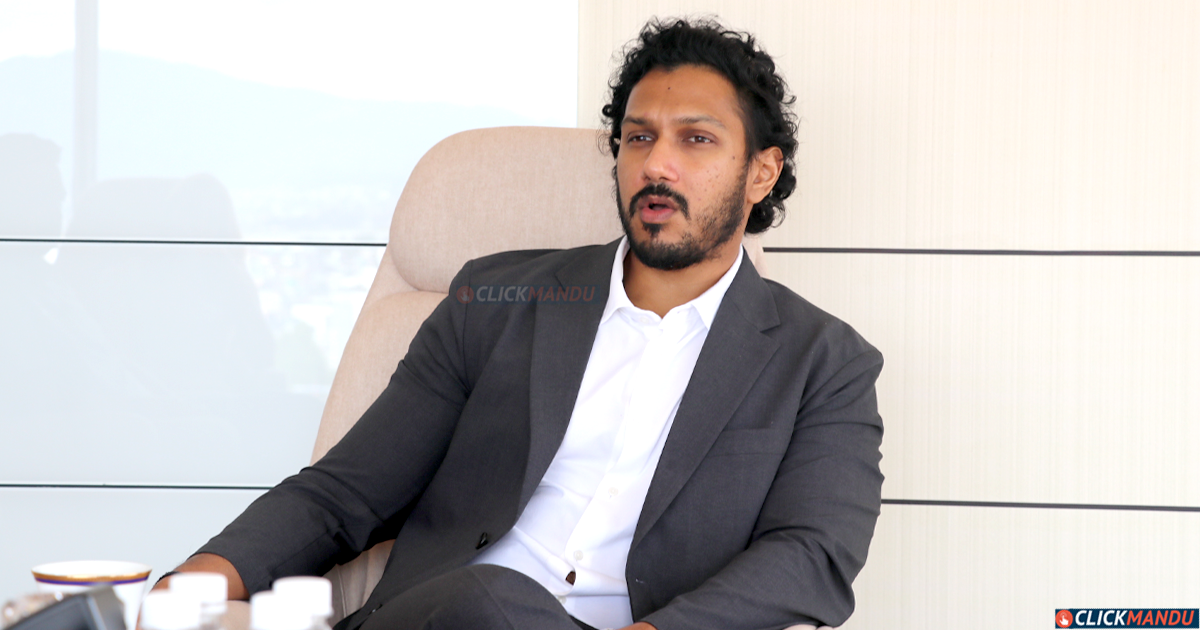
Society views the Marwadi community as “business is in their blood.” But third-generation member Akshay Golyan completely rejects this stereotypical narrative.
Sharing about his childhood dreams, Akshay reveals he did not want to become a businessman but ended up as one. His dream was to be an athlete. “In school, I thought I would become a football, volleyball, or basketball player,” Akshay says. “I had a competitive spirit, but it was for the sports field, not the corporate boardroom.”
Until age 27-28, he had no mood to join the business. He was enjoying life abroad. But around 2016/17, when he saw a crisis in the family business, he had to return to Nepal out of “responsibility,” not passion.
He says, “50-60 years ago, there were no options, so sons were compelled to join business, and people said ‘business is in the blood.’ But today, I had options. I chose responsibility.”
This segment confirms that leadership in the Golyan Group is not just about inheriting ancestral wealth but involves sacrifice—setting aside personal dreams to preserve family legacy.
The ‘Mato’ brand
The Golyan Group’s entry into agriculture was not the result of long market research. It was an emotional project born from a dinner conversation between Pawan and Akshay.
According to Akshay, one night while eating, Pawan suddenly became emotional and said to Akshay, “I go to villages and see farmers’ hardships. They work so hard, but their produce doesn’t sell. I feel great compassion for them. I want to do something for them.”
At that same table, Akshay suggested to his father, “We already have energy, industry, and hotels. If your passion is to help farmers, establish a separate agriculture vertical.”
Within a month of that conversation, the ‘Mato’ brand was established. Started purely from “emotion” without profit/loss calculations, this project has now become one of the group’s four main pillars. This detail shows that alongside “professionalism,” “heart” is also involved in the Golyan Group’s decision-making.
Principles from Uber and Google
Akshay says the Golyan Group will be fully run through a “board” in 3-4 years. But why? Akshay answers by citing examples from Silicon Valley.
“Uber, Google, Microsoft, or Apple—at one point, founders of all these companies stepped back or were removed,” Akshay says. “Founders have vision, but they are also biased. They are so immersed in their ideas that sometimes they don’t see market realities.”
That is why the Golyan Group plans to separate family members from “operations” and limit them to the role of “investors.” Independent directors will make decisions based on facts and results without emotional involvement—this understanding is the main reason for this plan.
Pawan’s message to Akshay
What is the mindset of a leader of a billion-rupee empire and boss to thousands of employees? Sharing the most important lesson learned from his father Pawan Golyan, Akshay says, “What my father taught cannot be found in management textbooks.”
“Father taught: If you don’t succeed or things don’t go as planned, don’t be too disappointed. Remember, this is just work,” Akshay says. “Bigger than work are relationships, family, friends, and society. Business may be good today, not tomorrow. But relationships with people and memories last till the end.”
This philosophical aspect reflects the Golyan Group’s “core value,” where people and relationships are prioritized over profit.
Golyan Group 5 years from now
With his new responsibility, Akshay Golyan has drawn a clear roadmap for the group over the next five years. He says, “We don’t just chase numbers, but whichever sector we are in, we will play a leadership role.”
In energy: Produce over 700 MW of electricity and export Nepal’s “clean energy”; in tourism: Expand a network of eco-friendly wildlife resorts and make Nepal a hub for “luxury nature tourism”; in exports: Increase current Rs 10 billion exports to Rs 20 billion; establish Nepal’s identity in the global market; in agriculture: Bring the ‘Mato’ brand to every household to help substitute agricultural imports; and in institutional governance: Transform the company from a family circle into a fully professional and transparent corporate house.
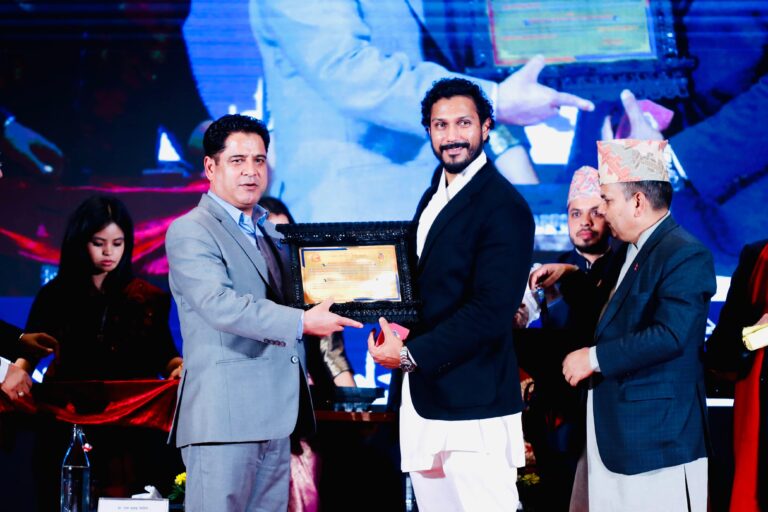
New chapter of trust
The Golyan Group’s six-decade journey is built on the foundation of “trust.” Grandfather Sohanlal earned credibility, father Pawan modernized and diversified it, and now Akshay is making it institutional and global.
Remaining free from family disputes and advancing with the mantra “everyone excels in their own area,” the Golyan Group is an enviable example in Nepal’s private sector. Whether earthquake or COVID pandemic, policy instability or societal challenges, the group has proven by overcoming every obstacle that world-class business is possible in Nepal too.
Chairman Akshay says, “Ups and downs come in business; it’s part of life. But the most important thing is—we must carry forward our relationships with the country, society, and people. My leadership’s main goal will be this: Prosperous Nepal, Happy Nepalis, and Strong Golyan Group.”

Comment Here