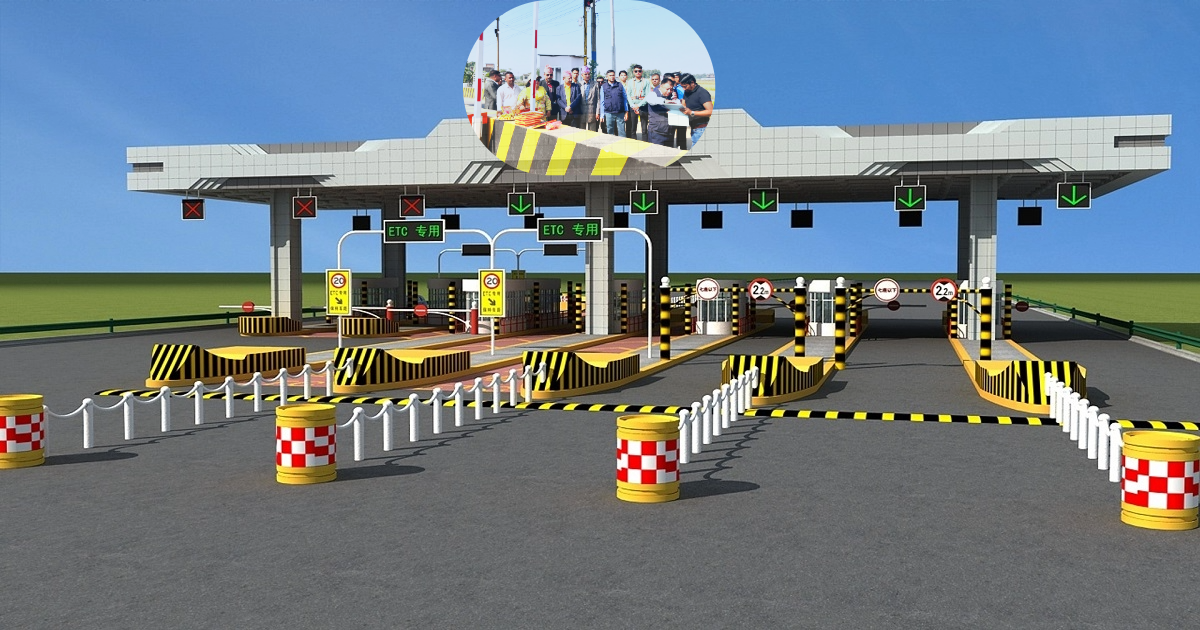

Kathmandu: Nepal’s government, through the Road Board Nepal under the Ministry of Physical Infrastructure and Transport, has initiated plans to build digital toll gates on 22 national highways to collect road usage fees from vehicles. This move aims to generate sustainable funding for road maintenance, improve transport safety, and rebuild aging bridges.
Executive Director Ganesh Bahadur KC confirmed the process has begun for automated toll systems across key routes. The first digital toll gate is already operational on the Bhairahawa-Bhumahi section, where fees of 30 rupees for large vehicles and 20 rupees for medium and small ones are being collected. A second gate is under construction at the Nagdhunga tunnel.
Toll collection on national highways was in place before the Covid-19 pandemic but was halted shortly after it began. It has now been revived, supported by the newly approved Road Usage Fee Procedure Regulations 2024. The initiative seeks to replace outdated manual methods, which often led to accidents, arbitrary charges, underreporting of collections, and rude behaviour toward drivers.
With digital systems, vehicles will be scanned automatically, informing drivers instantly of the fee due, which can then be paid electronically. No cash will change hands at the gates, and payments will go directly to the Road Board’s central account, reducing opportunities for misuse.
A centralized IT monitoring system in Kathmandu will provide real-time oversight of all toll gates, tracking vehicle types, traffic volumes, and collections second by second to ensure transparency.
In the first phase, digital gates are prioritized for five locations with available funding: the Nagdhunga tunnel, Narayanghat-Butwal, Biratnagar-Dharan, Birgunj-Pathlaiya, Narayanghat-Mugling, and Mugling-Pokhara sections. The current fiscal year’s budget allocates over Rs 4.28 billion to the Road Board, with each digital gate costing at least Rs 50 million.
If additional funding is secured from the Finance Ministry, more gates could be added this year on routes like Hetauda-Narayanghat, Naubise-Mugling, Kakadbhitta-Damak, and others. Newly expanded highways, including Butwal-Lamahi, Kohalpur-Attariya, and the Kathmandu-Nijgadh Fast Track, are also in line for future toll infrastructure.
However, concerns have arisen over potential duplication of efforts. The Department of Transport Management is separately advancing RFID-based gates at around 10 similar locations as part of the embossed number plate rollout. These are primarily for vehicle tracking, theft prevention, and enforcement, with some already built in areas like Nagdhunga and Pharping. Critics point to overlapping sites and functions, raising questions about efficient use of resources between the two agencies.
The Road Board’s digital toll push marks a step toward modern, cashless, and accountable road financing in Nepal, though coordination with related initiatives will be key to avoiding redundancy.

Comment Here