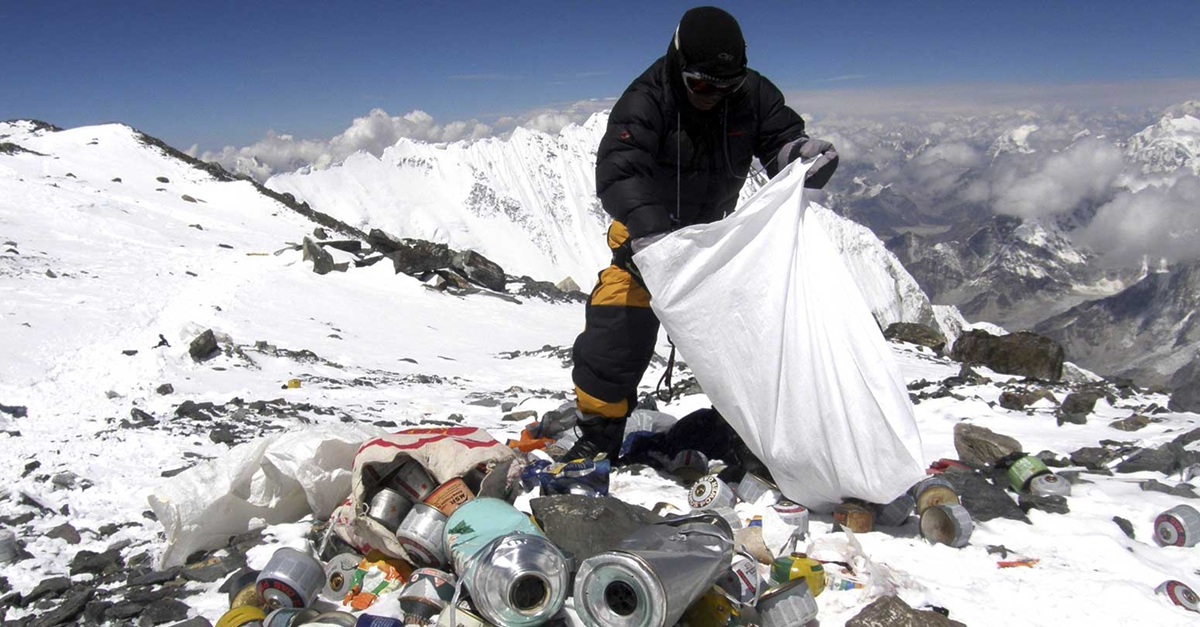

Kathmandu: The government has released a 5-year action plan regarding the cleaning of the Himalayas. The Department of Tourism, under the Ministry of Culture, Tourism and Civil Aviation, has released the “Action Plan Related to Keeping the Himalayas Clean (2025–30).”
The Department of Tourism prepared the said action plan by incorporating subjects including the attractions and challenges of mountain climbing.
The action plan includes an analysis of the current state of waste management in the mountains and has also assimilated past efforts made regarding waste management.
It mentions that waste management in the Khumbu region is currently challenging, and although there is a mandatory provision of “poop bags” to manage the waste generated by climbers above the base camp, the waste continues to increase.
The government has brought this action plan to create clean mountains and a fresh environment. Through this, the goal of ensuring clean mountains and a fresh environment via sustainable waste management has also been put forward.
The government has advanced the objectives of guiding the management of waste generated from mountain climbing and related activities, and minimizing the negative impacts of environmental pollution from waste on public health.
It is also mentioned that the government will form an Action Plan Implementation Steering Committee under the coordination of the Secretary of the Ministry of Tourism for the work of cleaning the mountains.
The government has released 29 programmes through four different strategies for cleaning the mountains. Such programmes range from raising awareness about mountain cleaning to reaching the peaks of the mountains to clean them.
Under this strategy, first of all, waste management work will be integrated with priority at every stage, from the pre-preparation of the mountaineering process and climbing permits to the refund of the waste management deposit.
The government will work in coordination with the private sector for such programmes. The action plan has been released to conduct mountain cleaning work in collaboration and coordination with relevant local bodies, the Tourism Board, the Nepal Mountaineering Association, and the Sagarmatha Pollution Control Committee, among other agencies.
Under this strategy, first of all, waste management work will be integrated with priority at every stage, from the pre-preparation of the mountaineering process and climbing permits to the refund of the waste management deposit.
In the second stage, cooperation will be established among government, non-government, community, and institutional stakeholders involved in mountaineering management. For this, a multi-stakeholder collaboration framework will be adopted to increase common understanding and responsibility regarding waste management.
In the third strategy, physical infrastructure, information technology, and necessary equipment required to manage all types of waste generated by mountain climbers and their helpers will be arranged.
Under the fourth strategy, programmes for modern technology and skilled human resource development will be operated to make waste management work effective. The programmes and collaborating agencies at all stages include local levels, provincial governments, and tourism-related organizations.

Comment Here