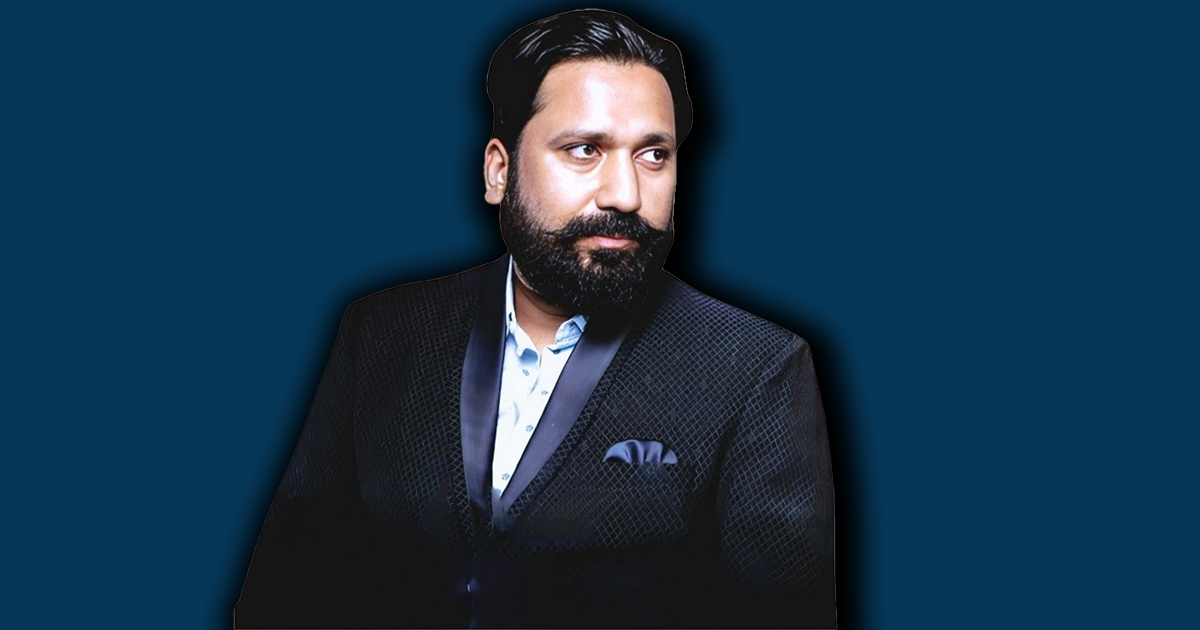

Kathmandu: For anyone involved in share trading or even casually following Nepal’s capital market, Dipendra Agrawal has long been a familiar name. His frequent commentary on social media, bold market predictions, and outspoken views regularly kept him in the public eye. Agrawal often singled out specific sectors and, at times, named individual companies while forecasting price movements, making him a figure closely watched by both seasoned traders and newcomers to the market.
This visibility ensured that investors, old and new alike, paid attention to what Agrawal said. His social media following ran into the thousands, and his opinions often shaped short-term market sentiment. However, critics argue that he used this influence less for market reform, transparency, or investor protection, and more to serve his own personal interests. A study conducted by Nepal’s securities regulator later echoed similar concerns.
Agrawal became known for his confrontational and often unruly behaviour, both toward regulators and on social media platforms. He repeatedly posted offensive remarks demanding the resignation of the finance minister and the central bank governor. On several occasions, he staged hunger strikes in the name of investors, drawing public and media attention while, critics say, pursuing his own agenda under the guise of activism.
For many, Agrawal turned into a persistent headache. Whenever decisions by the Securities Board of Nepal did not align with his expectations, he escalated pressure tactics—threatening regulators, inciting crowds, and creating disorder in the name of market reform. Rather than engaging constructively, his actions increasingly crossed into intimidation and chaos.
Agrawal remained highly active on platforms such as Facebook and Clubhouse, where he discussed market movements and made sweeping claims. Some investors accused him of encouraging them to buy certain stocks, only for prices to swing sharply afterward. Tensions escalated further following protests on September 9 and 10, after which his behaviour toward the Securities Board became openly hostile.
Much of this anger stemmed from the regulator’s refusal to approve an initial public offering for his company, Smart Doors. Following the rejection, Agrawal launched a barrage of posts attacking the board and personally targeting its chair, Santosh Narayan Shrestha. He mobilized groups of investors to stage repeated sit-ins at the regulator’s office, at one point creating a situation where board officials were effectively trapped inside the premises.
On October 13, investors protesting under Agrawal’s influence confined the board chair within the office building for several hours. Demonstrators demanded Shrestha’s resignation, accusing him of corruption and blaming him for the lack of market reform. Heavy deployments of Nepal Police and Armed Police Force were required to secure the area, as negotiations over an 11-point demand list dragged on late into the night.
Whenever decisions by the Securities Board of Nepal did not align with his expectations, he escalated pressure tactics—threatening regulators, inciting crowds, and creating disorder in the name of market reform.
When talks failed, security personnel escorted the board chair and senior officials out of the office around 10:30 pm. Agrawal, seen as the de facto leader of the protest, declared that the movement would continue until their demands were met. That same day, he posted on Facebook urging supporters to come to the Securities Board and remain there overnight if necessary.
In November, Agrawal escalated his campaign by announcing the “Walk Kathmandu Struggle Movement,” again framing it as a fight for capital market reform. He publicly released a 28-point memorandum demanding, among other things, the immediate resignation of the board chair if reform measures were not implemented. Protests followed, with demonstrators insisting that the market could not function properly without what they termed “purification” and reform.
Throughout these protests, Agrawal used social media to rally supporters, posting photos from sit-ins and urging others not to miss what he described as a historic moment. He repeatedly questioned the purpose of the Securities Board, asking why it existed at all if it could not protect investors. Under the banner of Gen Z, he also encouraged groups of young people to join demonstrations at the regulator’s office.
On December 5, amid growing uncertainty in Nepal’s capital market, a group called Gen Z Revolution Nepal submitted a 28-point demand letter calling for the board chair’s resignation. Agrawal welcomed the move publicly, stating on social media that he was pleased the younger generation had coordinated with him and presented demands identical to his own.
This was not the first time Agrawal had led such confrontations. In mid-2022, his group had staged similar protests, including hunger strikes, against the then-chair of the Securities Board, Ramesh Kumar Hamal. Agrawal was among those who used abusive language and aggressive slogans during those demonstrations.
In August 2022, Kathmandu police arrested Agrawal on charges of fraud and breach of trust. He was accused of defrauding investors and brokerage firms of more than Rs 220 million through share trading practices. After ten days in custody, he was released on bail. Upon release, he posted online claiming he had returned victorious after an “ordeal by fire,” portraying himself as a victim of persecution.
For years, allegations had circulated that Agrawal misled investors into buying shares. Complaints mounted across social media platforms, accusing him of orchestrating sharp price movements in certain stocks and leaving ordinary investors exposed to losses. Companies such as Nepal Finance were frequently cited in these allegations.
As investor complaints grew, the Securities Board launched a formal investigation. Media reports began detailing Agrawal’s trading practices, prompting him to lash out at journalists who published evidence-based stories. He accused reporters of being anti-market, subjected them to verbal abuse, and used offensive language online.
Several investigative reports by Onlinekhabar journalist Bhuvan Paudel detailed allegations such as self-dealing, market manipulation, and misuse of platforms like Facebook and Clubhouse to mislead investors. At the time, Agrawal attacked Paudel personally, but subsequent investigations confirmed the accuracy of those reports.
A preliminary investigation report titled “Initial Assessment on Whether Dipendra Agrawal Misled Investors and Influenced the Securities Market, 2025” concluded that he had engaged in serious market manipulation. Based on this report, Nepal Police’s Central Investigation Bureau arrested him.
The regulator found that Agrawal had posted misleading claims on Facebook, including assertions about rights issues and major acquisitions by Joshi Hydropower Development Company, none of which were true. Despite lacking any official basis, he claimed the stock would soon reach a price of 1,000, encouraging investors to shift their entire portfolios into the company.
As investor complaints grew, the Securities Board launched a formal investigation. Media reports began detailing Agrawal’s trading practices, prompting him to lash out at journalists who published evidence-based stories.
Investigations confirmed that Agrawal himself had posted these claims. Joshi Hydropower later clarified that it had made no decisions regarding additional rights issues or the acquisition of a 53-megawatt hydropower project. The Securities Board concluded that Agrawal had intentionally spread false and misleading information to induce others to buy shares, in violation of Nepal’s Securities Act.
According to the findings, Agrawal accumulated shares before releasing misleading information, benefited from the subsequent price rise, and sold at inflated prices. From Joshi Hydropower alone, he reportedly earned illegal profits of nearly Rs 4.9 million.
The investigation further revealed that he used trading accounts of 15 individuals to execute fake and artificial transactions, employed invalid collateral checks worth Rs 3.5 billion, and systematically manipulated the market. As a result, Agrawal has been in custody since December 19. Authorities say he has even continued his protest tactics while in detention, staging a hunger strike from inside police custody.

Comment Here