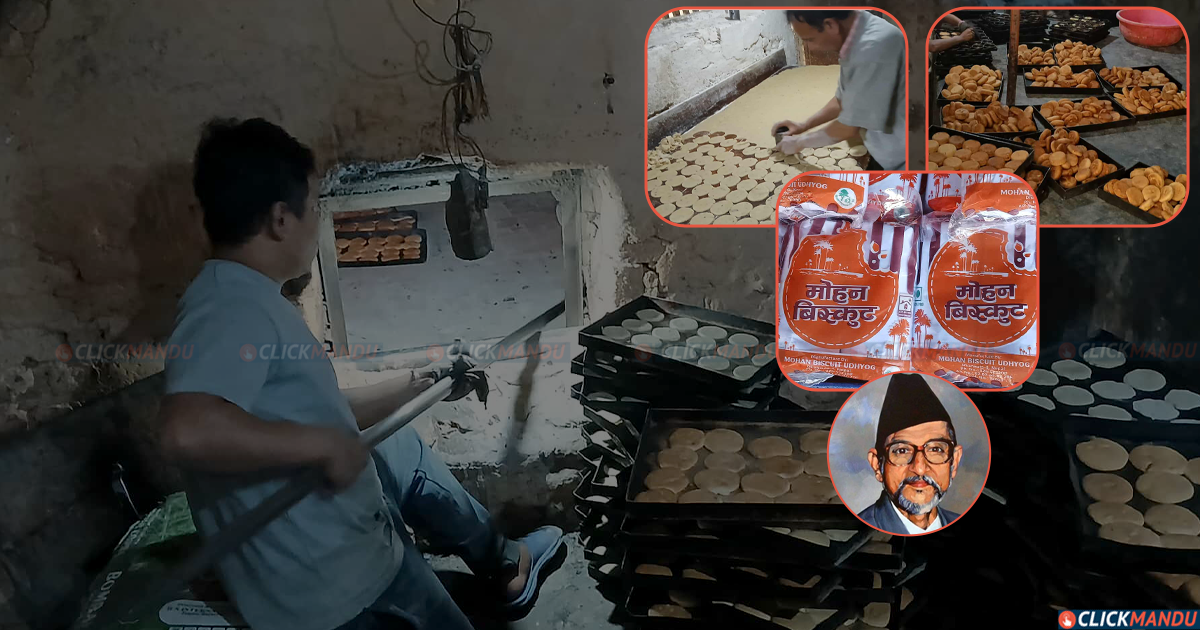

Dhankuta: In 1954, Purna Bahadur Shrestha opened the town’s first tea and snack shop at what is now the site of the army camp in Dhankuta. At the time, Dhankuta served as the administrative hub of eastern Nepal, and all official work was conducted from that area, then known as Gauda. Today, the same place is identified as Salleri Chowk in Debrebas, next to the army camp.
Anyone visiting the area for administrative work would inevitably stop by Purna Bahadur’s shop, not just for tea but also for a simple snack of roasted chickpeas and beaten rice. Over time, regular customers began asking for variety and new flavours. One of them was Bishweshwar Prasad Koirala, the founding leader of the Nepali Congress.
During his frequent visits to Dhankuta for political activities and party organization, Koirala would regularly drink tea at the shop and eat chickpeas and beaten rice as snacks. Eventually, he suggested that Purna Bahadur introduce biscuits as an alternative snack. Biscuits were not commonly available at the time, but encouraged by the suggestion of one of the country’s most prominent leaders, Purna Bahadur improvised. He mixed wheat flour with pieces of coconut, baked it over an open fire, and sold it as biscuits.
Soon after, he set up a small clay oven next to the tea shop. He kneaded wheat flour like flatbread dough, mixed in coconut pieces, rolled it out, cut it into round shapes using a glass, and baked them over fire. That marked the beginning of coconut biscuit production in Dhankuta.
Even after biscuit production began, BP Koirala continued to visit the shop. While enjoying tea with coconut biscuits, he praised their taste. Recalling those moments, local resident Ishwar Akela said Koirala encouraged Purna Bahadur to continue making biscuits and to run the business more systematically. From that point on, the small enterprise began to take a more organized form.
According to Akela, the business started by Purna Bahadur was later continued by his son Mohan, eventually becoming what is now known as Mohan Biscuit Industry. Established 71 years ago with an initial investment of just five rupees, it is widely regarded as Dhankuta’s first industry and has since become a symbol of the district itself.
In its early years, the business did not even have a registered name. Mohan Shrestha says the industry was formally registered only in 1973. That year, it was registered as Mohan Biscuit Industry at the then District Panchayat and has operated under that name ever since. Its records are now maintained under the Office of Cottage and Small Industries.
Mohan also recalls that after biscuit production began at the tea shop, his father Purna Bahadur gradually became known by a different name. Since the idea of making biscuits came from BP Koirala, people began calling his father Bishweshwar. Mohan says his father’s stature and manner of speaking also resembled Koirala’s, and once coconut biscuits became popular, everyone started referring to him as Bishweshwar instead of Purna Bahadur. In Dhankuta, he adds, hardly anyone recognizes his father by his original name, as both the man and the industry became associated with Bishweshwar.
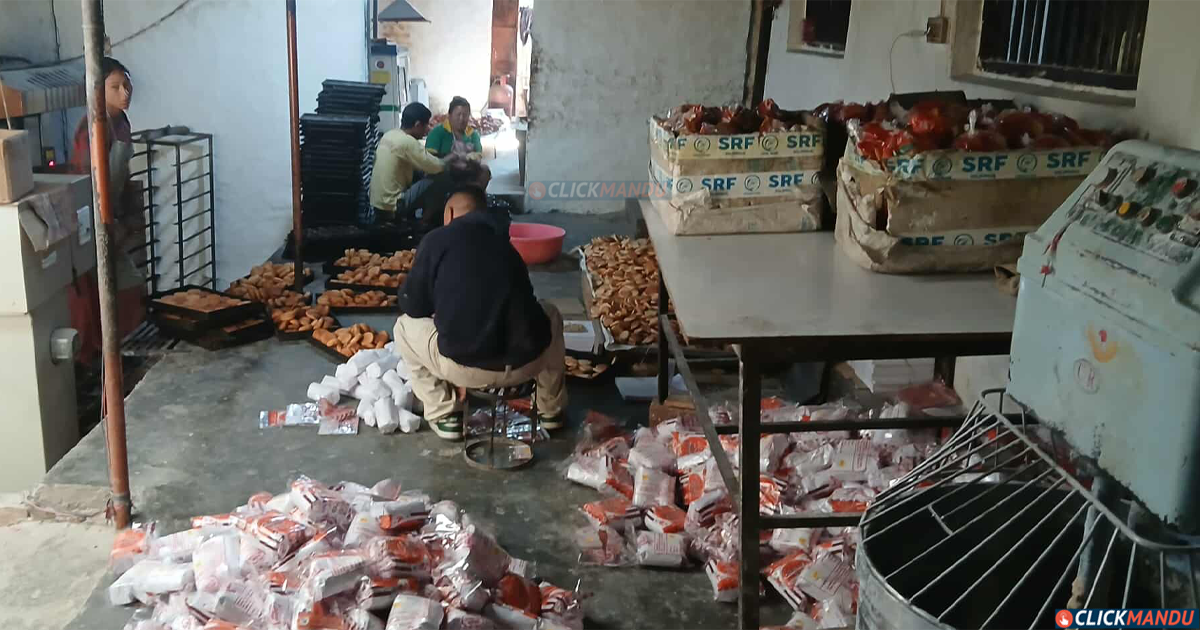
After land in Debrebas’s Salleri Chowk was acquired for the army camp, the biscuit industry relocated to Ghale Tole in Dhankuta-4, where it now operates. What began as a single product made from wheat flour and coconut has expanded into 14 different biscuit brands.
Today, Mohan Biscuit has become an unmistakable identity of Dhankuta. No one leaves the district, or returns home after visiting, without carrying these biscuits as a gift. Local resident Shambhu Pradhan told Clickmandu that Mohan Biscuit has become both a preferred souvenir for guests and a defining symbol of Dhankuta.
Started seven decades ago with a capital of just five rupees and a single worker, the industry now employs 18 people. Its operating capital has grown to two million rupees. According to operator Mohan Shrestha, the factory produces and sells biscuits worth nearly 17.5 million rupees annually, yet still struggles to meet market demand.
What began with coconut biscuits has expanded to include khasta, donuts, cookies, fruit cake, bread loaves, and other bakery items. The main markets for these products are Dhankuta, Tehrathum, Dharan, Sankhuwasabha, and Kathmandu. Beyond regular distribution, many customers buy directly from the factory, especially visitors who take the biscuits home as gifts.
Apart from supplying products to Bhedetar in Dhankuta, most customers come directly to the factory to make purchases and carry them back themselves. There is no concern about finding buyers; the real worry is the inability to meet growing demand. Co-operator Nina Shrestha says sourcing enough flour and sugar has become increasingly difficult.
To meet daily demand, the industry requires around 300 kilograms of refined flour and at least 100 kilograms of sugar. Shortages of sugar have repeatedly disrupted production. Nina explains that Nepali sugar is rarely available, forcing the industry to rely on expensive Indian sugar smuggled across the border. Such sugar does not come with VAT invoices, which in turn exposes the business to scrutiny from revenue authorities.
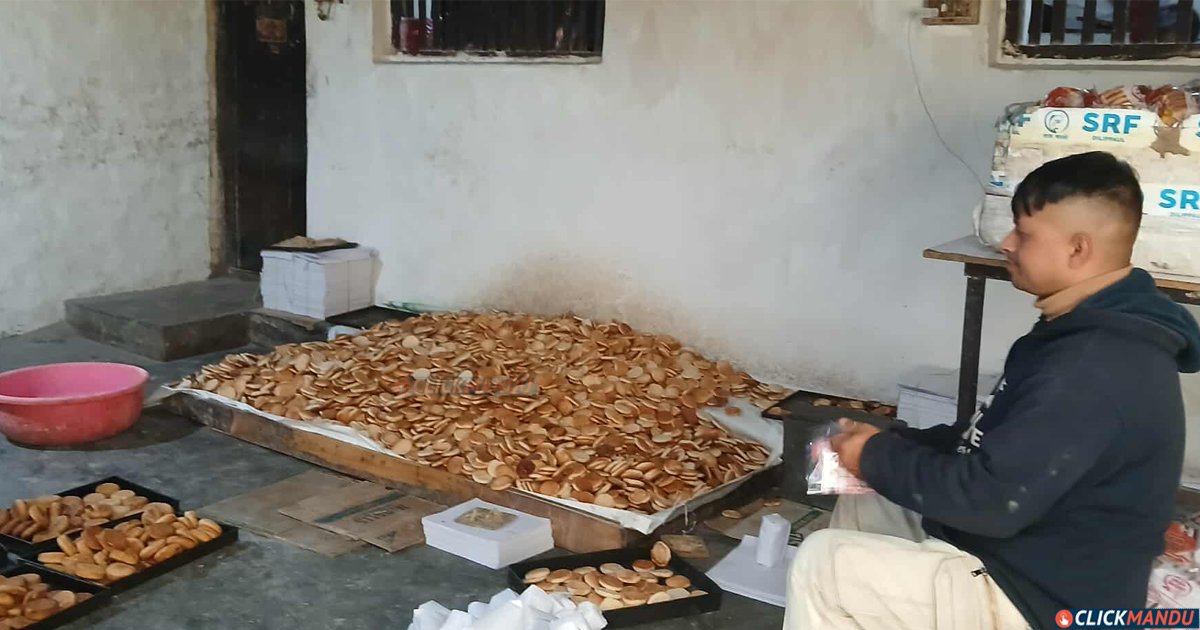
She criticized the government for failing to create an environment where industries can legally purchase sugar with proper VAT bills. With easier access to raw materials, she said, the factory could increase production and generate more employment. Instead, she argues, the state does not play a supportive role and indirectly pushes small industries into legal and financial risks.
Dhankuta is home to 4,238 cottage and small industries, including 19 biscuit factories. According to Arjun Karki, an officer at the Cottage and Small Industries Office in Dhankuta, Mohan Biscuit Industry stands out as a true identity of the district. He notes that aside from Mohan Biscuit, few other local brands have gained similar recognition in Dhankuta and surrounding areas.
Karki adds that entrepreneurs frequently complain about being unable to produce according to market demand due to shortages of essential raw materials like sugar, highlighting a persistent challenge faced by small industries across the region.

Comment Here