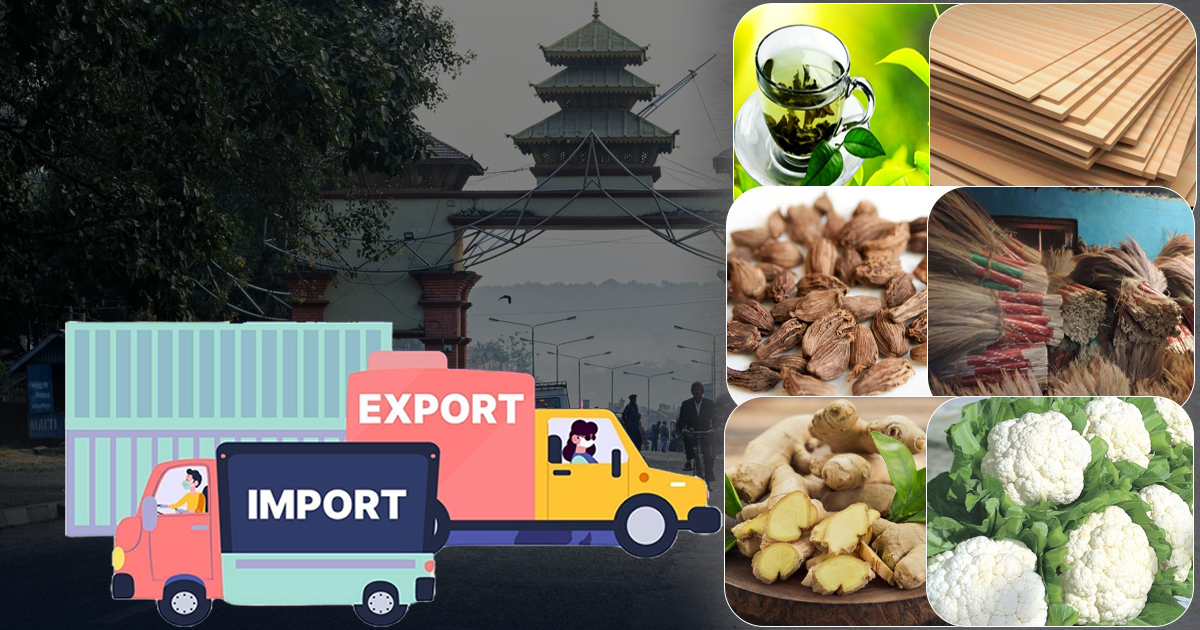

Kathmandu: Business leaders in Nepal have stressed the need for a long-term national strategy to reduce imports and significantly boost exports, arguing that export-led growth must be treated as a core economic priority.
Speaking at a press conference organized by the Nepal Export Council on the occasion of the 10th Export Day, entrepreneurs emphasized that sustainable economic development is not possible without placing the export sector at the center of national policy. They said exports should be advanced with the same level of urgency and commitment as other strategic sectors of the economy.
Council President Naresh Lal Shrestha said exports form the backbone of the national economy and must be strengthened through stable policies, an investment-friendly environment, and the effective implementation of export-promotion programs. He noted that without policy continuity and long-term planning, Nepal’s export sector would remain fragile and unable to contribute meaningfully to economic growth.
Shrestha highlighted that exports have a direct and positive impact on domestic production, employment, income generation, and capital inflows. He argued that Nepal needs to identify and develop new exportable products and move forward with a long-term vision rather than relying on short-term or opportunistic trade trends.
He pointed out that Nepal’s export share in total foreign trade remains very low, which has contributed to a widening trade deficit. While products such as soybean oil and palm oil account for a large portion of current exports, he warned that this model is unsustainable because it depends heavily on imported raw materials. As a result, such exports fail to create lasting value within the domestic economy.
Shrestha also expressed concern that Nepal is increasingly exporting labour rather than goods, with foreign employment becoming a substitute for productive domestic trade. He said there is significant potential to replace imports by increasing agricultural production and exporting value-added agricultural products. However, he criticized the government for discontinuing export subsidies starting from the last fiscal year 2024/25, arguing that such incentives should be restored and sustained to encourage exporters.
Council General Secretary Hari Dhakal echoed these concerns, emphasizing that export growth requires domestic production of raw materials and the strategic identification of products that can compete in international markets. Without strengthening the supply base at home, he said, export ambitions would remain largely theoretical.
According to the Nepal Export Council, exports continue to struggle due to a range of structural challenges. These include inadequate infrastructure, high transportation costs, a shortage of skilled manpower, and limited access to affordable credit and financial services for small entrepreneurs and exporters. The council also pointed to weaknesses in quality control, a lack of cold storage and warehousing facilities to preserve perishable goods, and the inability to maintain product freshness for export markets.
Political instability and policy uncertainty were cited as additional obstacles, along with high energy prices, expensive raw materials, and rising production costs, all of which undermine Nepal’s ability to compete internationally. Business leaders warned that unless these systemic issues are addressed through coordinated and long-term reforms, Nepal’s export sector will continue to underperform, leaving the country trapped in a cycle of rising imports and persistent trade deficits.

Comment Here