
Kathmandu: The country is marking 70 years since the initiation of planned development. Despite the adoption of a federal governance system, the expected level of coordination in planning and implementation among the federal, provincial and local governments is yet to be achieved.
The continuation of a centralised approach, unclear division of responsibilities and weak implementation mechanisms have prevented development from gaining the desired momentum. Duplication of projects and inefficient budget allocation are among the major factors hindering expected outcomes in the development sector, according to National Planning Commission (NPC) Vice Chair Dr Prakash Kumar Shrestha.
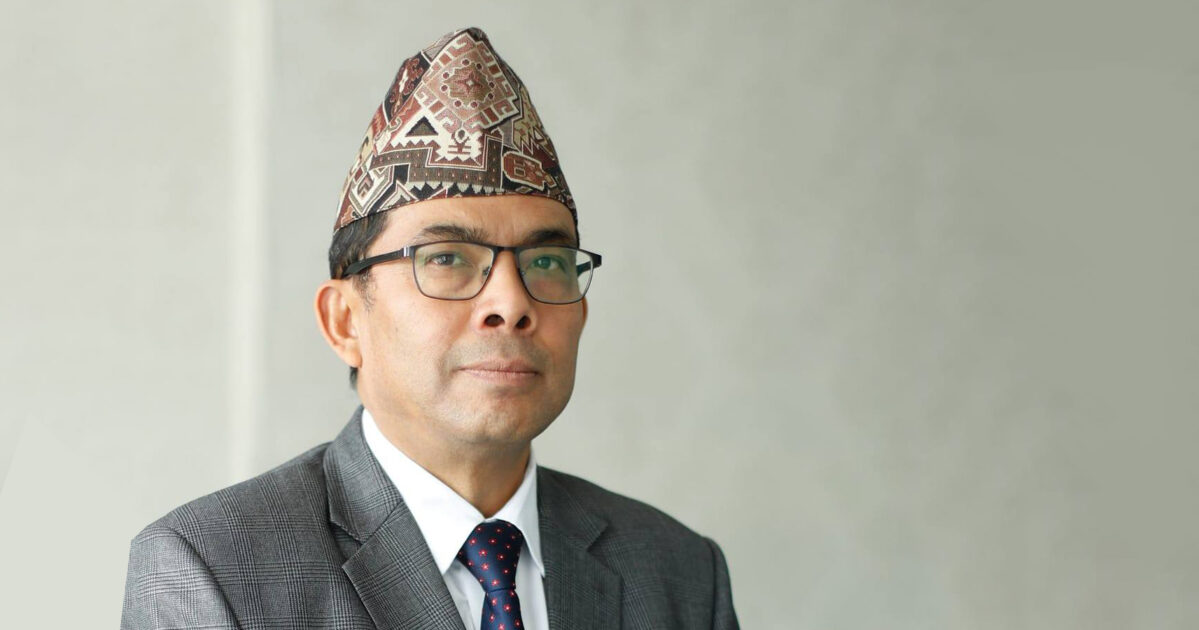
He said that a centralised mindset, the tendency to keep even small projects under the purview of the centre, incomplete implementation of initiatives such as the Project Bank, and political instability pose major challenges to development. Dr Shrestha has previously served as the NPC member, Executive Director of Nepal Rastra Bank, Vice Chair of the NPC Lumbini Province, and advisor to the Ministry of Finance.
He has extensive experience in economic policy and development planning. He holds a Master’s degree in Economics from Australia and a PhD from the United States. Currently serving as NPC Vice-Chair, Dr Shrestha was appointed by the incumbent government formed after the Gen Z movement. Presented below are edited excerpts of an interview conducted by RSS Feature Section Chief Krishna Adhikari and correspondent Nabin Paudel.
The interview focuses on development planning and implementation, the national economy, youth migration and budget formulation.
Q: How do you assess the 70-year journey of planned development in Nepal?
A: Nepal had officially entered the phase of planned development in 1956. This was about five years earlier than South Korea and a few years later than our neighbours China and India launched the planned development approach. Compared to the development scenario of 1956 (2013 BS), Nepal has achieved notable progress. However, the pace and scale of achievements lags behind those of many other countries. The main problem lies in weak implementation. Therefore, our overall achievements during this period are mixed. Despite Nepal’s long-standing adoption of liberalisation and privatisation, we have not completely moved away from the practice of planned development. We continue to guide government development efforts through periodic plans. However, weak implementation has left many plans confined to documents, preventing the attainment of expected results.
Q: Nepal is implementing the 16th Periodic Plan. How do you see its progress?
A: We are currently in the second year of implementing the 16th Periodic Plan, which was formulated by breaking away from previous traditions. It is thematic in nature and strongly implementation-oriented. A committee, in which I was also involved, held extensive discussions and spent nearly a year drafting the plan. We still have three years remaining to complete its implementation. The plan will guide budget formulation by the ministries, and we hope it will help achieve the targeted goals.
Q: What are the major reasons behind weak side of plan implementation?
A: Political instability is the main reason behind ineffective implementation of plan. Change of political leadership time and again and their separate policy, instability in bureaucracy, lack of capacity, frequent transfer, lack of financial resources and non-efficiency in allocation are also the reasons. The priorities of the government are changed frequently, more attention is paid on small projects as well as a situation has been created where major transformative works are unnoticed due to political instability. This has created problem in implementation of inclusive policy and strategies in plans.
Q: How do you evaluate the country’s economic situation?
A: Nepal is moving ahead towards economic development but in a snail pace. Our per capita income has reached to around 1,500 US dollar from 1,300 US dollar. There is an improvement in indicators like the average life expectancy and literacy but our economic condition is not that satisfactory as compared to other countries in South Asia except countries with conflict. Our economic growth rate is limited in average four percent. Though the average seven per cent economic growth rate was achieved in three consecutive years before corona, it did not continue. Currently, investment is weak, loan disbursement is slow, private sector is discouraged and government’s capital expenditure is disappointing. In overall, Nepal’s economic condition is not that much satisfactory.
Q: How effective have you found the coordination between centre, provinces and local levels in plan making and implementation?
A: After federalism, three-tier of governments make budget at 761 levels. It seems that financial resources have been provided to federation, provinces and local levels to support development, but it is not enough. The leadership-centric mindset has still existed. Though the local levels can carried out activities of small projects, the practice of allocating budget by the centre still persists, which has increased duplication. The National Planning Commission has forwarded a concept of ‘Project Bank’ which works to coordinate from selection of plans to their implementation. It has been expected that the possibility of duplication will be lessen as project details are shared in all three-levels through this system based on information technology. So emphasis will be given on its effective implementation.
Q: How do you see the relevance of the National Planning Commission in the federalism?
A: Yes, there are opinions that there is no need of the NPC in several countries adopting the market economy. But considering the state of development in Nepal, the Planning Commission still seems indispensable. The NPC’s role is important in coordination, guidance, and the selection of projects based on national priorities. The formation of separate planning commissions by each province in the current situation also confirms the need for a national-level planning commission. However, it seems that the role of the commission has been weakened due to the inability to strengthen human resources, institutional capacity, and its jurisdiction in a timely manner.
Q: How can the problem of increasing youth migration in the country be addressed?
A: Migration is a global human process. The trend of youths going abroad in search of better opportunities, education, and employment has increased. There is no situation in which young people wanting to go abroad can be forcibly stopped. The solution, however, is to create employment at home, accelerate the pace of development, and create a livable environment like elsewhere. Currently, the country is experiencing both unemployment and a shortage of labour, which is also contradictory. On one hand, there is a shortage of labour in sectors like production, agriculture, and construction. Our youths tend to seek white-collar jobs domestically but are reluctant to work in areas such as production. Now it is not enough to just point out problems; we must create an environment in our country that can prevent the migration of youth. Therefore, by opening industries and factories in the country, creating a business-friendly environment, and making it possible to use the skills, capital, and experience of non-resident Nepalis within the country, the problem of youth migration can be solved.
Q: What preparations has the Planning Commission made for next year’s budget and what should the budget be like?
A: Our constitution has stipulated that the budget must be presented on the 15th of the Nepali month of Jestha. Although the current government is an election-focused interim government, the National Planning Commission has already begun its regular preparations to lay the groundwork for budget formulation. The work of collecting plans, estimating resources, and preparing grants from various ministries, provinces, and local levels continues consistently. The Commission is currently focused on preparing the budget based on the fundamental aspects of the plan. The government that comes after the election will bring its budget by focusing on policy priorities based on this plan. Creating a foundation that enhances good governance, transparency, and the pace of development is the main responsibility of the current government and the National Planning Commission.

Comment Here