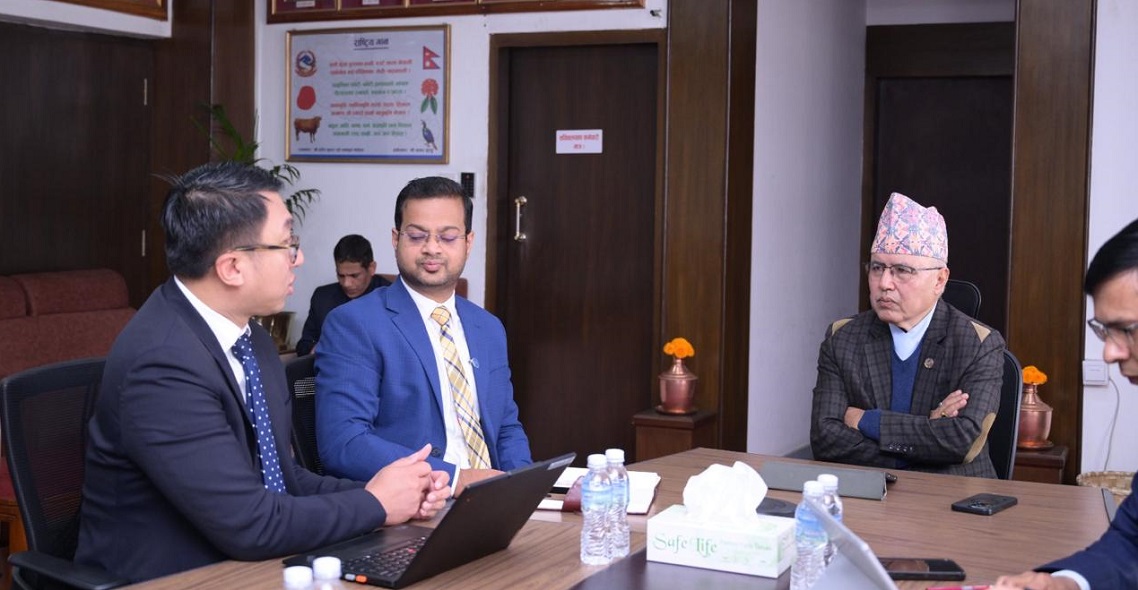

Kathmandu: A technical team from the International Monetary Fund (IMF) has wrapped up a visit to Nepal aimed at helping the government strengthen governance and curb corruption, following a request from Nepali authorities.
The delegation, led by Jonathon Pampolina, held meetings with a wide range of stakeholders from January 12 to 21 before departing, and is expected to publish a report soon based on its nine-day assessment.
The mission’s objective was to identify both strengths and vulnerabilities in Nepal’s economy and institutional framework, and the IMF says it will recommend a set of reform measures and an action plan to address gaps.
The work falls under the IMF’s 2018 Enhanced Governance Framework, focusing on areas where risks related to governance weaknesses and corruption are most significant, and helping define foundational priorities for what it calls Governance and Corruption Diagnostics (GCD).
During the visit, the team consulted extensively with key state bodies including the Ministry of Finance, Nepal Rastra Bank, the Constitutional Council, Supreme Court, Judicial Council, Public Service Commission, Commission for the Investigation of Abuse of Authority, Office of the Attorney General, Office of the Auditor General, National Planning Commission, National Information Commission, National Vigilance Centre, Financial Information Unit, Ministry of Law, Justice and Parliamentary Affairs, Ministry of Industry, Commerce and Supplies, Financial Comptroller General Office, Inland Revenue Department, Customs Department, and the Special Court.
According to the IMF, discussions covered challenges ranging from the business environment to public administration, as well as ongoing efforts to fight corruption.
The Fund expressed appreciation for Nepal’s stated commitments to improving governance and tackling corruption.
Another GCD mission is planned in the coming months, after which the full report will be released.
The IMF says the document will provide a detailed picture of corruption risks and patterns in Nepal, identify institutional weaknesses and high-risk areas, and support the government’s efforts to strengthen integrity and accountability.

Comment Here