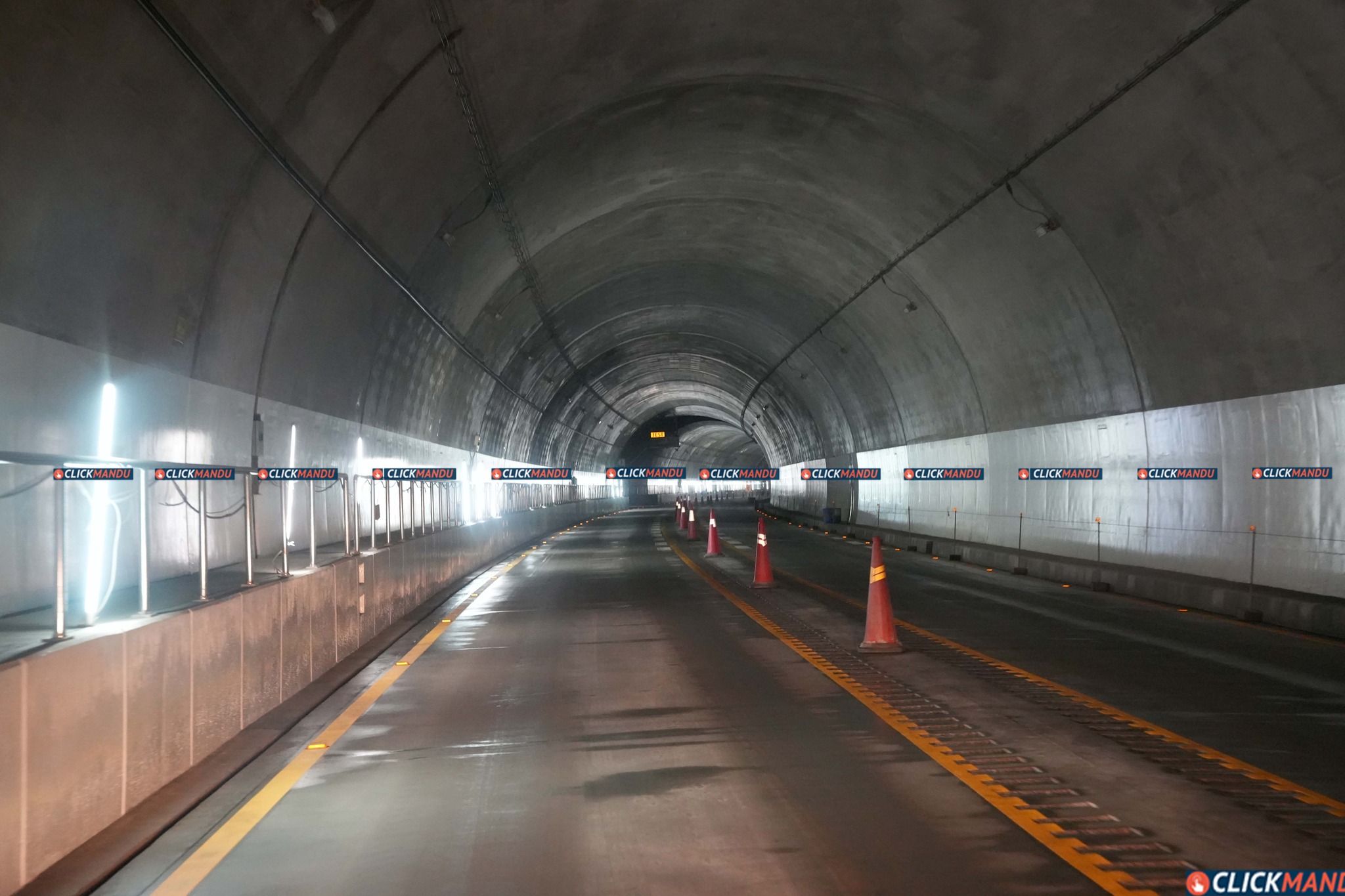

Kathmandu: The Nagdhunga-Sisnekhola Tunnel is Nepal’s first modern mountain road tunnel. Recently, it has become a geopolitical flashpoint at the intersection of competing visions for Nepal’s infrastructure development. While the tunnel itself promises significant economic and mobility benefits, the struggle over who will build and operate it reflects deeper strategic competition between Japan and China over influence in Nepal.
The Nagdhunga Tunnel is an under-construction two-lane highway tunnel linking Nagdhunga in Kathmandu with Sisnekhola in Dhading on the Tribhuvan Highway, spanning approximately 2.70 kilometres and designed to improve safety and efficiency on one of Nepal’s busiest transport corridors.
The project was financed through a concessional loan from the Japanese government, via the Japan International Cooperation Agency (JICA), amounting to approximately 16.63 billion Yen (roughly Rs 16 billion), with an additional contribution of Rs 6 billion from the Government of Nepal. The loan comes at an ultra-low interest rate, typical of Japan’s Official Development Assistance (ODA) model designed to promote high-quality, sustainable infrastructure in developing countries.
Construction began in 2019, and despite delays due to COVID-19 and other logistical challenges, the tunnel has reached late stages of completion. Major excavation has finished, and ancillary work, such as equipment installation, is underway.
Japan’s messaging emphasizes the tunnel not just as a transport improvement but as a symbol of partnership and technical cooperation, with the Japanese Ambassador to Nepal, Maeda Toru, describing it as “the pride of the country” and highlighting the transfer of advanced construction skills to Nepali engineers.
Japan positions itself globally as a champion of “Quality Infrastructure,” a paradigm that emphasizes durability, environmental safeguards, safety, and skills transfer. In Nepal, this approach has secured long-term projects in hydropower, urban transit, and now, road tunnels like Nagdhunga. This philosophy is rooted in Japan’s broader foreign policy, which seeks to foster institutional trust, technical capacity, and stable economic growth in partner countries.
The choice of a Japanese contractor, Hazama Ando Corporation, exemplifies this model. Japanese firms bring advanced engineering standards, long operational life expectations, and integrated safety features, differentiating the project from shorter-term or lower-quality construction options sometimes associated with other regimes.
Japan’s insistence on the involvement of Japanese firms goes beyond simple preference. It reflects a belief that high-quality construction will prevent negative outcomes such as structural failure, safety issues, or future maintenance burdens. Their influence has extended even into operational contract negotiations, with Japanese officials reportedly urging Nepali authorities that companies blacklisted by major multilateral banks or owned by foreign governments (a clear reference to Chinese state-owned firms) should not be selected to operate and maintain the tunnel. Nepali officers have told the Japanese that they cannot stop the foreign government-owned companies under the existing Procurement Act.
This pressure has stalled the selection of an operations contractor, illustrating how geopolitics is now embedded in decision-making processes that are normally technical and commercial.
Unlike Japan, China did not provide primary financing for the Nagdhunga Tunnel, and Chinese firms did not win the construction contract. However, they are active in participating in the global tender for the tunnel’s operation and maintenance, with companies like China First Highway Engineering Company and Poly Changda Engineering entering the bidding.
Chinese participation in this phase represents a soft but real form of competition. If Chinese firms were selected to operate the tunnel, they would gain a foothold in maintaining critical transport infrastructure in Nepal. This would signal Beijing’s expanding commercial influence, even in projects primarily financed and constructed by other partners.
Japan’s diplomatic efforts to counter this by urging the exclusion of government-owned or blacklisted companies reflect broader geopolitical tension between Tokyo and Beijing for influence in Nepal. Japan, with decades of development experience in Nepal, sees China’s growing role through projects like the Belt and Road Initiative (BRI) as a strategic challenge to its model of transparent and high-quality investment. The standoff over Nagdhunga’s operation contract illustrates this tension vividly.
Nepal must balance the benefits of Japanese soft loans and technical expertise with the reality that Chinese firms will continue to seek access to Nepal’s infrastructure market, given China’s broader investment footprint across the region.
China’s global infrastructure push, under the Belt and Road Initiative, often emphasizes rapid construction and connectivity across regions. Japan’s model insists on high-quality implementation and long-term sustainability. While Nagdhunga was financed by Japan, the tunnel’s operation phase became a key arena for strategic influence, with both powers vying for involvement.
Japan frames the Nagdhunga Tunnel as a partnership, a project that will improve Nepal’s economy and connectivity while building local capacity. This aligns with Japan’s broader soft-power strategy to be seen as a responsible, quality-oriented development partner.
Even when not directly financing a project, Chinese firms seek participation in ancillary roles. Inclusion in operations contracts would allow China to expand its influence in Nepal’s transportation sector, a strategic area for regional logistics and connectivity in South Asia.
Nepal is navigating this competition carefully, with implications that go beyond a single tunnel. Japan’s insistence on quality comes with concessional finance and standards that help ensure infrastructure longevity, a model that can reduce long-term costs and maintenance burdens.
The tunnel’s delayed operational contract (expected to come into force in April 2026) shows how foreign geopolitics can constrain Nepal’s ability to make purely technical decisions, as decisions over which firms can participate are influenced by diplomatic pressures.
Nepal must balance the benefits of Japanese soft loans and technical expertise with the reality that Chinese firms will continue to seek access to Nepal’s infrastructure market, given China’s broader investment footprint across the region.
This competition between Japan and China has already influenced Nepal’s procurement process and exposed the degree to which infrastructure has become a theatre for geopolitical strategy, not just economic development.

Comment Here