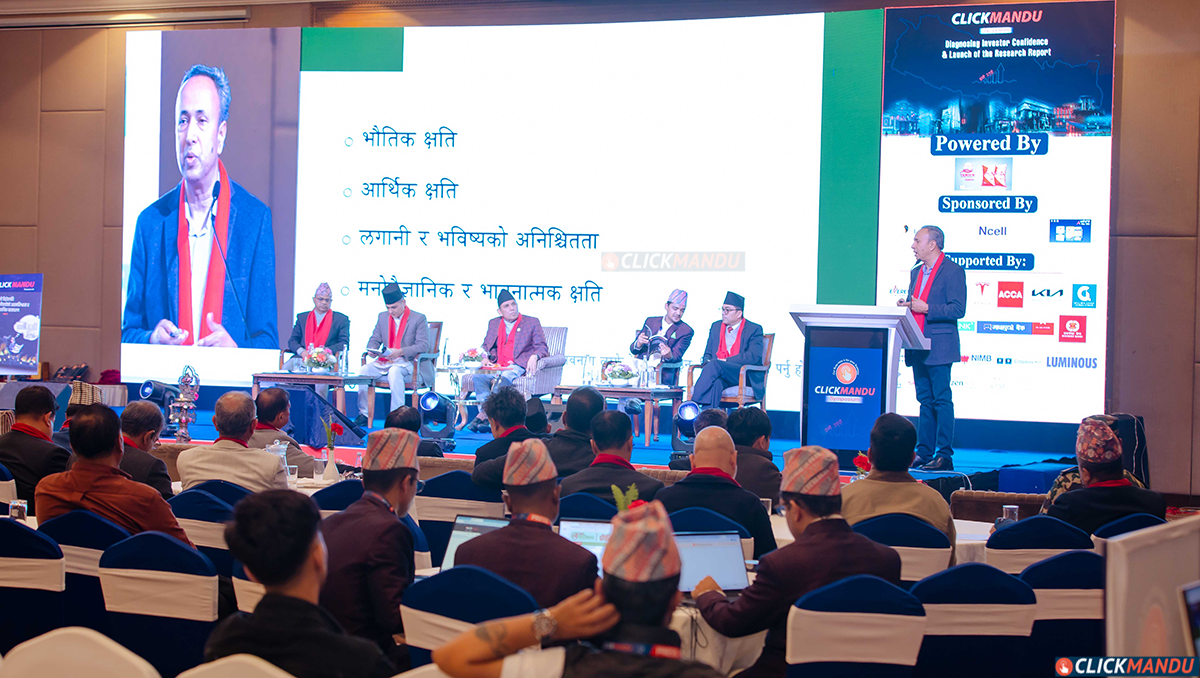

Kathmandu: A sweeping study has found that the recent Gen Z–led protests in Nepal have shaken the morale of the business community, with 98 percent of entrepreneurs reporting a negative impact on their confidence.
According to Investor Confidence and the Business Environment After the Gen Z Uprising 2025, a research report published by Clickmandu.com (Clickmandu Research), the unrest has significantly weakened sentiment across the private sector.
The study was conducted to assess the multidimensional impact of the Gen Z movement on Nepal’s business landscape and to highlight the structural, institutional, and practical role of the private sector in the national economy. The survey covered 121 high-net-worth investors active across industries such as manufacturing, finance, tourism and services, energy, education, healthcare, and construction.
Of those surveyed, 98 percent said their morale had been affected to some degree, ranging from mild to severe, while only 2 percent reported no change. The report further notes that 97 percent of respondents believe the investment climate has deteriorated, with 22 percent describing the impact as severe.
As a result, 70 percent of business owners said they have adopted a “wait-and-watch” approach to new investments, a clear sign of eroded confidence. Despite this caution, the study found no overwhelming resistance to future investment. While 8 percent said they would not increase investment under any circumstances, 21 percent expressed willingness to invest more, provided conditions improve.
The report identifies rumors and misinformation as the primary triggers behind attacks on businesses and private property during the protests. Sixty-nine percent of respondents said such false narratives fueled violence against the private sector. Entrepreneurs also pointed to negative perceptions of wealth creation, as well as personal grudges and pent-up resentment, as contributing factors.
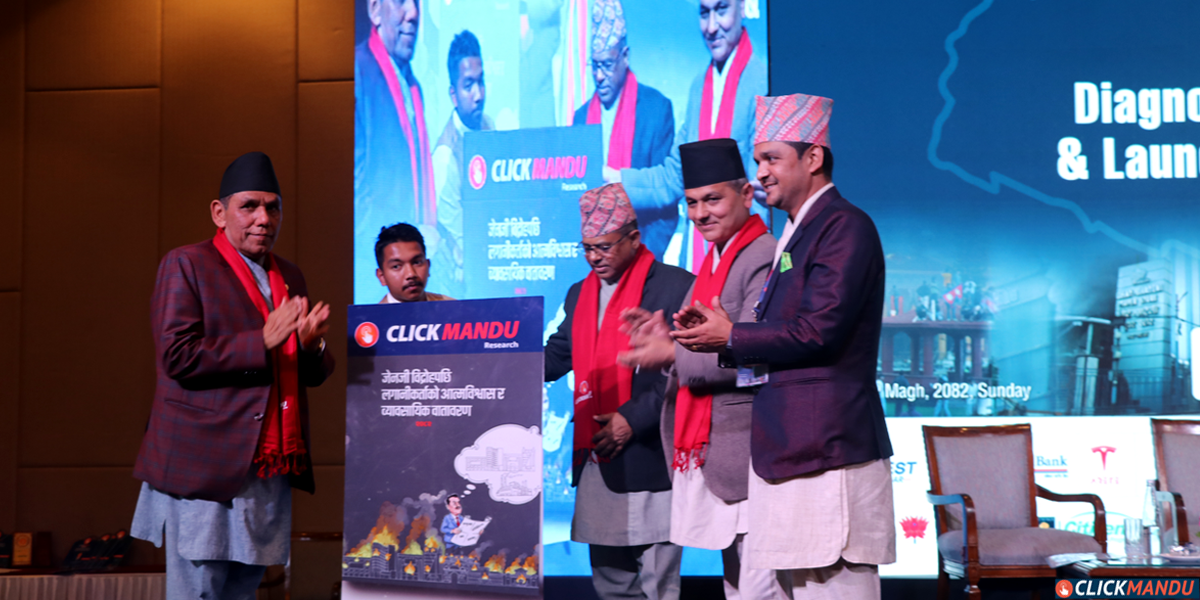
Clickmandu’s assessment concludes that the protests inflicted deep psychological and economic scars on Nepal’s established business community. While physical damage was extensive, the loss of trust and confidence was found to be far more alarming. According to the report, damage to morale has outweighed losses from arson, vandalism, and looting.
An analysis of the nature of losses shows that 67 percent of respondents suffered psychological trauma, while 54 percent said their market operations were directly affected. The study emphasizes that the emotional toll on entrepreneurs is more severe and long-lasting than material destruction.
The digital survey questionnaire included demographic, objective, and subjective questions, and more than half of respondents had total investments exceeding Rs 5 billion. Many were seasoned entrepreneurs: 64 percent had over 20 years of experience, and 48 respondents reported that each of their businesses directly employed more than 1,000 people. Several investors were active in multiple sectors.
Investment concentration was highest in industry and finance, with 46 percent of respondents invested in manufacturing and 37 percent in the financial sector. Geographically, 83 percent operated businesses in Bagmati Province, while 29 percent had investments in Karnali Province.
The report found that 46 percent of respondents suffered direct physical losses during the unrest, amounting to nearly Rs 25 billion in total, with an average loss of Rs 440 million per business. Additionally, 21 percent reported attacks not only on their enterprises but also on personal homes and vehicles.
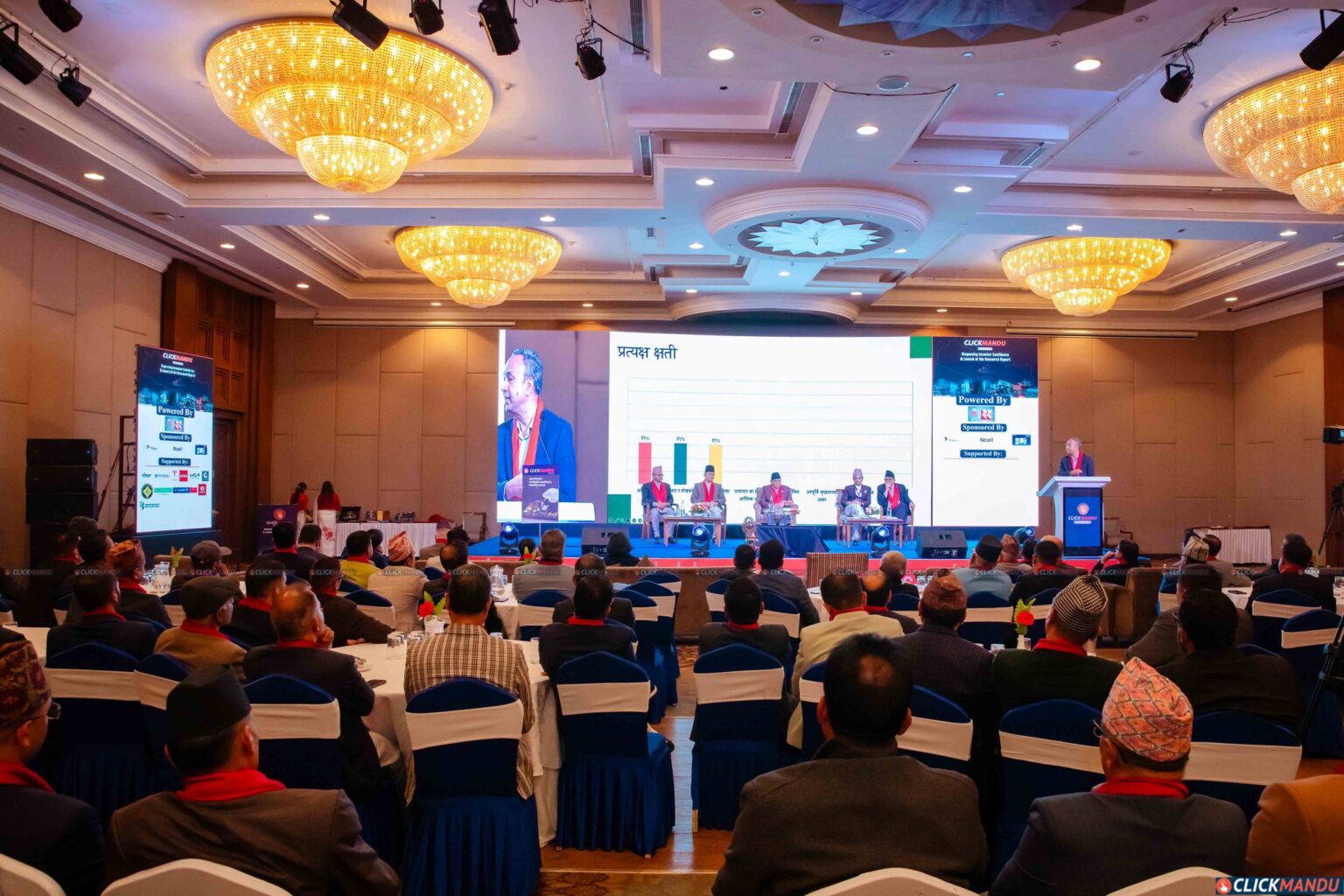
The findings were made public at an event held on Sunday at the Soaltee Hotel in Kathmandu. The report describes an atmosphere of extreme frustration, insecurity, and uncertainty among entrepreneurs. Many, it notes, are grappling with despair and fear about the future of doing business in Nepal.
According to Clickmandu Research, some entrepreneurs have begun to question whether investing in Nepal was a mistake. Watching businesses built through years of effort collapse before their eyes has left many suffering from post-traumatic stress. With private-sector confidence at a historic low, new investment plans have been shelved, and some investors are even contemplating capital flight.
The report warns that the perception of Nepal as an unsafe investment destination has further diminished prospects for foreign direct investment. Entrepreneurs also expressed concern over a growing narrative that labels business owners as “profiteers” or “exploiters,” rather than recognizing them as drivers of employment and revenue generation.
Clickmandu attributes this negative public attitude partly to the failure of media, political parties, and the education system to foster respect for entrepreneurship. The absence of a culture that values enterprise has, the report argues, fueled public distrust of the private sector.
While physical and financial damage may be repaired over time, the trauma inflicted on entrepreneurs is likely to endure. The report estimates that vandalism and arson targeting industries, banks, commercial establishments, and vehicles during the protests caused losses of around Rs 34 billion to the private sector.
Indirect economic losses are described as even more severe, estimated at approximately Rs 81 billion, an impact that could shave up to 5 percent off Nepal’s gross domestic product. The report notes that just two days of violent unrest caused serious damage to physical infrastructure, production systems, and service delivery, disrupted supply chains, and put millions of jobs at risk.
In the financial sector, the unrest has affected loan recovery, reduced credit demand, and led even capable borrowers to delay repayments. The insurance sector has seen a sharp rise in claims. However, the report adds that swift government steps following the protests, aimed at restoring law and order and announcing immediate relief measures, have provided a glimmer of hope for investors.
The study calls on the state to play a strong “guardian role” by guaranteeing full security for investment and private property. It stresses the urgent need for policy continuity and political stability, warning that without a sense of safety and respect, both domestic and foreign investment ambitions will remain unfulfilled.
To rebuild confidence, the report recommends enhanced security and legal assurances for businesses, including the creation of an industrial security force and the designation of industry, commerce, and service zones as “special security areas” supported by rapid response mechanisms. It also urges the government to ensure that those involved in looting, vandalism, and arson are prosecuted without political protection.
The report emphasizes that the government must demonstrate in practice that no one is above the law. It further suggests publishing a 10-year “economic stability roadmap” to prevent abrupt policy shifts with each change of government.
Clickmandu also urges the state to present the private sector to the public as a partner in economic progress, acting as a facilitator rather than a harasser in tax administration, and as a protector of investment. At the same time, it calls on business leaders to distance themselves from political affiliations to counter allegations of conflict of interest and political collusion.
Additional recommendations include declaring industries and businesses as peace zones that cannot be shut down during protests, establishing an “economic intelligence” bureau under direct police oversight to prevent attacks on entrepreneurs, and developing a clear roadmap to address youth frustration and demands for equal opportunity.
Finally, the report stresses the need for swift action through economic diplomacy to counter the global perception that Nepal is unsafe for investment following the Gen Z protests, and to restore confidence in the country’s investment climate.

Comment Here