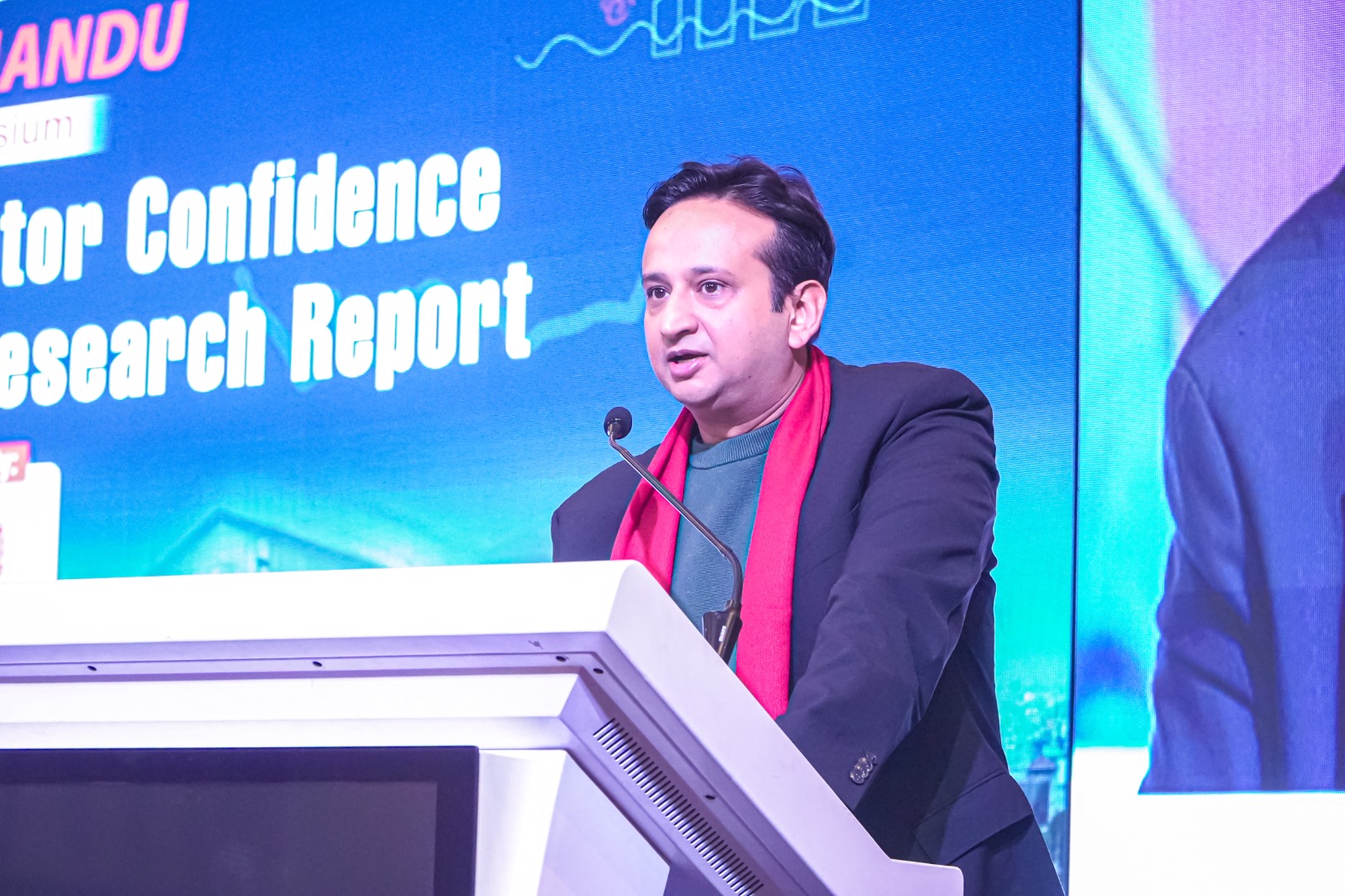

I stand here today on behalf of the Confederation of Nepalese Industries (CNI) to share a few reflections on our shared journey. As I see many international guests and partners in the audience, I will address this gathering in English to ensure the gravity of our message transcends borders.
We have just reviewed an exceptionally well-researched report prepared by Clickmandu. The data is empirical, the analysis is rigorous, and the conclusions are undeniable. Because the facts are so clearly laid out in that document, I have decided to forego my prepared, formal remarks. Instead, I want to speak to you from the heart, sharing the experiences of twenty-five years on the front lines of Nepal’s private sector.
I returned to Nepal after completing my education abroad twenty-five years ago. In that quarter-century, I have witnessed a whirlwind of change and a staggering lack of continuity. We have seen more than fifteen governments come and go. In the early 2000s, we endured a brutal civil war that lasted for years. It was a period of profound uncertainty; a challenging time for industries to breathe, for investors to plan, and for anyone harbouring the ambition to innovate within our borders.
More recently, we witnessed the Gen Z protests. The speed and intensity of that movement sent shockwaves through the private sector, forcing us to question the very essence of our safety, security, and the social contract we operate under. However, if my twenty-five years here have taught me anything, it is that we have navigated much darker waters. We have survived deep economic crises, strict curfews, active conflict, and perpetual political instability.
This history has forged a private sector that is perhaps one of the most resilient in the world. We are battle-hardened. Our ability to bounce back, to reinvest, and to push the economy forward despite the headwinds is a testament to the grit of the entrepreneurs in this room. I speak on behalf of my colleagues when I say: we are still here, we are still hopeful, and we are still standing tall with the conviction that Nepal’s best days are ahead.
I will not dwell on the familiar tropes of instability or corruption. I will not even compare our investment climate to our regional neighbors. At this stage, that feels like a far-fetched luxury. Instead, let us look at the fundamental issues. Based on my experience, the recent youth unrest was not merely about political disagreement; it was about a profound deficit of trust. The underlying catalyst was, and remains, unemployment.
While official statistics might peg unemployment at 10 percent, the reality on the ground for our working-class youth is much grimmer, likely hitting 30 percent to 40 percent. This is the dry tinder that fuels frustration. When 3,000 young people leave this country every single day, we are witnessing a hemorrhage of our future. Our economy is being sustained by the toil of those working abroad, while we fail to create a landscape where they can thrive at home.
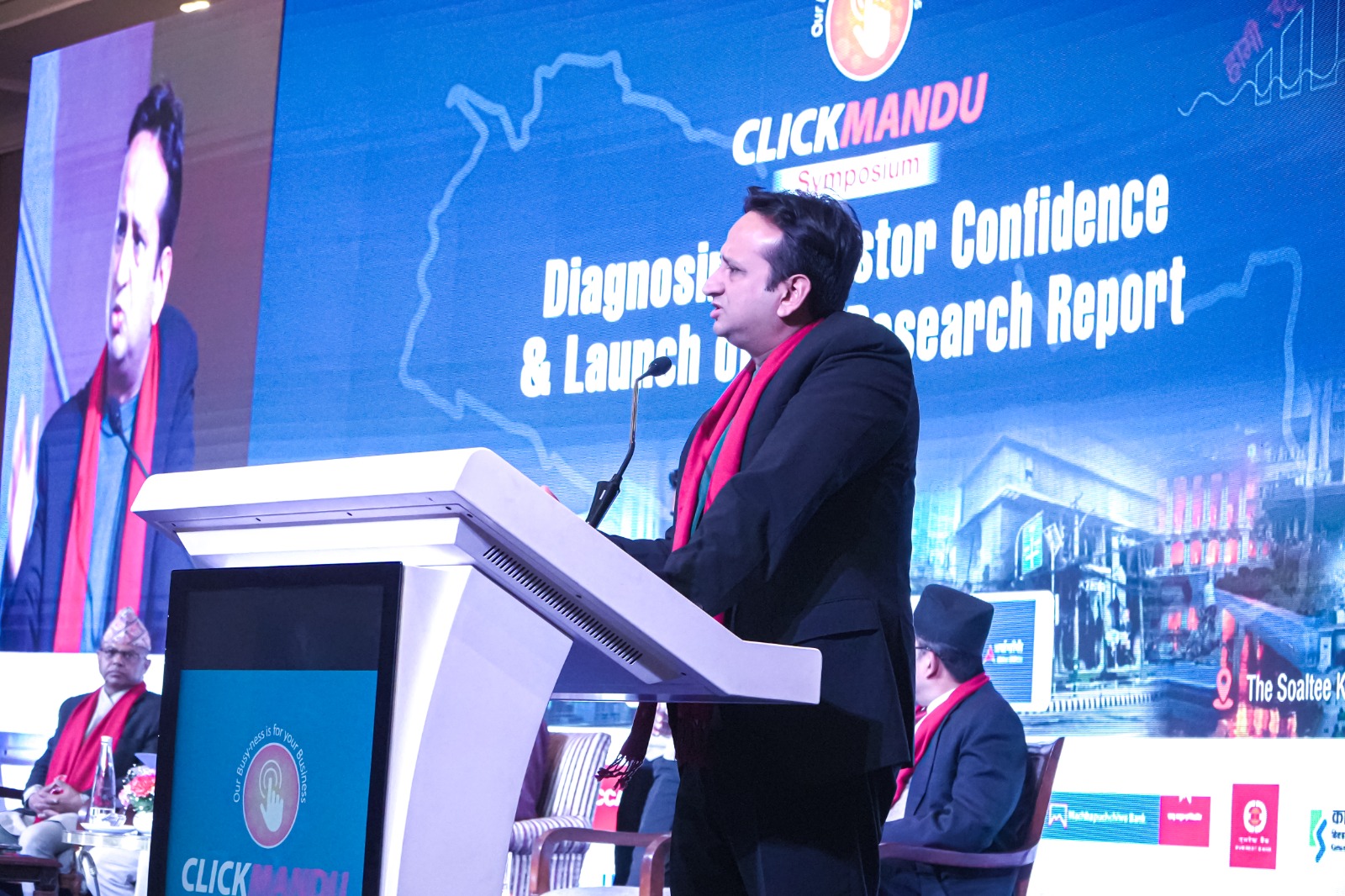
During these recent times of unrest, I found myself doing something I had not done in twenty-five years. I have always been a staunch advocate for Nepal’s prosperity and an optimist regarding our potential. But for the first time, I felt the weight of the skeptics. Our group is among the largest taxpayers in the country. We provide livelihoods for over 30,000 people. Over the last decade alone, we have invested more than half a billion dollars into this land, and we continue to do so.
When I hear close friends and respected members of the business community say, “Enough. It is time to look elsewhere. There are so many easier opportunities outside,” it gives me pause. Yet, my conscience did not allow me to entertain that thought. This is my country. This nation gave my family and me our identity, our respect, and our purpose. It is my moral duty and my solemn obligation not just to remain here, but to be a catalyst for this country’s growth.
The tagline “Hami Uthchau” (We Shall Rise) is not just a slogan; it is a certainty. We will rise. The only variable is how fast. The roadmap for that acceleration is clearly articulated in the report we saw today.
The question then arises: Does the government need to “worry” about the private sector as a priority? My answer is no. We are strong enough. We possess the resilience to bring new ideas and new capital to the table. Should the government worry about attracting Foreign Direct Investment (FDI)? Again, the answer is no, at least not in the way they think.
Let me provide a concrete example. Over the last five years, despite the turmoil and the instability, I was in talks with one of the world’s largest power companies. They were ready to invest over a billion dollars in Nepal. But because our government did not put the economy at the center stage of its priority list, those billion dollars vanished. Ten years ago, one of the world’s leading airport management firms wanted to invest a billion dollars to upgrade our entire aviation infrastructure. They were blocked. We lost another billion. From solar and hydro to telecom and infrastructure, our partnership alone has seen over five billion dollars in potential investment slip through our fingers in the last five years.
The government does not need to “court” FDI through empty rhetoric. FDI will flow naturally the moment those of us already investing in Nepal feel secure. If the domestic investor feels confident, the international investor will follow. Confidence is contagious, but so is fear.
Our immediate priority is a shift in national consciousness. I commend Clickmandu for organizing this event and stressing this point. We must recall the 1992 U.S. Presidential campaign of Bill Clinton. He realized that regardless of foreign policy or social debates, the core of a nation’s health is simple: “It’s the economy, stupid.” He understood that if you fix the economy, you fix the country.
As elections approach, we need leaders who recognize the systemic importance of the private sector not as a cow to be milked, but as an engine to be fuelled.
We saw a similar transformation in India in the early 90s. When the country faced bankruptcy, Prime Minister Narasimha Rao summoned Dr. Manmohan Singh from the IMF/World Bank. Dr. Singh famously protested, saying he didn’t understand politics. Rao’s response was legendary: “You leave the politics to me. You drive the economy; that is what you are good at.” That separation of political maneuvering from economic stewardship allowed India to open up its aviation, automobile, and tech sectors, creating the global powerhouse we see today. Nepal experienced a glimmer of this in the 90s during our own period of liberalization, and we saw what growth looked like when the gates were opened.
I want to leave you with three concluding thoughts.
First, we must place the economy at the centre stage of the national narrative. As Chandra Dhakal ji rightly said, this is where our friends in the media play a pivotal role. I confessed recently that I had stopped reading the newspapers. Why? Because every front page was a chronicle of political nuances, disagreements, and petty squabbles. When will we see economic opportunities, industrial challenges, and infrastructure solutions on the front page? The day our media treats a major investment with the same gravity as a political cabinet reshuffle is the day we truly begin to prosper. That is the responsibility of credible organizations like Clickmandu.
Second, we must demand leadership that understands resource management. As elections approach, we need leaders who recognize the systemic importance of the private sector not as a cow to be milked, but as an engine to be fuelled.
Finally, we must maintain our determination. To my fellow entrepreneurs: do not let your hope be extinguished by the noise of the day. We have survived the last twenty-five years; we are more than capable of winning the next twenty-five.
We are not just going to grow strong; we are going to grow strong faster. Thank you for your time, your investment, and your unwavering belief in Nepal.
Speech given by CNI Deputy Chairperson Nirvan Chaudhary on 8 February 2026 at the “Diagnosing Investor Confidence and Launch of the Research Report” symposium organized by Clickmandu.com. Edited for clarity.

Comment Here