
Kathmandu: Government has set two core criteria for classifying infrastructure schemes as “National Pride” projects: they must be completed within a maximum of 10 years and carry a minimum investment of Rs 50 billion.
Yet by the government’s own benchmarks, many of these flagship projects have already failed, running years, sometimes decades, beyond their original timelines.
Successive governments have promoted these initiatives as transformative “game changers” for the economy, prioritizing sectors such as energy, highways, aviation, railways, irrigation, drinking water and tourism. But the gap between ambition and execution has widened.
Of the 27 projects currently listed under the National Pride category, only four have been completed so far, including Gautam Buddha International Airport, Pokhara Regional International Airport and the 456-megawatt Upper Tamakoshi Hydropower Project. The remaining 23 continue to move at what critics describe as a “snail’s pace.”
Even completed projects illustrate systemic weaknesses. The Upper Tamakoshi hydropower plant, launched in fiscal year 2010/11, was finished slightly beyond its mandated timeline and saw its cost balloon from an initial Rs 35.29 billion to around Rs 80 billion due to delays.
Gautam Buddha International Airport, built with financial support from the Asian Development Bank and the OPEC Fund, has struggled to attract sufficient commercial traffic, raising concerns about debt servicing. Pokhara’s new international airport, financed largely through a loan from China’s Exim Bank, faces similar utilization challenges.
The deeper concern lies with projects that have remained under construction for decades. According to the mid-year review of the current fiscal budget, 13 National Pride projects have already exceeded their 10-year completion window. The Postal Highway has dragged on for 17 years with less than 40 percent financial progress recorded so far this fiscal year.
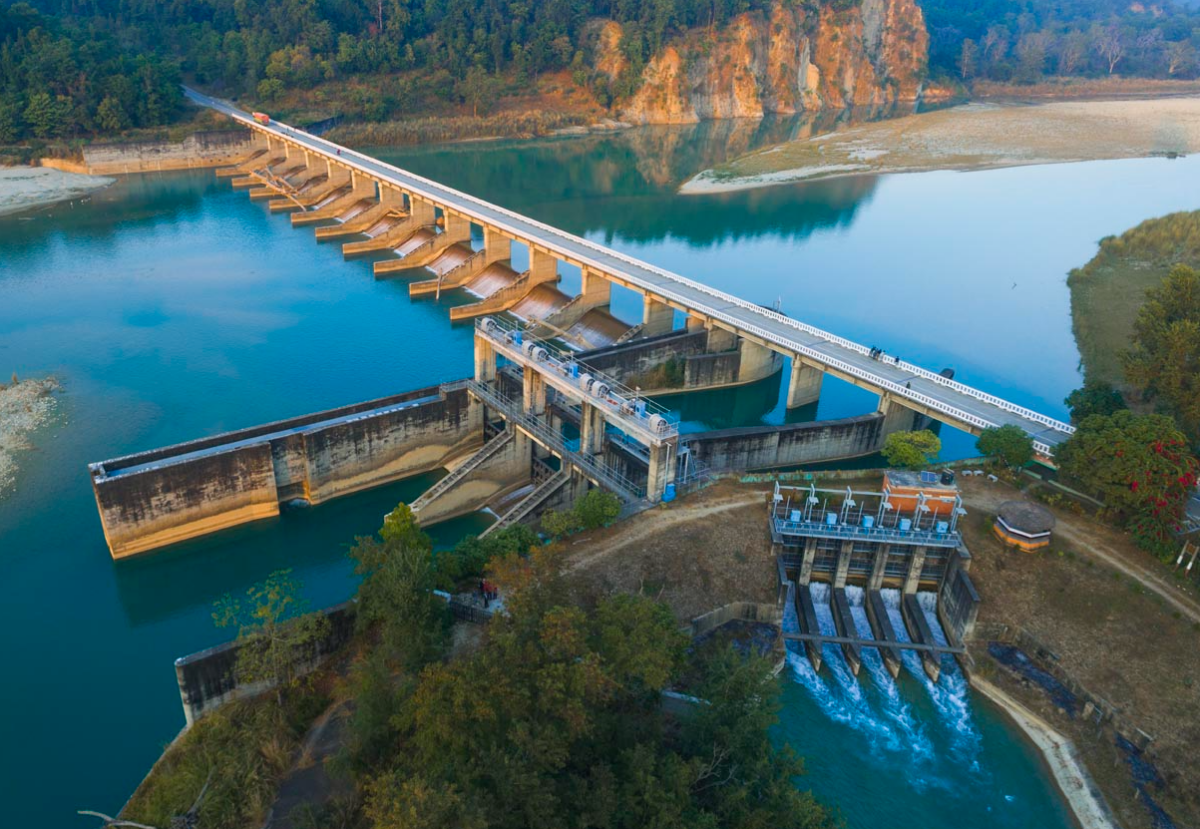
Major irrigation schemes such as Babai (37 years), Sikta (21 years), and Mahakali (19 years) remain incomplete despite repeated deadline extensions and mounting expenditures. The Melamchi Water Supply Project, initiated 27 years ago, continues to struggle with slow financial and physical progress.
Economists and former officials attribute the stagnation to politically driven project selection without adequate technical, economic or environmental feasibility studies. Projects have often been elevated to National Pride status based on political influence rather than preparedness, experts argue. Once designated, they frequently fail to receive adequate budget allocations, land acquisition support or regulatory clearances, leading to chronic delays and escalating costs.
Former Infrastructure Secretary Tulsi Sitaula has warned that projects selected without proper capacity assessment inevitably become “sick projects,” consuming resources for decades without delivering returns. Similarly, former Infrastructure Minister Prakash Jwala acknowledged that indiscriminate inclusion of projects under the prestigious label has diluted its meaning, arguing that any scheme unable to meet timelines should be removed from the list.
Finance Minister Dr. Rameshore Khanal, in the government’s mid-year budget review, admitted that National Pride projects have underperformed expectations, with only 15.49 percent of allocated funds spent by mid-year. He cited inadequate preparatory work, weak legal frameworks, poor coordination, land acquisition bottlenecks, forest clearance issues and limited managerial capacity as key obstacles.
For many analysts, the prolonged stagnation raises fundamental questions about economic planning and accountability. Irrigation projects conceived decades ago were designed to serve farmland that, in many cases, has since been converted into urban housing. Rail, metro and monorail development plans have made negligible progress after nearly 17 years.

Comment Here