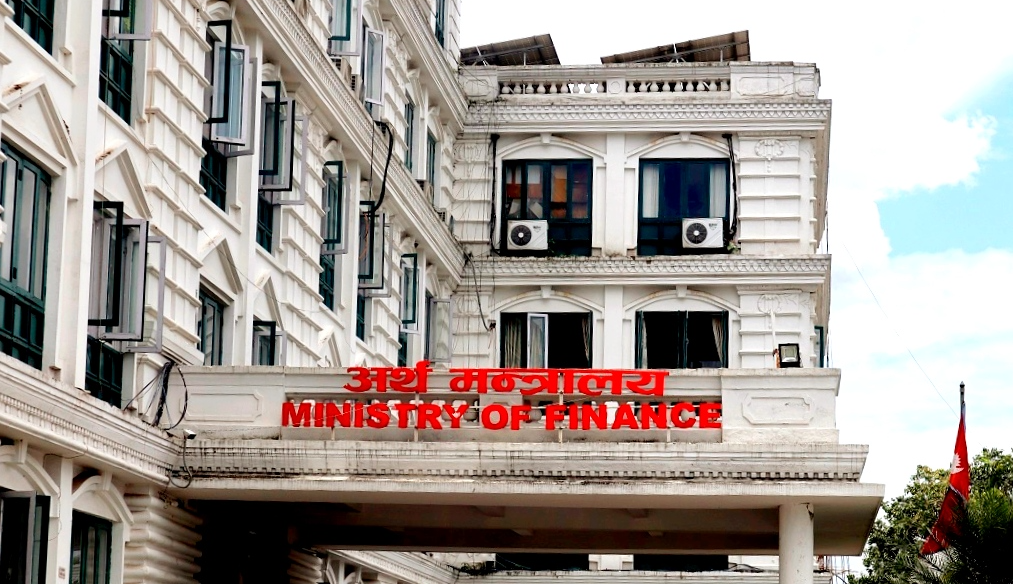

Kathmandu: Government has collected nearly Rs 150 billion less in revenue than targeted in the first seven months of the current fiscal year 2025/26 (FY 2082/83), underscoring mounting fiscal pressures as spending continues to outpace income.
According to data from the Ministry of Finance, the government raised Rs 669.32 billion in revenue between mid-July and mid-February, against a target of Rs 813.63 billion for the same period. The shortfall highlights the persistent gap between ambitious projections and actual performance. For the full fiscal year, the government has set an overall revenue target of Rs 1.48 trillion. By mid-February, only 45.22 percent of that annual goal had been achieved.
The revenue gap, combined with higher expenditures, has pushed the budget deficit to Rs 132 billion within just seven months. With income lagging and recurrent obligations continuing, the fiscal imbalance has crossed the Rs 125 billion mark well before the end of the fiscal year.
A breakdown of revenue sources shows customs duties contributing Rs 135 billion, value-added tax Rs 196 billion, and excise duties Rs 105 billion, including Rs 3.44 billion from education service fees. Income tax generated Rs 158 billion, while non-tax revenue stood at Rs 65 billion and miscellaneous sources added Rs 4.3 billion, bringing the total to Rs 669 billion.
While collections are slightly higher than the same period last fiscal year—when Rs 650 billion was raised by mid-February—the government has again missed its interim target. In the previous fiscal year 2024/25 (FY 2081/82), revenue also fell short by around Rs 18.5 billion during the first seven months.
Analysts note that the government has struggled to broaden the revenue base, even as it continues to expand annual targets and increase the overall size of the national budget. For the current fiscal year, the government unveiled a budget of Rs 1.964 trillion, one of the largest in Nepal’s history. However, actual spending remains subdued.
Data from the Office of the Financial Comptroller General show that total expenditure as of mid-February stands at Rs 801 billion. Of this, Rs 562 billion has been spent under recurrent expenditure—covering salaries, administrative costs and other regular obligations—while only Rs 63 billion has been utilized under capital expenditure.
Capital spending, which directly supports infrastructure and development projects, remains particularly weak. By mid-February, only around 15 percent of the allocated capital budget had been spent. The government had earmarked Rs 407 billion for capital expenditure this fiscal year, but implementation delays and bureaucratic bottlenecks have slowed disbursement.
The combination of underperforming revenue and sluggish capital spending reflects structural weaknesses in fiscal management. While recurrent costs continue to consume the bulk of public resources, development expenditure—considered critical for economic growth—lags far behind. If current trends persist, the government may face increased borrowing pressures and difficulty meeting its annual fiscal targets.

Comment Here