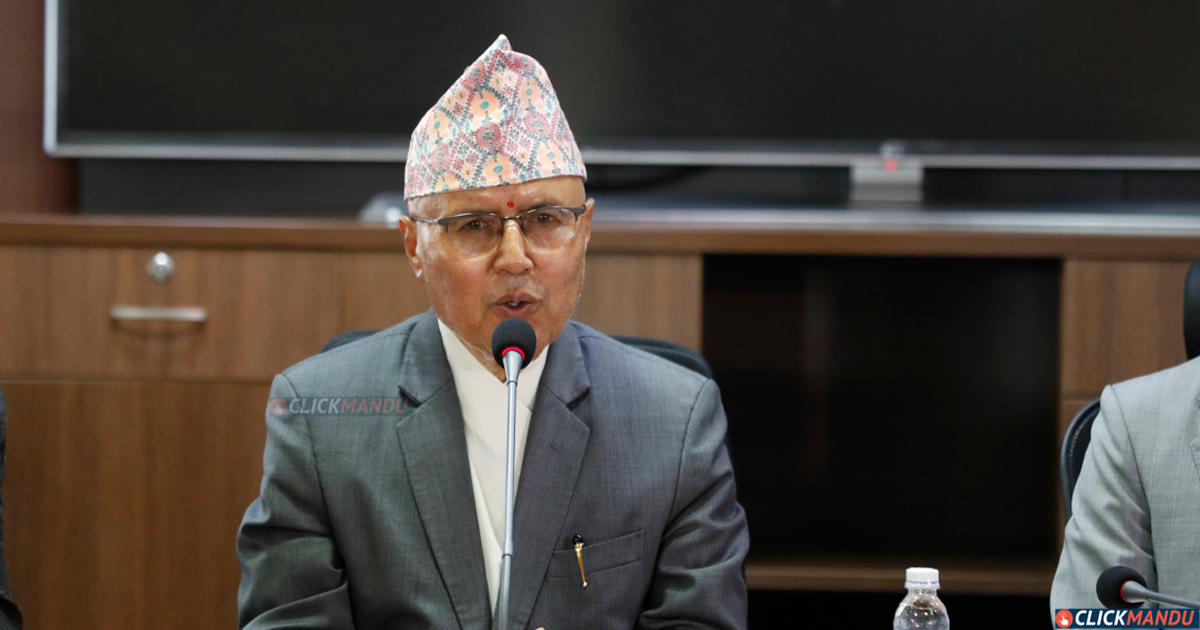

Kathmandu: Finance Minister Rameshwar Khanal has said that timely and equal access to information is essential for keeping the economy on track, warning that unequal information flows are creating serious distortions in Nepal’s markets.
Speaking at a program in the capital on Friday focused on the use of the right to information in the media, Khanal argued that disparities in access to market-sensitive data are undermining fair competition. Although Nepal has laws guaranteeing the right to information, along with accounting standards and other legal provisions mandating disclosure, he said implementation remains weak—particularly in the capital market.
According to Khanal, insider trading continues to give certain individuals an unfair advantage, allowing them to monopolize critical information before it becomes public. When some investors receive data in real time while others only gain access days later, decision-making becomes inherently unequal, he said, leading to market distortions and eroding investor confidence.
To illustrate the point, he cited the metals trade, noting how early access to gold and silver price movements can mean the difference between profit and loss. Such time gaps, he argued, translate directly into unequal opportunities and outcomes.
Khanal stressed that the right to information law alone is not sufficient. Various accounting standards and regulatory frameworks already require companies—especially large firms and conglomerates with significant economic impact—to disclose operational details and their broader social footprint. However, he suggested that enforcement has been inconsistent and that journalists have not adequately scrutinized whether companies are complying with mandatory disclosure requirements.
While equal opportunity frameworks are widely practiced globally, Khanal noted that in Nepal it remains difficult to access data on how companies are contributing to social inclusion—for instance, how many jobs they provide to Dalits, Indigenous communities, and other marginalized groups. He concluded that Nepal still has considerable room to improve in ensuring accurate, timely, and equitable information flows to all citizens and market participants.

Comment Here