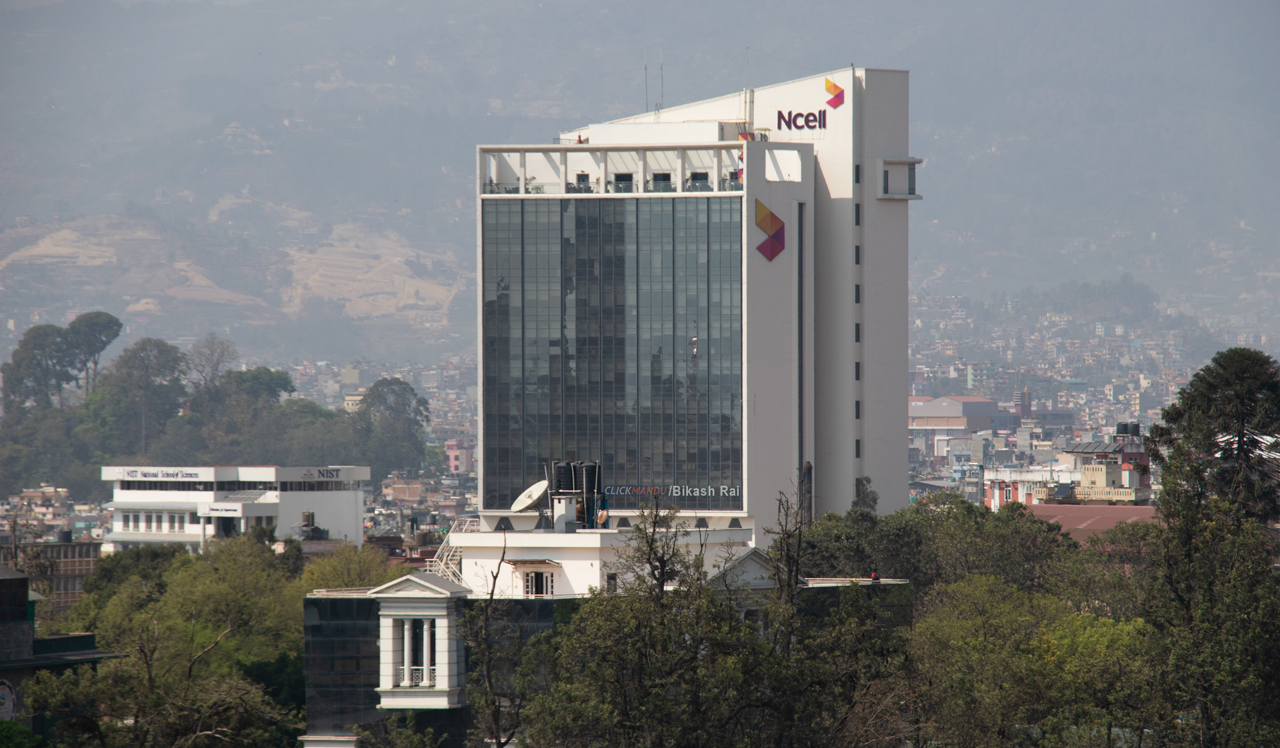

Kathmandu: Ncell Axiata reported revenue of more than 8.18 billion Nepali rupees in the first three months of the current fiscal year, covering mid-July to mid-October.
While the company remains one of Nepal’s largest telecom operators, its annual revenue has been on a steady downward trend in recent years. It posted revenues of Rs 32.54 billion in the last fiscal year, down from Rs 34.06 billion in 2024, Rs 37.44 billion in 2023, and Rs 39.72 billion in 2022. The decline has largely been driven by falling voice and international call volumes, reflecting shifting consumer behavior.
Despite the revenue contraction, Ncell continues to dominate Nepal’s telecom market. According to a rating report by ICRA Nepal, the company holds around 51 percent of the GSM market and roughly 48 percent of the voice and data segments. The agency notes that although competitive pressures and changing usage patterns have weighed on overall turnover, Ncell has maintained a strong market position.
Average revenue per user has also declined, putting pressure on income from traditional voice services. However, growing data consumption and the expansion of 4G services have helped stabilize earnings to a significant extent. Operationally, the company remains profitable, though margins have narrowed slightly. Its operating profit margin fell from 54 percent in 2024 to 50 percent in 2025, still a robust level by industry standards, supported by effective cost controls.
Ncell’s balance sheet appears relatively strong. The company’s gearing ratio stands at 0.6 times, indicating low leverage, while total debt is about 0.7 times its profit margin, suggesting manageable repayment capacity. Its debt service coverage ratio is 2.8 times—well above the generally accepted comfort threshold of 1.25—signaling solid ability to meet loan obligations. As of October 2025, the company held roughly Rs 14 billion in cash reserves.
One looming uncertainty is license renewal. Ncell’s 25-year operating license is set to expire in September 2029, and there remains ambiguity over the government’s renewal terms, particularly given the company’s foreign ownership structure. At the same time, rapid technological change in the telecom sector continues to require heavy capital investment.
Founded in 2001 and commercially operational since 2005, Ncell was Nepal’s first private-sector telecom provider. Initially launched under the “Mero Mobile” brand, it rebranded as Ncell after ownership changes involving Nordic telecom giant TeliaSonera. In 2016, it became part of Malaysia-based Axiata Group Berhad. In December 2023, Axiata announced plans to divest its stake in Reynolds Holdings to the UK-based Spectrlite UK Limited, though Nepal’s telecom regulator has yet to grant final approval. Spectrlite is fully owned by Singapore-based businessman Satish Lal Acharya of Nepali origin.
Recently, Ncell sought fresh credit ratings for Rs 32 billion in borrowing, comprising Rs 20 billion in long-term loans and Rs 12 billion in short-term facilities—an increase of nearly Rs 10 billion over its previous rated limit. The additional borrowing is intended primarily to finance capital expenditure, including network expansion, technology upgrades, and service improvements.
Given its relatively low leverage and healthy profitability metrics, Ncell appears well positioned to absorb additional debt. Reflecting this financial strength, ICRA assigned an “LA” rating for long-term borrowing and an “A1” rating for short-term facilities, indicating a stable credit profile despite industry headwinds.

Comment Here