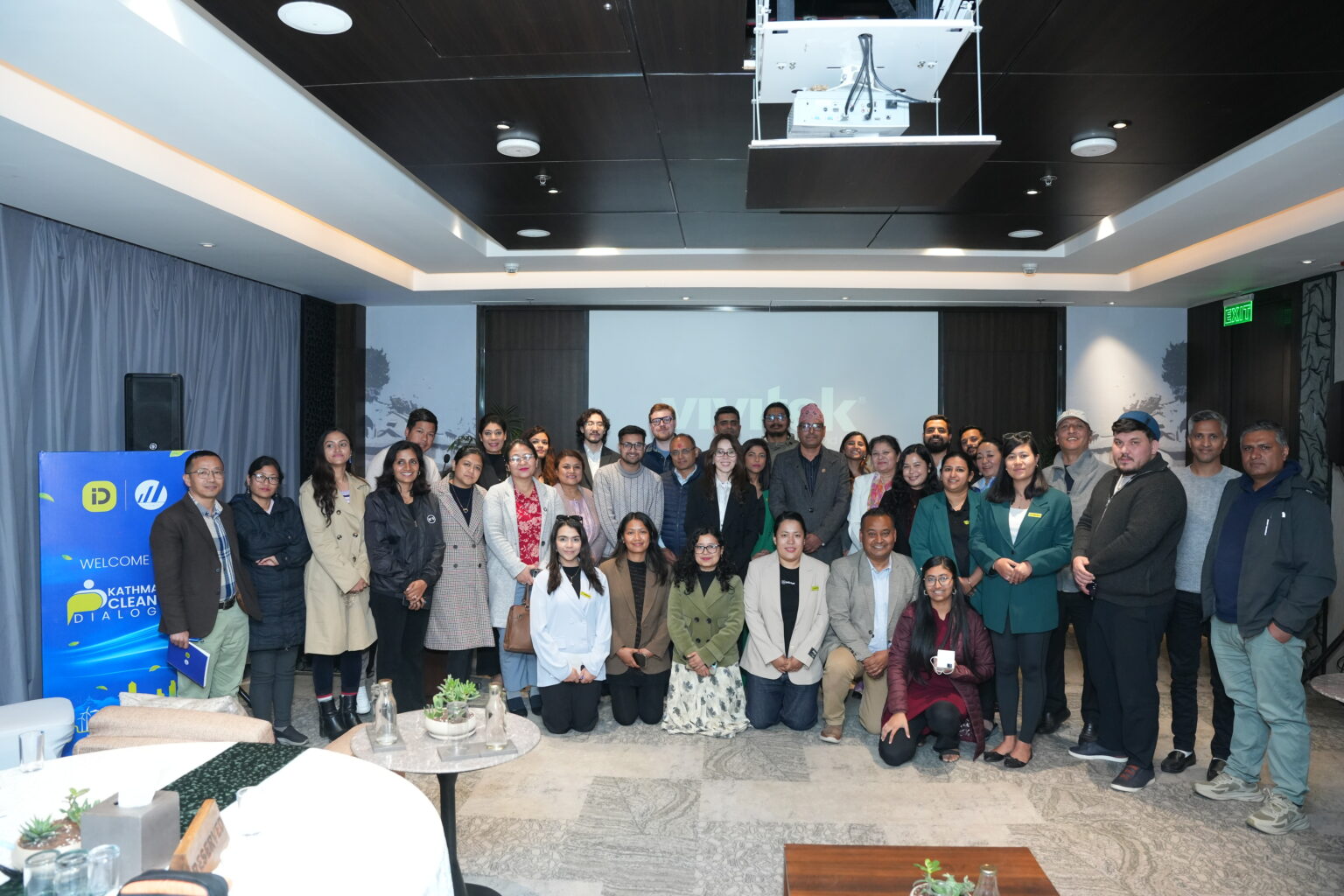

Kathmandu: inDrive convened government officials, policy experts, researchers, civil society representatives, and private sector leaders for the “Kathmandu Clean Air Dialogue,” an initiative aimed at developing coordinated, sustainable, and actionable solutions to the worsening air pollution crisis in the Kathmandu Valley.
The dialogue sought to frame air pollution as a shared responsibility and to push for stronger policy coordination, evidence-based decision-making, and concrete implementation plans. Participants engaged in in-depth discussions on current air quality conditions, major pollution sources, the effectiveness of existing policies and programs, and the persistent gaps in enforcement.
The forum focused on four key priorities: strengthening high-level coordination among government bodies, development partners, research institutions, and the private sector with clearly defined roles and accountability; mapping the Valley’s current air quality status and reviewing key pollution sources such as transport emissions, industrial activity, construction, and household fuel use; identifying policy, structural, and behavioral barriers while proposing phased and sustainable solutions; and encouraging more active private sector engagement through innovation, technology adoption, and the expansion of electric and sustainable transport systems.
Government participation featured prominently at the event. Addressing the gathering as chief guest, Forest and Environment Minister Madhav Chaulagain highlighted progress made so far but stressed the need for faster, more coordinated, and results-driven action. He praised inDrive and the Almaty Air Initiative for bringing diverse stakeholders onto a common platform.
Kathmandu’s air pollution problem is multifaceted. A significant share of emissions comes from biomass and household fuel use, while rapid growth in transport and industrial activities adds mounting pressure. The Valley’s bowl-shaped geography worsens pollution levels during the winter months. Participants emphasized that reliable data, transparent monitoring systems, public trust, and coordinated implementation are essential to addressing these challenges. With international support gradually declining, building locally owned and sustainable systems has become increasingly critical.
The dialogue also marked the launch point for the “Taza” initiative, “Taza” meaning “clean” in Kazakh, modelled on the Almaty Air Initiative’s “Brain, Voice, Bridge” framework. The “Brain” pillar focuses on strengthening data-driven systems, independent monitoring networks, research, and advanced modeling to ensure credibility. The “Voice” component aims to translate scientific evidence into public awareness and collective demand for cleaner air. The “Bridge” pillar seeks to connect science and civic engagement with sustainable policy reforms, legal improvements, and institutional transformation.
Zhuldyz Saulebekova, CEO of the Almaty Air Initiative, noted that lasting improvements in air quality require robust local systems built on credible data, informed citizens, and close cooperation with government authorities. Drawing on Almaty’s experience, she said systemic change becomes possible when evidence, public participation, and policy alignment come together, adding that her organization is proud to support Kathmandu in developing its own locally driven clean air roadmap.
Overall, the Kathmandu Clean Air Dialogue represents an important early step toward cross-sector collaboration in pursuit of cleaner air, healthier communities, and a more sustainable urban future for Nepal. The initiative underscores the need to strengthen partnerships among policymakers, scientists, and the private sector to secure long-term public health and environmental benefits.

Comment Here