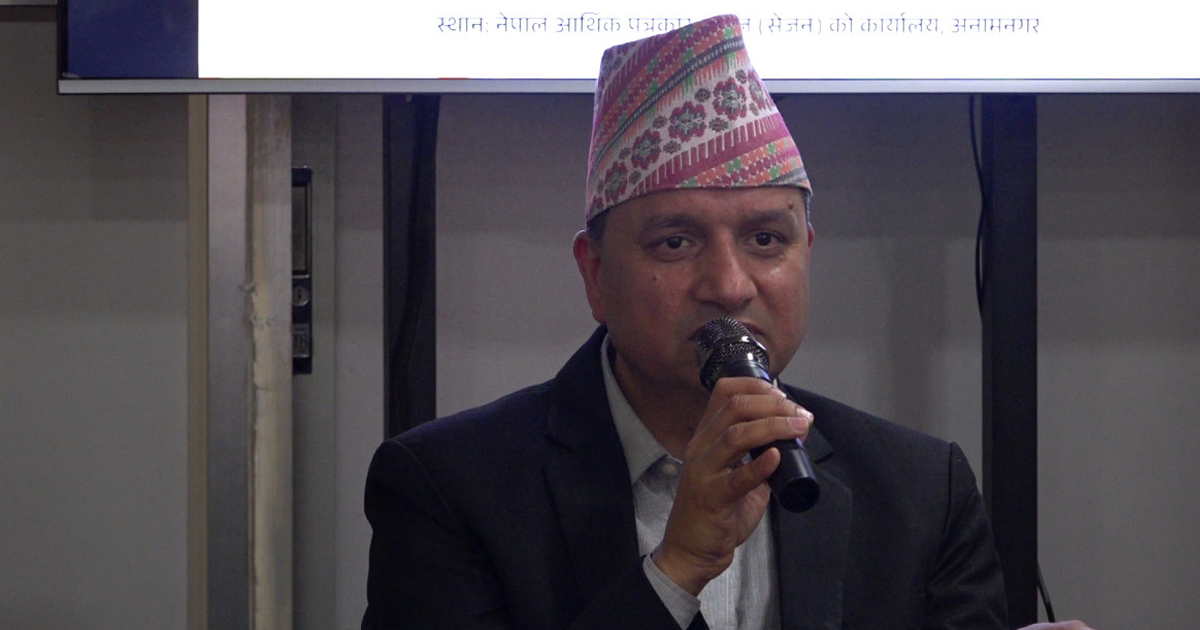

Kathmandu: Former executive director of Nepal Rastra Bank, Gunakar Bhatta, has warned that the ongoing crisis in the Middle East could have a direct impact on Nepal’s economy. Speaking at a program organized in the capital by the Society of Economic Journalists Nepal (SEJON) on Friday, he said the conflict has already begun pushing up global crude oil prices, which could directly affect Nepal’s economic stability.
According to Bhatta, if the conflict continues for a prolonged period, economic risks will rise not only for Nepal but for the global economy as well. International studies show that a 10 percent increase in crude oil prices caused by war leads to a 0.4 percent rise in inflation and a 0.15 percent drop in economic growth. If the conflict persists, oil prices could surge by as much as 25 percent, he cautioned.
He said the uncertainty created by the war has already triggered a tendency in countries like India and Nepal to stockpile essential goods such as cooking gas and food. This behavior could gradually create shortages in the market. As consumers begin hoarding goods, businesses may take advantage of the situation by creating artificial scarcity, he added.
Bhatta warned that rising inflation would hit lower-income groups the hardest, potentially widening poverty and income inequality. Ongoing global conflicts are already affecting Nepal’s economic growth, he noted.
He further explained that higher petroleum prices would make it difficult to advance reconstruction and development projects, while disruptions in the supply of raw materials could slow construction activities. As economic activities weaken overall, the country’s broader growth momentum would also decline.
In particular, sectors such as transportation, wholesale trade, and retail — all of which contribute significantly to Nepal’s economy — could face serious challenges in the coming months. The war could also affect tourism as well as imports and exports.
Bhatta also pointed out that nearly half of Nepal’s chemical fertilizer imports come from the Middle East, meaning the crisis there could negatively affect agricultural production.
He additionally warned of potential declines in remittance inflows. Around 40 percent of Nepali migrant workers are employed in Middle Eastern countries, and any disruption to their employment could reduce remittance earnings.
A drop in remittances could weaken Nepal’s foreign exchange reserves and make international donors less confident about extending financial support in the future. If foreign employment opportunities shrink, managing the return of large numbers of migrant workers would become a major challenge for the government, Bhatta said.

Comment Here