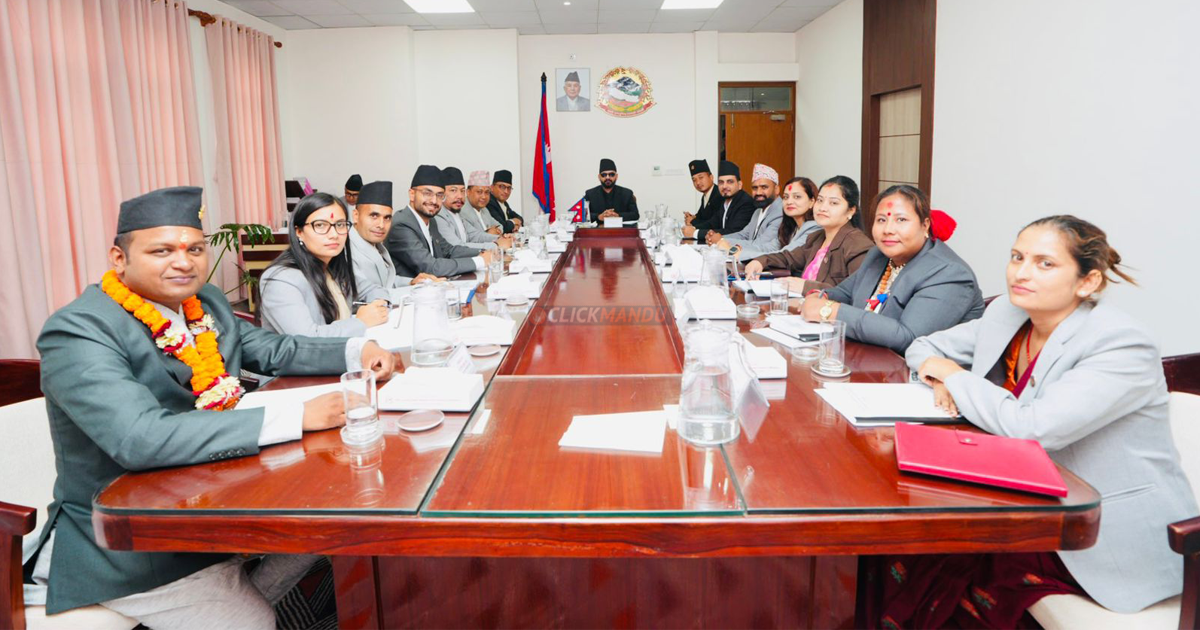

Kathmandu: The new government led by Balen Shah has rolled out an ambitious 100-point governance reform agenda aimed at strengthening revenue administration and mobilizing billions of rupees that have long remained idle across various state institutions.
The plan, approved during the Cabinet’s first meeting on Friday and made public on Saturday evening, focuses on securing resources needed for national development projects.
As part of this strategy, the government has taken a firm stance on utilizing scattered public funds, including court deposits and unused government reserves, for development purposes. Large amounts of “deposit funds” held across government offices, courts, and agencies have remained inactive for years.
The plan sets a 60-day deadline to establish the legal framework required to channel these funds into development activities. Similarly, the government intends to collect data on bank accounts that have remained unclaimed for 10 years or more and transfer those funds into the state treasury within 90 days.
Currently, more than 139 government funds are operating in a fragmented and overlapping manner, limiting the effective use of public resources. The government plans to consolidate these funds within 60 days and design a mechanism to invest them in high-return projects.
To improve transparency and efficiency in the revenue system, large businesses will be required to implement an e-billing system within one month. The Ministry of Finance is also set to introduce a special action plan within 45 days to curb revenue leakage and automate tax administration.
In the mining sector, licenses held by companies that have failed to begin operations will be revoked. The government also plans to amend the Mines and Minerals Act, 1985, to make it more investment-friendly. In addition, laboratory facilities under the Department of Mines will be upgraded with modern equipment within three months, and an integrated database of strategic minerals will be developed.
Customs administration will be restructured to better facilitate trade, while stricter enforcement of maximum retail price rules will be introduced to protect consumers from market exploitation. The government also aims to strengthen commerce and consumer protection mechanisms through more effective monitoring.
Overall, the 100-point reform agenda is designed to boost government revenue and channel billions of rupees that have remained unused for years into productive development projects.

Comment Here