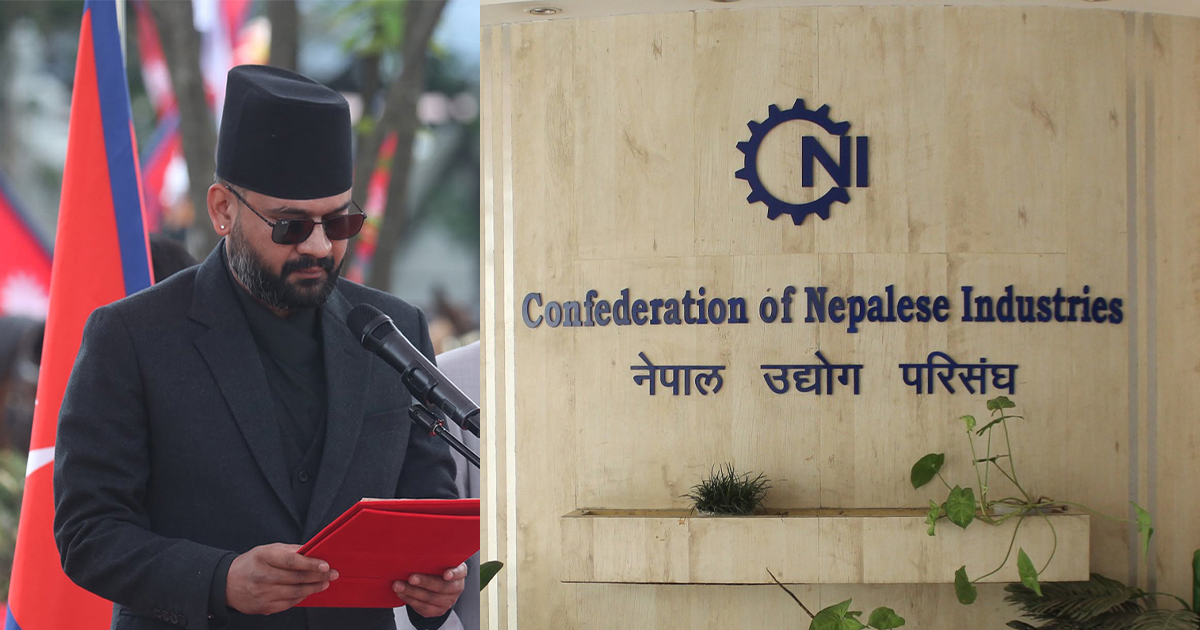

Kathmandu: The Confederation of Nepalese Industries has welcomed the policy reform agenda and commitment to repeal outdated laws announced by the government led by Prime Minister Balen Shah.
In a statement, the industry body said it was encouraged to see long-standing recommendations from the private sector being prioritized, boosting confidence among businesses.
CNI noted that the government’s proactive approach toward promoting both manufacturing and service industries is a positive step. It particularly emphasized the importance of the government’s goals to ensure good governance, eliminate corruption, and create an investment-friendly environment.
The confederation described the decision to amend or scrap several outdated laws—long demanded by the private sector—as historic. These include laws restricting foreign investment by Nepali businesses, the Compensation Act, the Black Marketing and Certain Other Social Offences and Punishment Act, the Nepal Agency Act, and the move to dissolve the Revenue Investigation Department.
CNI also praised the government’s plan to fully digitize public service delivery and implement a one-door system, calling it a major step toward improving efficiency.
The commitment to fast-track processes such as land acquisition, tree cutting approvals, and environmental impact assessments for national pride projects is expected to accelerate development. The private sector has also welcomed plans to make public procurement more transparent and competitive.
The government has prioritized measures to safeguard industries and supply chains, activate the Industry–Commerce Dialogue Council chaired by the prime minister, and automate tax administration. Additional initiatives such as advancing power purchase agreements, developing Nepal as a wellness tourism hub, and setting minimum support prices for agricultural products are also seen as positive for the economy.
CNI reiterated its call for all political parties to place economic issues at the top of their agendas. It also expressed satisfaction with the government’s plan to consolidate election manifestos from various parties into a unified “national commitment,” while suggesting that such a framework should remain focused on overall economic development.

Comment Here