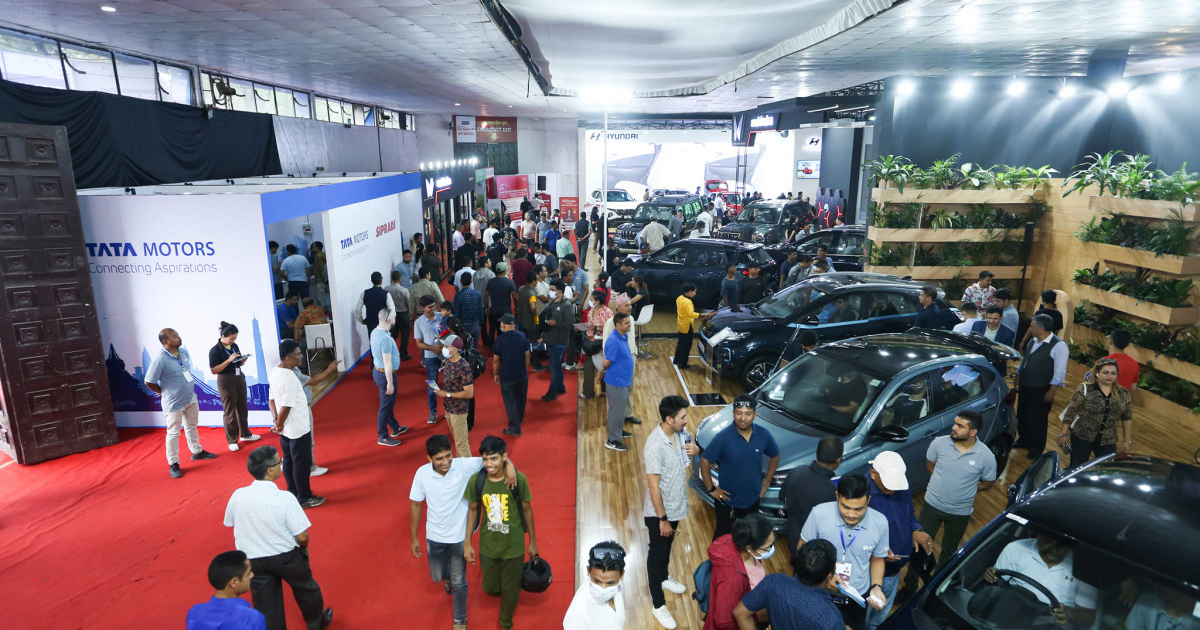

Kathmandu: Auto dealers in Nepal say the market has become excessively fast-moving in recent years, far beyond what demand justifies. According to them, the rapid pace, mirroring global trends, has begun to hurt actual business performance, even as sales volumes appear strong.
Until a few years ago, when an established brand launched a new vehicle, it would remain popular for years. A single variant could dominate the market for a long time, earning customer trust and maintaining steady demand. That landscape has now shifted dramatically.
With a constant influx of new brands and variants, consumer preferences are changing almost instantly. Buyers are increasingly drawn to the latest releases, forcing dealers to import newer models in quick succession just to keep up.
Dealers say whichever brand introduces a new model or variant tends to attract immediate customer attention. Vehicles quickly become “outdated” in a short span of time, a sign, according to them, that the market is moving faster than it should.
This trend is clearly visible in the sales pattern of BYD vehicles, which have gained popularity in Nepal. Cimex Inc., the authorized distributor of the Chinese EV brand, launched the Atto 3 in October 2022.
Within less than a year, it introduced the Dolphin in August 2023, followed by the M6 in January 2025. A refreshed Dolphin model arrived in mid-2025, and the Sealion 7 soon after. The same year also saw the launch of the Atto 1 and Atto 2 in quick succession.
As dozens of models enter the market within short intervals, customers continue shifting toward newer options. This has created a pattern where demand consistently tilts toward the latest arrivals.
In fact, dealers say brands that can launch new models more frequently are seeing better sales figures. This has sparked intense competition among automakers to introduce updated variants as quickly as possible. While this creates the impression of a dynamic market, dealers argue that it is negatively affecting real earnings.
Even high-quality vehicles from reputable brands are losing their appeal quickly once new models arrive. Dealers recall that models introduced around 2012–13 used to sell steadily for years. Today, manufacturers are locked in a race to update models annually and add new features, while buyers focus almost exclusively on the latest versions, ignoring older ones.
Rupesh Sharma Bhatt, CEO of SPG Automobiles under the Sharda Group—the authorized distributor of Omoda and Jaecoo in Nepal—says the overly dynamic market is squeezing profitability. “Before one model settles in the market, another arrives. As soon as a new launch happens, the previous model is treated as outdated. Dealers are then forced to offer discounts of Rs 400,000 to 500,000 just to clear stock,” he said. “Sales numbers may look high, but profit margins are shrinking significantly.”
Holding inventory for long periods is no longer viable, he added. Costs such as parking, bank interest, and other overheads continue to rise, putting pressure on dealers to sell vehicles quickly. At the same time, a new launch can instantly overshadow existing stock, creating additional challenges.
“To stay price-competitive, margins are already kept low. Offering heavy discounts within a short time leaves almost nothing for dealers,” Bhatt explained. “So while unit sales may increase, overall income remains compressed.”
He also noted that the need to frequently introduce new models, often before existing ones have had time to establish themselves, has weakened the overall market compared to the past.
“Looking at the number of vehicles sold, the market seems strong. But in reality, it’s not translating into meaningful profits. The main reason is this excessive pace of change,” he said, adding that the tendency of consumers to flock to whatever is newest has made the business environment more challenging.
Globally, too, the auto industry is witnessing intense competition with new brands entering the market. Nepal is reflecting the same trend, with a race to bring in the latest vehicles. As a result, consumers are increasingly driven by the desire to own the newest model, often giving less importance to factors such as after-sales service, spare parts availability, and long-term reliability.
Deepak Thapaliya, General Manager of Laxmi Intercontinental, echoed similar concerns. “These days, purchases are less about a vehicle’s strengths or weaknesses and more about which model is newest,” he said. “As consumers flock to the latest models, dealers face mounting pressure to sell older stock.”
This trend, he added, reduces actual earnings for dealers, even when sales volumes appear healthy. It also sidelines important considerations like quality, service, and parts availability.
Meanwhile, import data shows that Nepal imported 6,396 units of electric four-wheelers worth Rs 14.95 billion in the first eight months of the current fiscal year (up to mid-March). This is lower than the 7,089 units imported during the same period last year. The government collected Rs 9.11 billion in revenue from these imports.
Electric vehicles are being imported into Nepal primarily from China, India, Germany, South Korea, Indonesia, the United States, Austria, and the United Kingdom. Among these, 2,198 units fall under the 50 kW category, while 3,672 units are in the 51–100 kW range. Additionally, 519 units fall within the 101–200 kW segment, seven units in the 201–300 kW range, and two units are unassembled vehicles.
China remains the dominant source, especially in the lower and mid-power categories. For instance, of the 3,672 units in the 51–100 kW segment, 2,614 units came from China, followed by India and Thailand.
In the 101–200 kW category, Nepal imported 519 vehicles, including 468 from China, along with smaller numbers from India, Germany, the United States, and South Korea. Similarly, only seven vehicles were imported in the 201–300 kW range, sourced from China, the United States, and Austria.
In addition to EVs, Nepal imported 3,864 petrol cars during the same eight-month period, a 53.45 percent increase compared to last year. Of these, 1,794 units were imported in unassembled form, according to customs data.

Comment Here