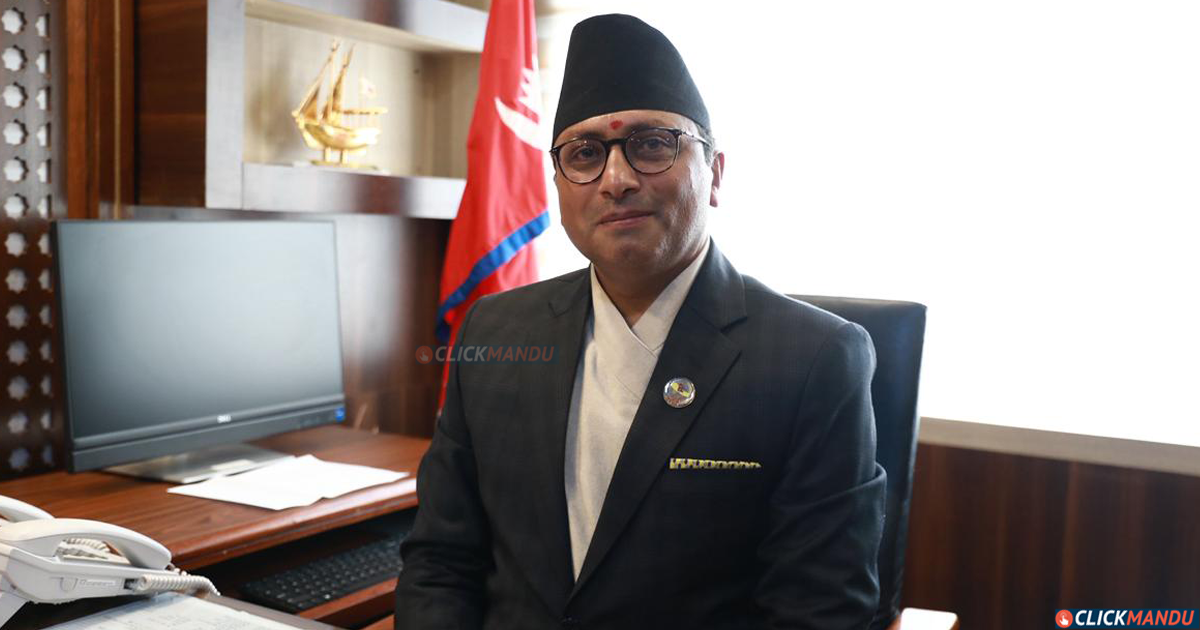

Kathmandu: Within just a week of taking office, newly appointed Finance Minister Swarnim Wagle has signalled a clear shift in both policy direction and working style, outlining an ambitious agenda for structural economic reforms.
Sworn in on March 27, Wagle has moved swiftly to accelerate policy decisions, administrative reforms, private sector engagement, and preparations for the upcoming national budget.
Soon after assuming office, the minister announced plans to present a realistic picture of the economy and initiated three key policy decisions. He directed officials to prepare an updated economic status report reflecting conditions up to mid-March and outlined plans to publish a comprehensive roadmap. In line with electoral commitments, he also pushed for the formulation of 100-day, mid-term, and annual action plans to guide government performance.
In a move aimed at modernizing the regulatory framework, Wagle decided to begin scrapping 15 outdated and redundant laws, including those related to revenue administration, based on recommendations from a high-level economic reform commission. He also prioritized introducing new legislation—or amending existing laws—to ensure better protection for the private sector, promote entrepreneurship, and facilitate large-scale projects.
On the administrative front, the minister indicated a departure from political interference by assigning 30 undersecretaries to positions based on merit. According to the ministry, these officials—primarily from the revenue group—were placed in roles aligned with their qualifications and expertise.
During the week, Wagle held detailed briefings with key divisions and agencies under the ministry, including budget, customs, and tax authorities, as well as the insurance regulator. Discussions focused on budget implementation, revenue collection trends, and strategies to curb revenue leakage.
With revenue collection falling short of targets, the minister convened a high-level meeting on revenue leakages, directing security agencies and administrative bodies to intensify enforcement. He instructed officials to strengthen revenue collection efforts without harassing taxpayers, while aiming to exceed existing targets.
To boost confidence amid a slowing economy, Wagle actively engaged with the private sector. He held both separate and joint meetings with representatives from the Federation of Nepalese Chambers of Commerce and Industry, Confederation of Nepalese Industries, and Nepal Chamber of Commerce.
Emphasizing the government’s commitment to a business-friendly environment, he urged entrepreneurs to invest with confidence and contribute to job creation.
Meanwhile, groundwork for the fiscal year 2026/27 budget is already underway. A budget drafting committee has been formed under the coordination of Joint Secretary Uttar Khatri, and the minister has reportedly made more than three dozen ministerial decisions within his first week.
As part of stakeholder consultations, Wagle also visited Birgunj—home to the country’s largest customs point—where he inspected key facilities, including the Integrated Check Post and local tax offices. He also participated in an interaction program organized by the Birgunj Chamber of Commerce and Industry, collecting feedback from local business leaders to inform the upcoming budget.

Comment Here