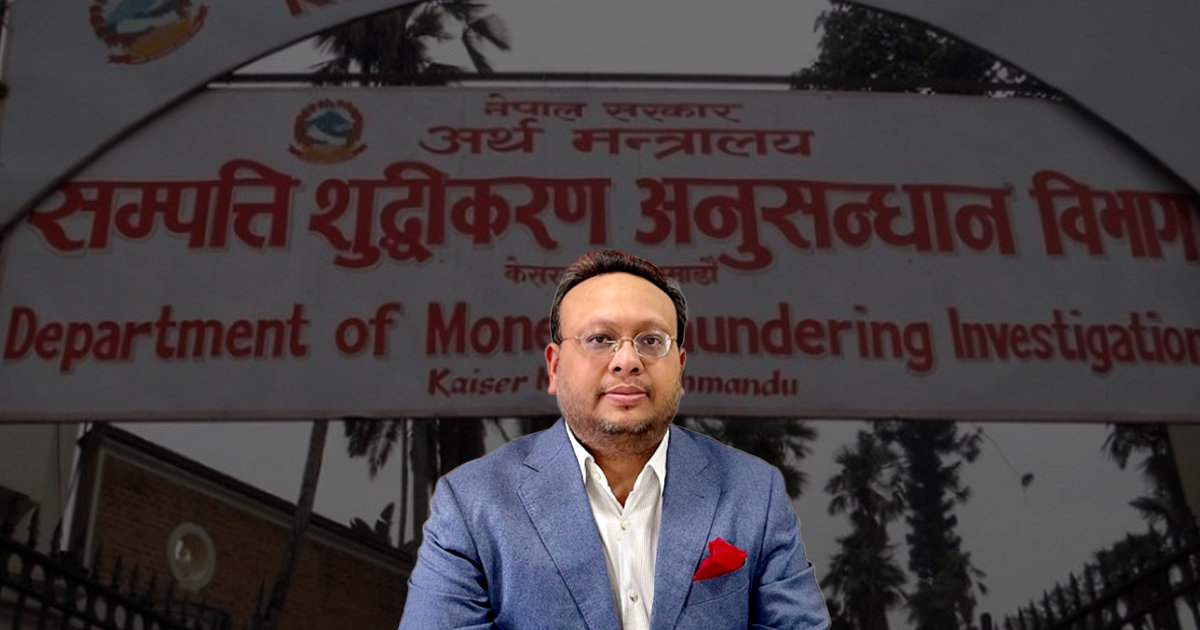

Kathmandu: Nepal’s business community has been shaken after authorities detained Shankarlal Agrawal and Sulabh Agrawal, the chairman and vice chairman of Shanker Group, for questioning in a money laundering investigation.
The move by the government has drawn widespread attention, given the group’s vast business footprint and past annual turnover exceeding Rs. 115 billion, along with bank credit facilities nearing Rs. 100 billion.
Officials at the Department of Money Laundering Investigation confirmed that Sulabh Agrawal’s statement recording began on Sunday. The investigation is linked to businessman Deepak Bhatta, who was arrested earlier on similar charges. Authorities say evidence gathered during Bhatta’s probe pointed to the involvement of the Agrawals, who are known to have close business ties with him.
Investigators suspect that billions of rupees may have been laundered through networks involving the group. Sources within the department allege that the businessmen had long leveraged political connections to bypass regulations. With the current administration taking a stricter stance, officials claim enforcement has become easier, signalling a shift toward stricter rule of law.
The arrests have also raised concerns within the private sector. Some business leaders question the approach of detaining individuals before completing preliminary hearings, especially when Finance Minister Swarnim Wagle has publicly emphasized dialogue with entrepreneurs before punitive action. The situation has created unease, particularly because the group directly employs more than 15,000 people, raising fears about broader economic ripple effects.
Banks are also on edge. The Nepali banking sector has extended close to Rs. 100 billion in loans to the group, and any financial distress could have systemic implications. Executives warn that if the group were to default, multiple banks could face serious challenges, as the funds ultimately represent public deposits.
The group is also a major player in the stock market, and analysts suggest recent negative sentiment in the market may be partly linked to developments surrounding the case. Despite operating more than 40 companies, Shanker Group’s recent business performance has reportedly slowed, with allegations of capital flight adding to concerns.
The case has also revived memories of a controversial incident during the COVID-19 lockdown, when Sulabh Agrawal was arrested for black-marketing thermal guns at inflated prices. Despite being released on bail and later cleared in that case, authorities had at the time initiated further investigation into the source of his assets, which eventually fed into ongoing money laundering inquiries.
Shanker Group’s business journey dates back decades, evolving from trading roots into a diversified industrial conglomerate. It has major interests in steel, cement, automobiles, hydropower, and financial services, including significant investments in insurance and reinsurance. The group is also known for bringing international brands into Nepal and expanding domestic manufacturing.
However, insiders say the group’s reputation has increasingly come under strain in recent years, particularly as its business strategies have become more aggressive.

Comment Here