
Kathmandu: After taking office, the government led by Balendra Shah approved a 100-point governance reform agenda in its first Cabinet meeting on 27 March.
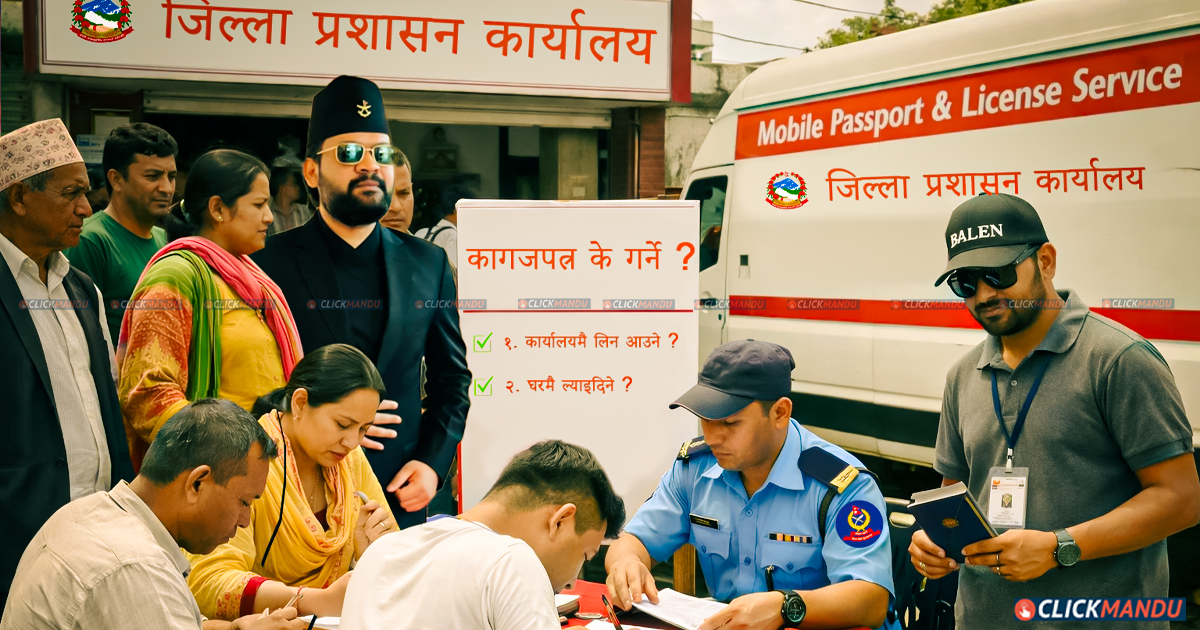
One of the key commitments, made public the next day, aims to transform the postal system into a modern “Government Courier Service” capable of delivering official documents such as passports, citizenship copies, and driving licenses directly to citizens’ homes within 100 days.
The announcement has generated widespread interest, along with scepticism about whether the existing workforce can handle such an ambitious rollout.
For years, citizens have endured long queues both when applying for and collecting government documents, and many remain unsure whether the promise of home delivery will truly materialize.
Meanwhile, the Ministry of Communications and Information Technology has already endorsed a 10-point reform plan to make public services faster and more technology-friendly.
Under this roadmap, the government plans to expand document delivery via the postal system to all 77 districts by the end of Baisakh 2083 BS. Services will include passports, driving licenses, academic certificates, and even Nepal Telecom SIM cards. Some districts have already begun implementation, signalling that the initiative is moving beyond policy into practice.
Siraha is set to become the first district to deliver passports directly to homes. Since 6 April, applicants there have been given the option to either collect their passports from the office or receive them at home.
Once printed by the Department of Passports, documents are expected to be delivered within three days through the postal network, free of charge. However, the printing process itself still takes around 15 to 20 days before reaching the district.
Officials say the postal system is prepared for the transition. With nearly 10,000 personnel, including both permanent and temporary staff, the department believes it has the capacity to securely deliver even sensitive documents. Following Siraha’s lead, districts such as Myagdi, Makwanpur, and Chitwan are also preparing to roll out similar services, with further improvements expected once digital systems between agencies are fully integrated.
The reform drive extends beyond document delivery. In the foreign employment sector, workers can now receive labour approvals on the same day they apply. The removal of the token system has streamlined the process, benefiting up to 3,000 applicants daily and significantly reducing complaints about delays.
A breakthrough has also been achieved in clearing the long-standing backlog of driving license printing. Previously, applicants often waited years and relied on temporary slips, but the government now aims to issue licenses within 24 hours of receiving data. With a daily printing capacity of up to 40,000 cards, authorities expect to eliminate a backlog of nearly 2.9 million licenses by the end of Asar.
This progress has been made possible after shifting printing to a domestic security press, reducing reliance on foreign contractors. Officials say the combination of new infrastructure and a more proactive administration has dramatically improved service delivery. By Shrawan, the need to carry temporary slips is expected to end altogether.

Comment Here