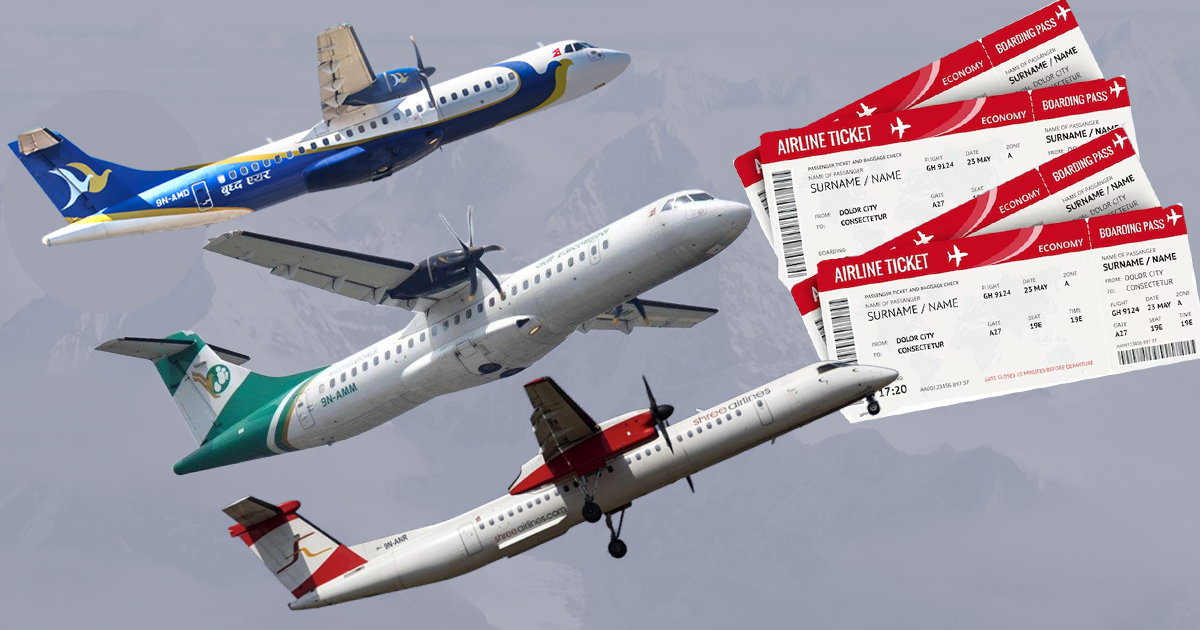

Kathmandu: With Khadga Raj Paudel assuming office as Minister for Culture, Tourism and Civil Aviation, discussions have resurfaced over abolishing the long-standing “dollar fare” system imposed on foreign passengers in Nepal’s domestic air travel sector.
The issue tends to re-emerge with every new tourism minister, and this time is no exception, as policymakers revisit whether the dual pricing structure should continue.
The ministry has suggested that the dollar fare, currently charged to foreign nationals and non-resident Nepalis, could first be removed in remote regions such as Karnali and Sudurpashchim. Senior officials argue that maintaining two separate fare systems is no longer justifiable.
However, the minister has not yet made a formal decision, stating that consultations with airlines and stakeholders are ongoing and that any move will aim to balance the interests of the government, service providers, and passengers.
Private airlines, however, have strongly opposed scrapping the system. They warn that eliminating dollar fares would inevitably lead to higher ticket prices for Nepali passengers. According to airline operators, the current pricing model allows them to charge foreigners in US dollars while offering subsidized fares to locals in Nepali rupees, effectively benefiting domestic travellers.
Pratap Jung Pandey, president of the Airline Operators Association, has urged the government not to interfere with the existing system, arguing that removing it would shift the financial burden directly onto Nepali passengers. Airlines maintain that differential pricing has helped keep air travel affordable for locals.
Buddha Air’s Executive Chairman, Birendra Bahadur Basnet, echoed similar concerns, stating that if dollar fares are abolished, domestic ticket prices for Nepalis could rise by as much as 50 percent. He pointed to rising operational costs, especially fuel, to justify the current model. According to him, when aviation fuel cost Rs 124 per litre, it accounted for 35 per cent of total expenses, but with prices now at Rs 257 per litre, fuel alone accounts for around half of operating costs.
Basnet also highlighted that dollar fares contribute roughly 25 percent of airlines’ total revenue, enabling cross-subsidisation that keeps domestic fares lower. Payments made by foreign tourists in dollars help airlines cover expenses such as spare parts, insurance, and maintenance, which are also dollar-denominated. Without this system, he warned, airlines would have no option but to significantly increase fares for all passengers.
He further noted that airlines are already under financial strain, worsened by declining passenger numbers, down by as many as 1,500 daily, amid geopolitical tensions in West Asia. In such a fragile situation, he argued, removing the dollar fare system would only add further pressure on both airlines and Nepali travellers.

Comment Here