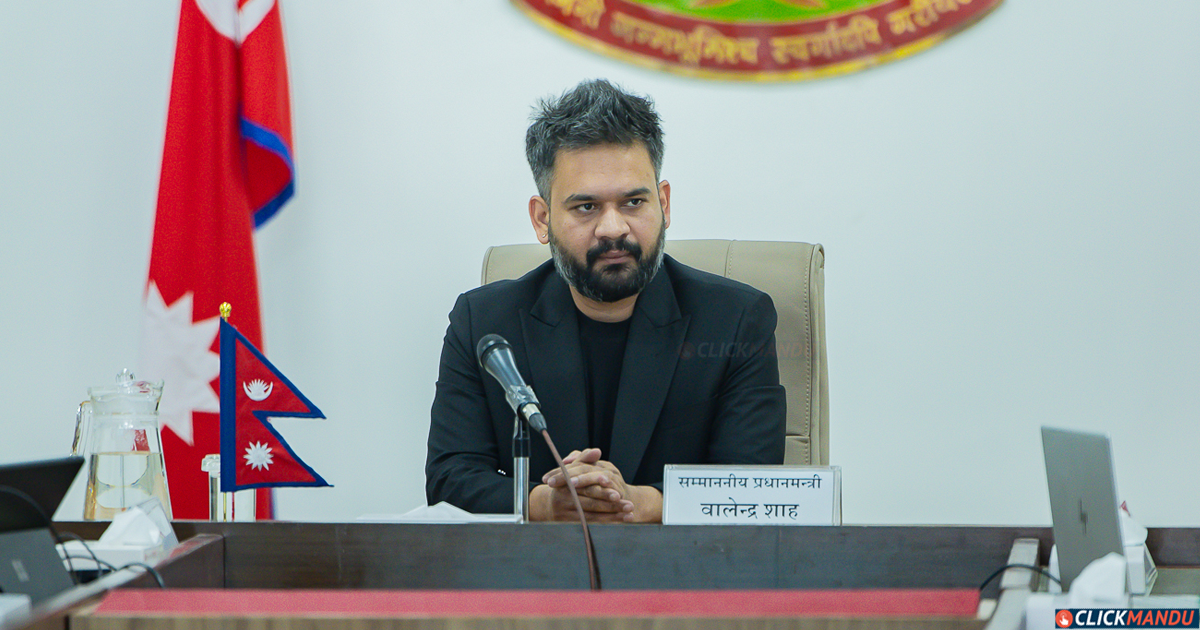

Kathmandu: Following the formation of a new government after the February 21, 2026, elections, the administration led by Prime Minister Balendra Shah has introduced an ambitious 18-point “National Commitment” aimed at overhauling governance and accelerating economic transformation.
The draft, prepared by incorporating key pledges from six nationally recognized political parties, has been circulated for feedback, with stakeholders asked to submit their suggestions by April 23.
At the heart of the plan is a bold economic vision: achieving an average growth rate of 7 percent within five years, raising per capita income to $3,000, and expanding the country’s GDP to US$ 100 billion. The government has pledged policy stability by guaranteeing unchanged tax rates and conditions for a decade, while also vowing to dismantle cartels and artificial market distortions through a politically agreed “economic charter.”
Agriculture is positioned as a pillar of self-reliance, with plans to review trade arrangements with India, expand irrigation to an additional 300,000 hectares, and establish a domestic chemical fertilizer plant. Farmers will be supported through credit cards, insurance, and contributory pension schemes. In tourism, the government aims to double per-tourist spending, promote religious and cultural circuits from Pashupatinath to Muktinath, and fully operationalize Pokhara and Bhairahawa international airports with direct global connections, while declaring 2027 as a “National Wellness Year.”
Energy ambitions are equally expansive, targeting 30,000 megawatts of electricity generation over the next decade, prioritizing reservoir-based hydropower projects such as Budhi Gandaki and Dudhkoshi, and exploring green hydrogen and rare earth minerals. The vision is to position Nepal as a clean energy export hub for South Asia. Complementing this, a dedicated authority will oversee scientific mining, ensuring local communities benefit from resource extraction.
Infrastructure development will focus on continuity and accountability, preventing the transfer of project chiefs before completion and upgrading the East-West Highway to international standards within three years. Cross-border connectivity with India and China will also be strengthened through waterways and transit agreements.
Employment generation is another central theme, with a target of creating 1.5 million jobs in five years. Programs like “earn while you learn” and reintegration of returning migrant workers are intended to harness skills and capital domestically, alongside labour market reforms to curb exploitation.
In social sectors, sweeping reforms are proposed in education and healthcare, including free and compulsory school education, a ban on political affiliations among teachers, increasing the health budget share to 8 percent by 2031, and introducing a “one citizen, one digital health profile” system. Environmental commitments include stricter Chure conservation, air pollution control aligned with global standards, and advancing climate justice and carbon trading frameworks.
Governance reforms feature prominently, including asset investigations of public officials since 1990, whistleblower protection laws, and closing legal loopholes enabling corruption. Administrative restructuring will cap federal ministries at 17, introduce time-bound service delivery, eliminate bureaucratic red tape, and digitize governance processes.
Technology and innovation are identified as strategic drivers, with plans to develop Nepal’s own satellite, promote AI and computational exports, and ensure digital literacy up to grade 12. Social justice measures include inclusive audits across public institutions, formal acknowledgement of past structural discrimination, and enhanced support systems for vulnerable groups.
On foreign policy, the doctrine of “Nepal First, Nepali First” will guide diplomacy, aiming to reposition the country from a buffer state to a “vibrant bridge” between nations, alongside performance audits of diplomatic missions. The government also seeks to tap into the Nepali diaspora by granting voting and property rights, issuing diaspora bonds worth Rs 100 billion annually, and leveraging global expertise as “brain gain.”
Sports development, disaster preparedness, and financial sector reforms are also included. Plans range from depoliticizing sports administration and nurturing talent from schools to deploying AI-based early warning systems for disasters and integrating cooperatives and microfinance institutions under stricter central bank supervision with deposit protection mechanisms.
The government has stated that this national commitment will form the foundation of policies and budgets from the upcoming fiscal year 2026/27, with direct monitoring led by a dedicated unit under the Prime Minister’s Office to ensure effective implementation.

Comment Here