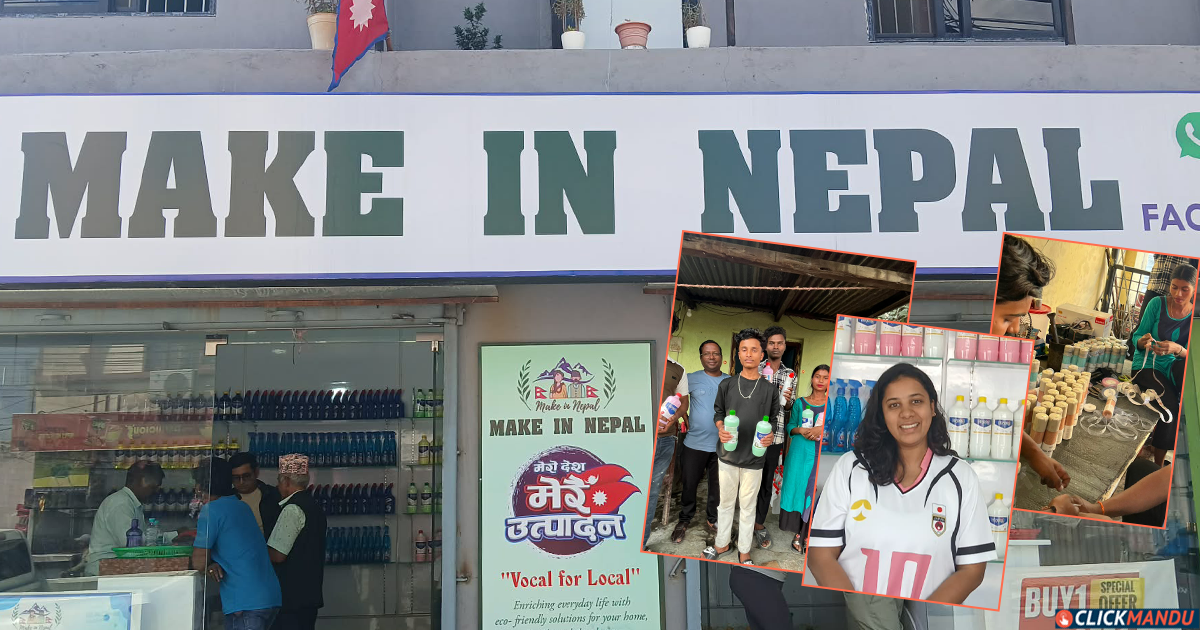

Biratnagar: After completing her postgraduate studies in International Business and Architectural Design in Pune, India, 29-year-old Ruchika Vaid from Biratnagar had job offers waiting from renowned multinational companies the moment she graduated.
Firms such as Global Vision, TCH, and Reliance offered her high-paying roles in India and Dubai, with monthly salaries running into hundreds of thousands of rupees. Yet, turning down these lucrative opportunities, she chose to return home, determined to build something of her own in Nepal.
Today, Ruchika is challenging the popular belief among many young people that success lies only abroad. Guided by the philosophy of staying, working, and utilizing resources within Nepal, she had long dreamed of starting a production-based industry. Driven by that vision, she established her own enterprise in Threetoliya, Biratnagar–13, with an investment of around Rs 1 million.
According to her, a troubling trend exists in the market where imported goods are simply repackaged under local brand names and sold as domestic products. Determined to break this practice and genuinely contribute to import substitution, she began producing household cleaning and personal care items using locally sourced raw materials. “I’ve already seen encouraging results,” she says, branding her products under the slogan “Make in Nepal, My Country, My Product.”
Over the past year, her company has been manufacturing a wide range of items, including toilet cleaner, phenyl, handwash, perfume, glass cleaner, skincare products, detergent, coffee body scrub, rose water, face packs, and soap. She also creates handmade artificial jewellery. Ruchika personally handles research and development, ensuring that every product undergoes proper pH balance testing before reaching the market.
She claims her products are not only high-quality but also significantly more affordable than imported alternatives. “If consumers are paying Rs. 200 for imported goods, we can produce similar items here for Rs. 100,” she explains. Her initiative, she adds, is helping curb deceptive practices of repackaging imported goods and protecting consumers from being misled.
As part of her business strategy, she has opened a showroom named “Make in Nepal” just north of the Biratnagar Metropolitan Office, where products are sold at factory prices. To attract customers, she has introduced a year-long “buy one, get one free” offer. Due to the combination of quality and affordability, she reports that nearly 70 percent of her customers return for repeat purchases.
What began as a small venture employing 12 people is now set to expand. Ruchika plans to open five additional outlets across Biratnagar soon and is preparing to extend her showroom network to cities like Itahari, Dharan, Damak, and Birtamod, ensuring factory-priced goods reach a wider market.
Her long-term goal is to create direct employment for more than 50 people by 2026 and expand her products nationwide. “My main aim is to show the younger generation that with dedication, skills, and the right mindset, it is possible to build a secure future right here in Nepal,” she says. Firm in her resolve, she is committed to breaking the dominance of imported goods and maximizing the use of local resources.

Comment Here