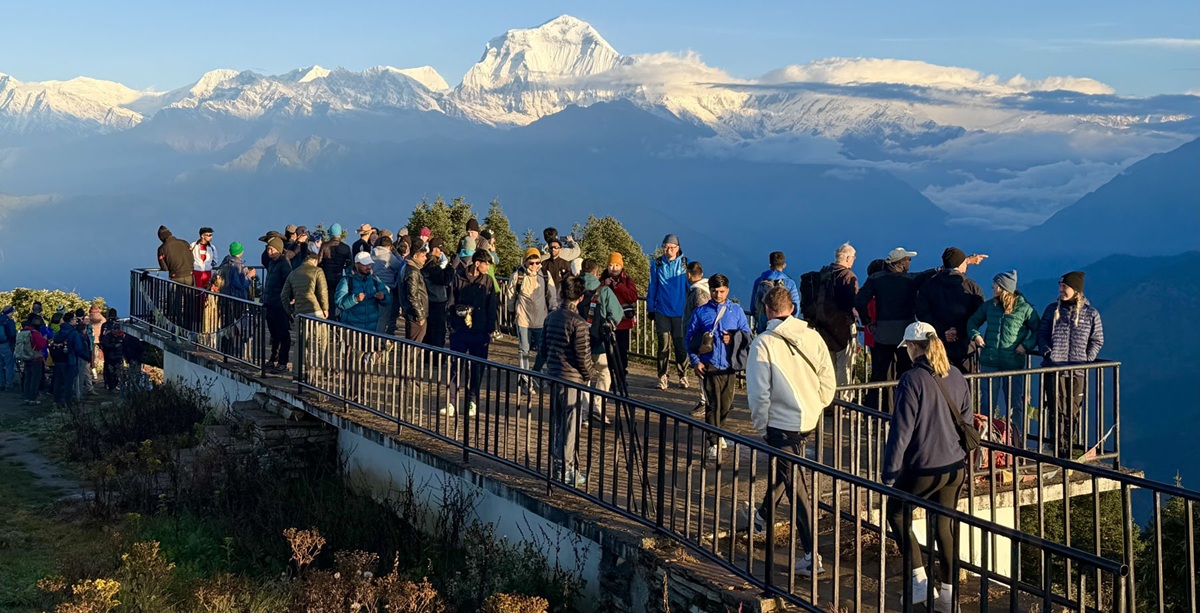

Kathmandu: The Government of Nepal has announced that 2027 will be celebrated as “Wellness Tourism Year,” aiming to tap into the fast-growing global market of high-spending travellers seeking health, mindfulness, and holistic experiences.
With rising international demand for premium wellness travel, Nepal hopes to leverage its natural assets, Himalayan landscapes, medicinal herbs, and ancient healing traditions to open a new avenue for foreign currency earnings. Yet, despite the ambition, a wide gap remains between policy declarations and on-the-ground readiness.
Global data shows the wellness tourism market has been expanding at an annual rate of 12 to 15 percent over the past decade, with projections reaching billions of dollars by 2027. Even capturing a small share of this market could significantly boost Nepal’s external balance. However, the country still lacks the infrastructure and policy framework needed to deliver world-class services to high-end visitors.
Reliable and efficient transportation is the backbone of any tourism sector, but Nepal continues to struggle in this area. Tribhuvan International Airport is already operating at full capacity, limiting additional international flights. In 2025, despite handling nearly 10 million international passengers, Nepal welcomed only about 1.15 million tourists. Meanwhile, newly built international airports in Pokhara and Bhairahawa—developed with billions in investment—remain underutilized, raising concerns about their economic viability.
Hotel infrastructure, on the other hand, is not seen as a major constraint. According to industry leaders, Nepal’s hospitality sector can accommodate up to four million tourists annually and is capable of handling even five million visitors. Yet, the country still struggles to attract even 1.2 million foreign tourists each year, highlighting that the bottleneck lies elsewhere.
Air connectivity and costs also pose significant challenges. With the national carrier in decline, most tourists rely on expensive international airlines. Domestic air travel remains costly due to high operating expenses and fluctuating fuel prices, making it difficult to offer competitive luxury travel packages. Road conditions further complicate the experience, as even short journeys from Kathmandu to nearby resorts can involve hours of traffic congestion and dust—far from the serene environment wellness tourists expect.
Tourism entrepreneurs point out that Nepal still lacks a clear strategy on where to take tourists and what curated experiences to offer. Although the country has immense potential for wellness tourism, legal and policy clarity is still missing. Industry leaders emphasize the absence of a domestic accreditation system for wellness resorts and services, forcing businesses to seek costly certifications from foreign agencies. Without trusted standards, attracting high-value tourists becomes more difficult.
Experts believe wellness tourism could extend the average tourist stay to 10–15 days and more than double daily spending. Currently, average tourist expenditure in Nepal hovers around $40–45 per day, but wellness packages could raise this to $150–200. Visitors from Europe, the United States, and East Asia—many willing to spend heavily for mental and physical rejuvenation—could find Nepal’s natural environment highly appealing.
However, tourists expect quality services, safe transportation, and international hygiene standards. Without integrating destinations such as meditation centres, wellness retreats, and high-end Himalayan resorts into cohesive, branded packages, the 2027 goal risks remaining largely symbolic.
Government officials insist that this time the focus will be on implementation rather than rhetoric. Plans are underway to form expert committees to design scientific guidelines and move away from traditional, ad hoc policymaking. Regions such as Sudurpashchim and Karnali are being identified as potential wellness hubs, with proposals to develop corridors like Khaptad to Rara as flagship destinations.
The Nepal Tourism Board has been promoting wellness tourism since 2020 and now sees the official declaration as an opportunity to secure budget allocations and design targeted international campaigns in collaboration with the private sector. However, internal inefficiencies and questions over budget execution continue to undermine confidence.
Industry veterans argue that coordination between the government and private sector remains weak. While the announcement has been made, businesses say they have yet to receive clear guidance on how to prepare. With global tourism already affected by geopolitical tensions, introducing new concepts like wellness tourism is seen as a positive step—but without concrete action, it risks repeating past failures.
Wellness Tourism Year 2027 presents Nepal with a rare opportunity to reposition itself globally—not just as a land of mountains, but as a destination for peace, healing, and holistic well-being. It could strengthen foreign exchange reserves while promoting indigenous healing practices and herbal resources. However, without a clear roadmap by mid-2026 and coordinated execution between public and private stakeholders, the initiative risks becoming yet another symbolic campaign with little real impact.

Comment Here