
Biratnagar: Nepal’s tea exports to India have come to a complete halt since Friday after the Tea Board of India enforced a new Standard Operating Procedure requiring mandatory laboratory certification for every tea consignment entering the Indian market.
The new rule officially came into force on May 1, and since then, not a single export declaration for Nepali tea has been filed at the Kakarbhitta customs point, the country’s main tea export gateway to India.
Customs officials say that with exporters unable to comply immediately with the new documentation and testing process, tea shipments have effectively stopped. Until last week, one to two truckloads of tea were crossing the border daily, but over the last four days, not even a kilogram has moved out.
The disruption is also visible in the complete suspension of certificates of origin, which are mandatory for export. Industry bodies in Jhapa, Mechi, Bhadrapur and Ilam that routinely issue such certificates have not processed a single one since the Indian measure took effect, indicating that exporters are unwilling to dispatch cargo under the new uncertainty.
Previously, Indian authorities only carried out random or partial sample checks on Nepali tea. Under the revised mechanism, however, every truck and every consignment entering India must now undergo compulsory laboratory testing. According to Nepal’s CTC tea producers, this sudden shift has paralyzed exports worth nearly Rs 4 billion annually through the Kakarbhitta route alone.
The procedure now requires Indian importers to upload detailed pre-arrival information on the Tea Council portal, including the expected arrival date of the consignment, warehouse location, container details and proforma invoice, before obtaining a provisional clearance certificate. Exporters say this administrative step itself can take close to two weeks, while laboratory results may take another 14 to 20 days.
During that period, the tea must remain stored in a designated bonded warehouse inside India. It cannot be sold, distributed or re-exported until the laboratory report is released. This means Nepali exporters must effectively park their consignments in Indian customs custody for weeks without any guarantee that the shipment will eventually be cleared.
Industry representatives say trucks carrying Nepali tea are now required to stop at Panitanki on the Indian side of the border, where officials from the Tea Board of India collect two 500-gram samples from every shipment within 24 hours of arrival. Each sample test costs INR 11,120, roughly Rs 17,800 in Nepali currency, in addition to GST and other charges, sharply increasing the landed cost for importers.
If a tea consignment fails the first laboratory examination, importers are allowed to request a second test by paying an additional INR 15,000. But if the tea fails again, the consignment will either have to be destroyed in India or sent back to Nepal. Exporters say this clause has made the risk commercially unacceptable, as cargo can remain stranded for weeks only to be rejected at the end.
Tea entrepreneurs argue that under the current arrangement, sending tea to India has become less of an export transaction and more of a gamble. The consignment remains immobilized until the quality report arrives, and only a positive report permits onward clearance. A negative report could mean financial loss, return freight, or outright destruction of goods on Indian soil.
Producers also suspect that the stricter controls are not merely technical. Nepali tea exports have been expanding steadily in recent years, and exporters say India has repeatedly used procedural barriers at different times to slow the inflow of Nepali tea into its domestic market.
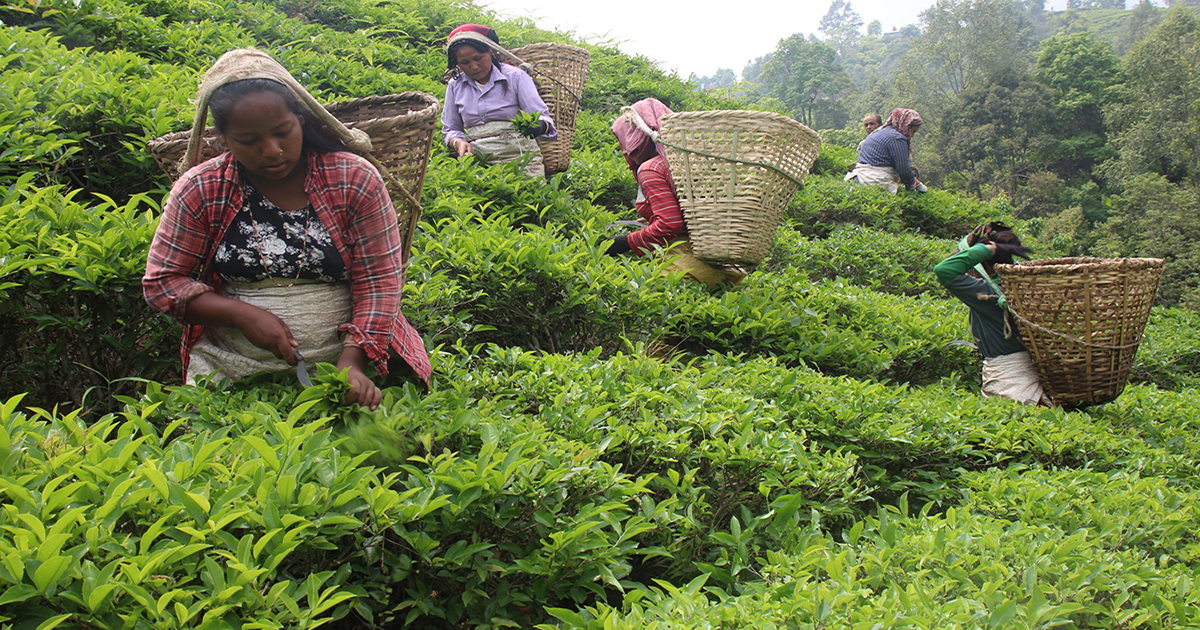
Nepal currently exports tea worth around Rs 4 billion annually, with production concentrated in the eastern hill and plains districts of Ilam, Jhapa, Dhankuta and Panchthar. A substantial portion of this production is export-dependent. More than 70 per cent of Nepal’s outbound tea goes to India, while the rest is shipped to markets such as the United States, Germany and Japan.
Nepal has 68 large tea factories, including 30 orthodox and 38 CTC processors, along with more than 150 small orthodox processing units. With India remaining by far the largest buyer, exporters warn that unless the new regulatory bottleneck is resolved quickly, the entire eastern Nepal tea economy—from factories to farmers—could face a serious cash-flow crisis.

Comment Here