
Kathmandu: The government has retreated from its controversial decision requiring imported goods to carry Maximum Retail Price (MRP) labels at customs checkpoints, following strong opposition from the business community.
Under the revised arrangement, importers will no longer be required to affix MRP labels at the customs point itself. Instead, they will now be allowed to submit a self-declaration committing to apply MRP labels before the goods enter the market.
Business groups had fiercely opposed the original rule, arguing that it was practically impossible to label products with MRP at customs under Nepal’s current infrastructure and logistics conditions. The growing pressure eventually forced the government to reconsider its position.
The dispute was formally resolved on Wednesday after the government introduced the self-declaration option as a compromise measure.
To ease the customs clearance process for imported goods, the Department of Customs has now allowed goods to be released after importers submit an MRP declaration undertaking.
The immediate tension between the government and the private sector is expected to ease following this arrangement, after the mandatory implementation of MRP labelling for both imported and domestically produced goods triggered widespread dissatisfaction among industrialists and traders.
The Ministries of Finance and Industry, Commerce and Supplies, along with the Department of Commerce, held discussions to resolve the disruption in customs clearance caused by the MRP dispute.
Following the discussions, the Department of Customs instructed customs offices nationwide to implement the self-declaration system, according to Director General Shyam Prasad Bhandari.
Bhandari said importers will now have to declare the MRP at customs and provide a written commitment before goods can be cleared and released.
He also indicated that some of the disagreements surrounding the MRP system could be addressed through the upcoming national budget.
According to the Department of Customs, businesses will still be required to place MRP labels on products before they are distributed in the market.
Under the current arrangement, importers must submit a written declaration at customs specifying the product name, brand, model, quantity, purchase price, and declared MRP.
Goods will only be cleared after importers complete the process with company details, official seals, and signatures.
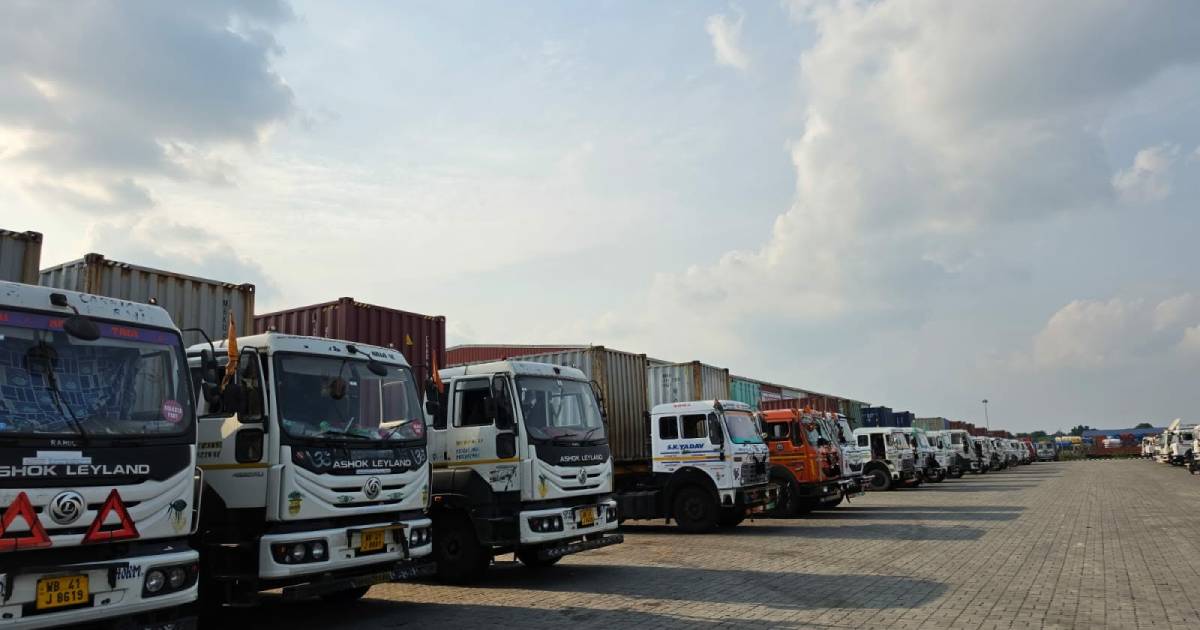
The government’s strict implementation of the MRP rule had triggered widespread protests from businesses, leaving numerous imported containers stranded at customs points across the country.
Kamlesh Agrawal said Nepal lacks the infrastructure necessary to implement MRP labelling at customs effectively.
According to Agrawal, imported goods are later distributed to different parts of the country, and customs authorities cannot determine the final destination of every product at the point of entry.
“Goods are distributed across various regions after arrival, and customs officials cannot know where every shipment will ultimately go,” he said. “That is why the current MRP implementation model is not practical.”
The legal basis for MRP labelling itself is not new. The provision dates back to the Consumer Protection Act of 2018, under which the government had already begun tightening MRP enforcement.
Section 6(3) of the Act requires producers and importers to place labels in either Nepali or English on goods intended for sale and distribution.
The labels must include details such as the producer or importer’s name and address, composition of the product, quantity or weight, quality standards, manufacturing date, maximum retail price, batch number, and expiry or consumption period.
The government’s recent attempt to strictly enforce these long-existing legal provisions, however, escalated tensions with the business sector.
Importers are also now required to provide written commitments stating that all imported goods will carry MRP labels before entering the market, even if the labels are not attached at the customs point itself.
The Department of Customs has warned that businesses distributing products without either of the required written commitments could face legal action under existing laws.

Comment Here