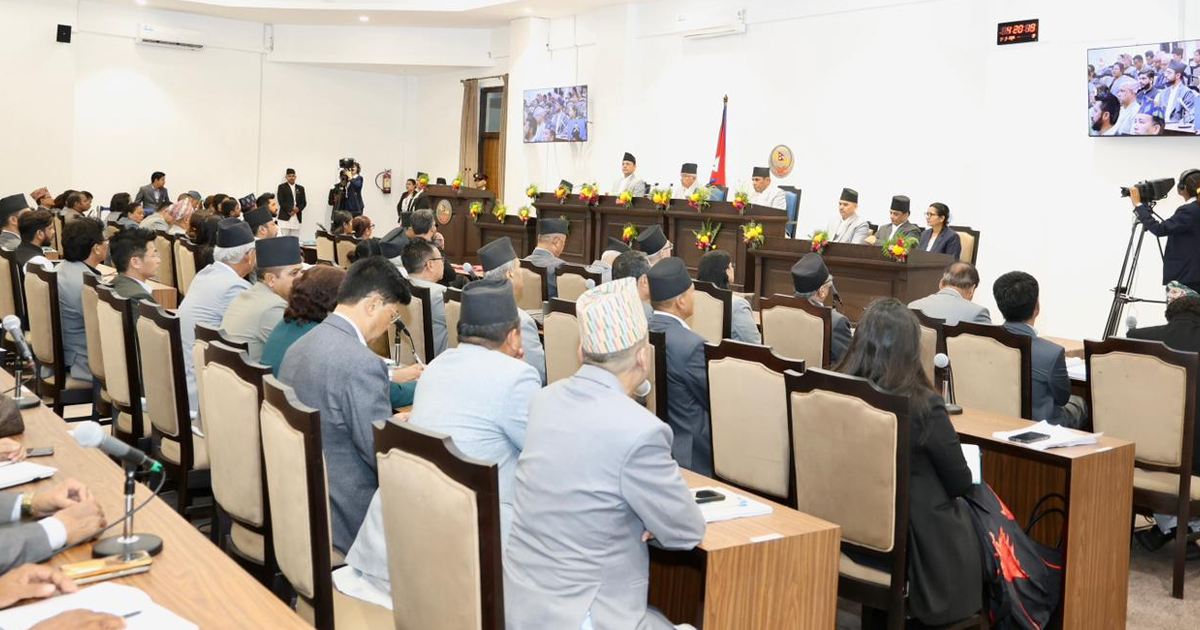

Kathmandu: The Government of Nepal has unveiled a pioneering financial model aimed at modernizing infrastructure development across the country.
While presenting the policy and programs for the upcoming 2026/27 (2083/84) fiscal year, President Ram Chandra Paudel announced that the state will now actively mobilize alternative development finance, diaspora capital, and private sector contributions.
To facilitate sustainable long-term growth, the government plans to mature the domestic financial landscape by developing robust debt and bond markets, introducing specialized infrastructure bonds, and implementing sophisticated risk management tools.
Moving forward, the government will adopt a more disciplined approach to capital allocation, prioritizing foreign aid, loans, and private investments exclusively for high-return projects that offer the greatest economic impact. These transformative initiatives will be managed under a rigorous framework featuring clearly defined objectives, guaranteed budgets, and inflexible deadlines.
To ensure these goals are met, project chiefs will be required to sign performance-based contracts, holding them directly accountable for the progress and completion of their respective assignments.
In a bid to end chronic project delays, the government has committed to maintaining administrative stability by ensuring that key personnel are not transferred until their projects reach completion.
This will be supported by the implementation of a real-time digital progress tracking system to enhance oversight.
Furthermore, the government has vowed to prioritize and fast-track the resolution of long-standing hurdles related to land acquisition and environmental clearances in forest areas, ensuring that critical infrastructure work can proceed without bureaucratic stagnation.

Comment Here