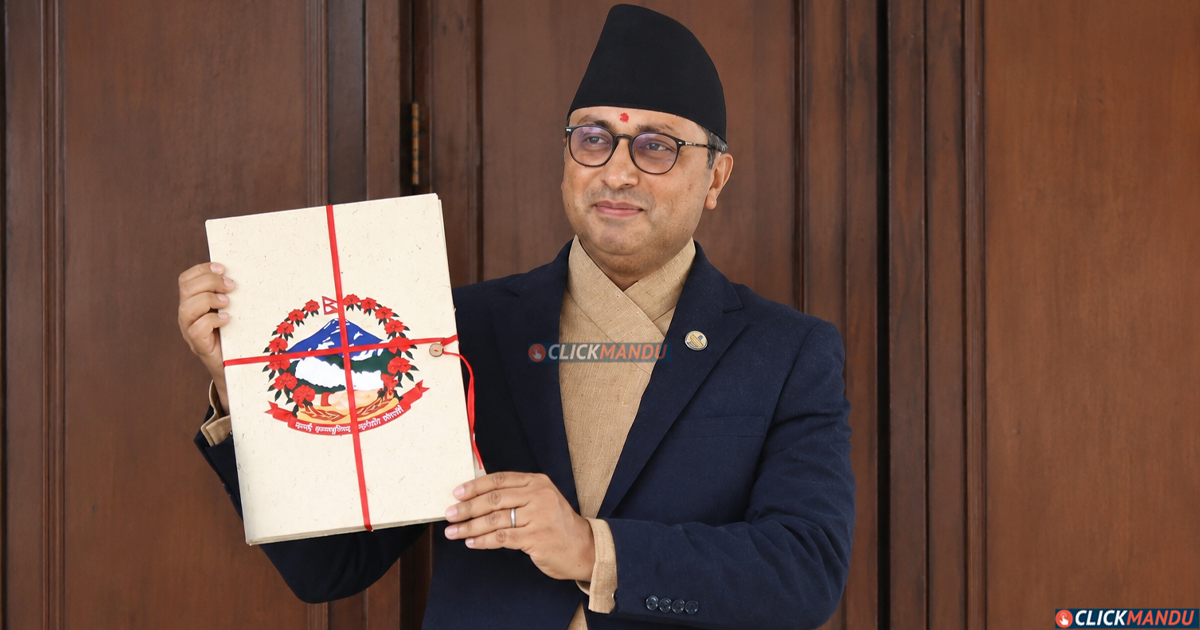

Kathmandu: Industrialists and business leaders in the prominent industrial hub of Biratnagar have characterized Finance Minister Dr. Swarnim Wagle’s budget for the fiscal year 2026/27 as a private-sector-centric plan.
The local business community believes the budget is specifically designed to boost investor morale and revive the sluggish economy through structural reforms and a focus on good governance. While expressing high optimism, they cautioned that the ultimate success of these ambitious policies hinges entirely on the government’s ability to execute them effectively.
Describing it as a landmark budget for Republican Nepal that directly addresses long-standing private sector demands, business leaders noted that even a 30 percent implementation rate would significantly spur industrial development and market activity. Tara Chan Khetan, an 84-year-old industry veteran, remarked that in his lifetime of observing sixty-one budgets, he had never seen a more revolutionary or inclusive fiscal plan. He emphasized that if the government delivers on even a fraction of its promises, every sector of society stands to benefit from the resulting economic momentum.
The business community expressed particular enthusiasm over specific fiscal measures intended to lower production costs and enhance domestic competitiveness. Leaders such as Nandakishore Rathi and Rajendra Raut highlighted the reduction of customs duties on 273 items and the complete abolition of excise duties on 360 different products as major victories for the industrial sector. Furthermore, the government’s commitment to ensuring that raw materials are taxed at a lower rate than finished goods is being viewed as a vital step in protecting local manufacturing from cheaper imports.
The modernization of the financial and legal landscape also received widespread praise, with industrialists welcoming the increase of the personal income tax threshold to one million rupees and the announcement of a credit recovery law. The introduction of the country’s first AI computer centre, the removal of the requirement for central bank approval to repatriate foreign investment, and the consolidation of fragmented infrastructure levies into a unified “Green Tax” are expected to create a more transparent and stable investment climate. These moves, combined with a simplified “exit policy” for companies, are seen as essential for restoring long-term investor confidence.
There was significant support for the government’s strategic focus on innovation, specifically the commitment to invest one percent of the total capital expenditure into research, development, and startups. By identifying new ventures as a primary engine of economic transformation and promising to provide them with concessional loans and market access, the government has signalled a move toward a production-oriented economy. Business leaders also lauded the pledge to eliminate market syndicates and monopolies, which they believe will foster a healthier and more competitive commercial environment.
Regarding market demand and logistics, leaders noted that the budget effectively addresses the “triple taxation” issue previously faced by goods in transit between local jurisdictions. The increase in civil servant salaries was also viewed positively as a means to boost domestic consumption. While some representatives mentioned that they had hoped for more specific infrastructure projects dedicated to Biratnagar’s local development, they acknowledged that the broader focus on policy stability and the protection of private property provides a necessary foundation for economic recovery.
Finally, the industrial sector welcomed the government’s push for commercializing agriculture through a pilot project offering 40 percent grants for investments up to 20 million rupees. By identifying energy, IT, tourism, and agriculture as the primary drivers of the economy and proposing a Public-Private Partnership (PPP) model for major infrastructure, the administration has provided a roadmap that Biratnagar’s business leaders believe could fundamentally reshape Nepal’s economic future, provided the administrative machinery remains accountable for its results.

Comment Here