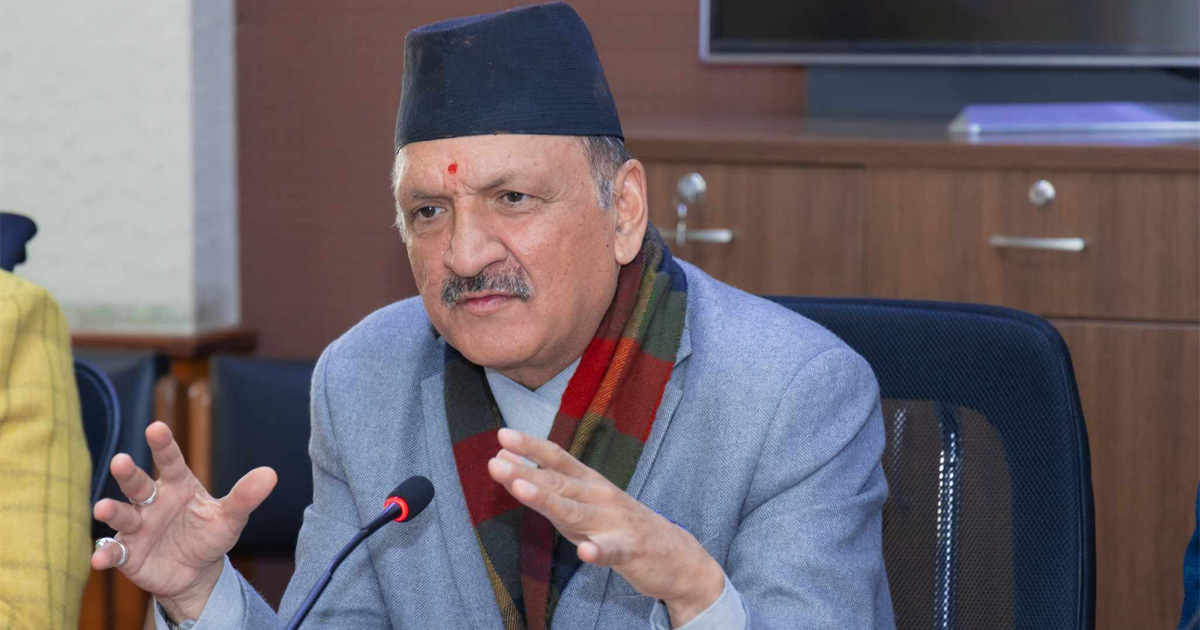

Kathmandu: Dr Prakash Sharan Mahat, former Finance Minister and senior leader of the Nepali Congress, has described the newly presented budget for the fiscal year 2026/27 as overly ambitious and nearly impossible to execute.
Reacting to the Rs 2.124 trillion fiscal plan unveiled by Finance Minister Dr Swarnim Wagle, Mahat argued that the budget is impractical from the perspectives of both resource mobilization and spending capacity. He emphasized that while the government intends to project a message of increased capability, the targets do not align with the current economic realities and lack a pragmatic foundation.
Mahat expressed deep skepticism regarding the government’s ability to meet its revenue and funding goals, noting that if the state fails to secure the projected resources, the entire expenditure plan will inevitably collapse. He specifically questioned the government’s assumption that lowering tax rates would trigger a surge in economic activity significant enough to boost total revenue collection, calling such a belief unreliable. Furthermore, he pointed out that securing the anticipated levels of foreign loans and assistance remains a formidable challenge that the budget fails to address convincingly, especially given the current global and domestic financial climate.
Regarding macroeconomic targets, Mahat argued that aiming for a 7 percent economic growth rate is an unrealistic leap for an economy currently growing at less than 4 percent. He warned that the sheer volume of the budget is likely to fuel inflation, making the target of keeping price hikes within 6 percent highly precarious. According to Mahat, this inflationary pressure will not only adversely affect ordinary citizens but also increase the nation’s overall debt burden, creating a cycle of financial instability rather than the intended growth.
The former minister also highlighted a looming crisis in financial management, noting that a significant portion of the planned Rs 422 billion in domestic borrowing would be consumed merely by servicing the principal and interest of existing debts. He criticized the decision to lower tax rates for the highest income brackets, arguing that such a move was ill-advised in the current fiscal context. Mahat further contended that the budget lacks sufficient protective measures for the agricultural sector, which is vital for boosting domestic production and ensuring the sustainability of the rural economy.
While acknowledging some positive aspects, such as the removal of excise duties on over 340 items and the focus on Information Technology and Artificial Intelligence, Mahat claimed these initiatives lack genuine novelty. He pointed out that IT-focused policies have been in development for some time and do not represent a significant breakthrough in economic thinking. He concluded that despite the government’s claims of delivering a transformative document, the budget is essentially a traditional plan with an artificially inflated size that fails to capitalize on the government’s strong two-thirds parliamentary majority and its favorable relationship with the bureaucracy.

Comment Here