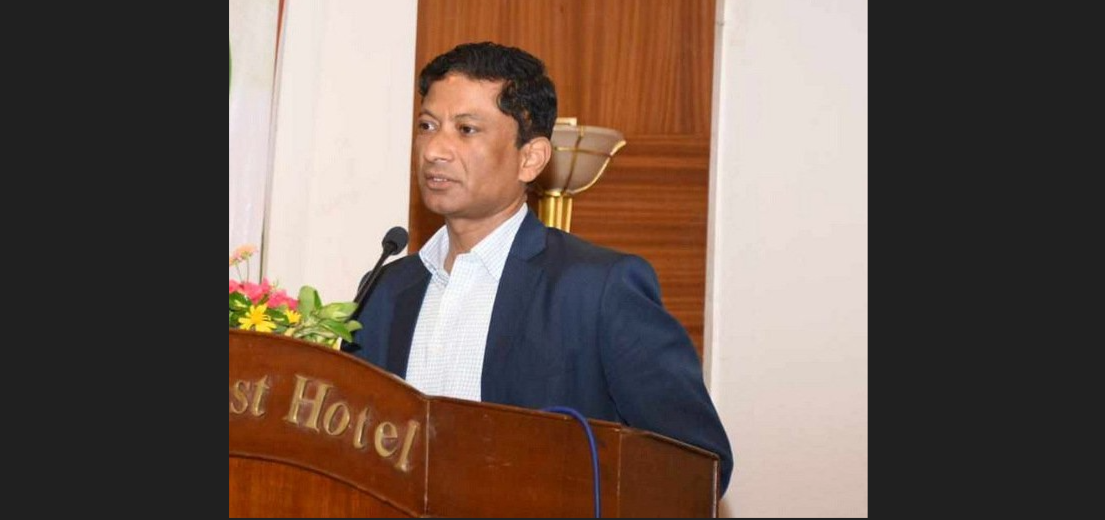

Kathmandu: Economist Dr Ramesh Paudel has expressed strong dissatisfaction with the latest budget, arguing that while it provides significant relief to the middle and upper classes, it leaves the country’s lower-income population in a state of anxiety.
He claimed that the current taxation policies and subsidy frameworks fail to deliver economic justice to the poor. Drawing on a classic quote from the Chinese philosopher Guan Zhong, which suggests that while grain is planted for a year and trees for a decade, people must be developed for a century-long vision, Dr Paudel noted that the fiscal plan lacks the necessary foresight to prioritize the long-term well-being and development of its citizens.
Interestingly, Dr Paudel shared that his analysis using advanced artificial intelligence tools like ChatGPT and Gemini echoed these concerns, indicating that the budget’s primary beneficiaries are the affluent. He specifically pointed out that raising the income tax exemption threshold to NPR 1 million and slashing the highest tax bracket from 39 per cent to 29 per cent serve the interests of the wealthy but offer no tangible relief to those at the bottom of the economic ladder. According to Paudel, these adjustments disproportionately reward high earners while ignoring the struggles of the marginalized.
Furthering his critique, Dr Paudel slammed the government’s decision to restrict agricultural subsidies only to those investing more than Rs 20 million. He labelled this policy as fundamentally flawed, noting that the vast majority of Nepal’s agricultural sector consists of small-scale farmers who cultivate for their basic livelihoods. By setting such a high financial bar for state support, he accused the budget of catering exclusively to wealthy “elites” in the sector while completely bypassing the smallholders who form the backbone of the rural economy.
Regarding public services and social welfare, Dr Paudel suggested that the current 50-unit free electricity threshold is insufficient and should be doubled to 100 units to provide meaningful relief to low-income households. He also addressed the new education tax, suggesting it is unfair to treat low-cost and high-cost schools the same. Instead, he proposed that taxation should only apply to institutions charging monthly fees above Rs 5,000 to ensure equity.
Finally, he described the current health insurance system as weak and overly bureaucratic, characterized by long wait times that discourage public participation. He urged the government to move away from fragmented, scattered programs and instead focus on a comprehensive, efficient package to make health insurance truly effective for the general public.

Comment Here