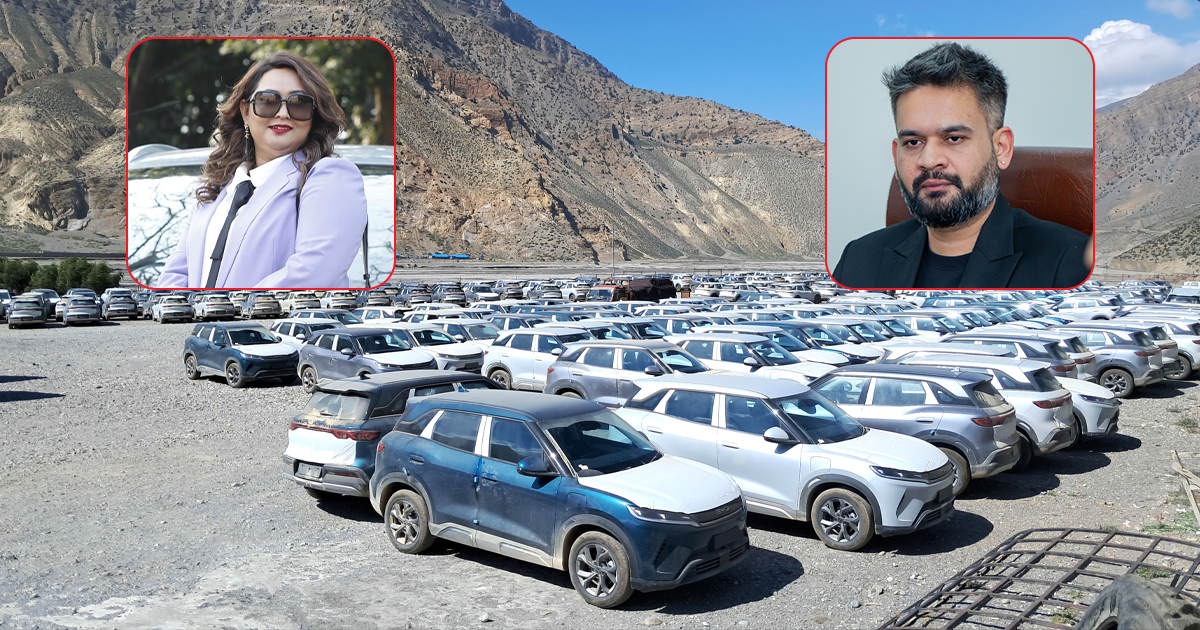

Kathmandu: The Nepal government has established a high-level joint committee to conduct a thorough investigation into the detention of 779 electric vehicles (EVs) by the Armed Police Force.
These vehicles were seized at various locations across the country on suspicion of large-scale revenue evasion. Following a direct order from the Office of Prime Minister Balen Shah, representatives from the Ministry of Finance, the Department of Customs, the Nepal Police, and the Armed Police Force have been mobilized to scrutinize the legal and financial documents associated with these imports.
Deepa Dahal, the Prime Minister’s press and research expert, emphasized that the administration is taking a zero-tolerance approach toward revenue leakage and has already initiated on-site field inspections to expedite the legal proceedings.
The investigation stems from reports that an unusually high volume of BYD brand electric vehicles, totalling 825 units, poured through the Korala border in Mustang just days before the announcement of the new fiscal year budget. According to customs data, nearly 450 vehicles entered on June 12 and 13, followed by another 176 units arriving in multiple batches on June 14, the very eve of the budget presentation.
This surge has led to serious allegations that sensitive information regarding impending tax hikes was leaked to traders, allowing them to rush imports and clear customs at lower rates. There are even suspicions that some vehicles were cleared by customs officials before they had physically entered Nepali territory, potentially causing billions in lost tax revenue for the state.
Acting on these red flags, the Armed Police Force intercepted hundreds of these vehicles as they were being transported toward Kathmandu. Significant seizures were made in Jomsom, Kushma, and Hemja. APF spokesperson DIG Bishnu Prasad Bhatta confirmed that the security forces intervened following suspicious activities and similar previous incidents at other border points.
While the Korala Customs Office maintains that all clearances were procedural and that the backlog in their yard was merely due to a shortage of drivers and the need to charge vehicle batteries, the timing and scale of the operation have necessitated a deeper look into potential administrative collusion.
The urgency of this probe is fuelled by a similar recent scandal at the Rasuwa border, where approximately 200 EVs were reportedly cleared while still in transit. That investigation led to the recall of Rasuwa Customs Chief Tulsi Prasad Bhattarai and five other officials for their alleged involvement in the fraudulent scheme.
The government has reassured the public that while the sheer number of vehicles means that the verification of customs documents may take some time, they are committed to strengthening the national economy and upholding the rule of law. The newly formed committee is tasked with ensuring that any individuals or entities involved in undermining state revenue are held accountable through rigorous legal scrutiny.

Comment Here