
A budget is far more than a simple annual tally of income and expenditure; it serves as a mirror reflecting the state’s intent and its vision for the economy’s future direction.
Consequently, our discussion today transcends a mere analysis of fiscal figures and enters the realm of a serious deliberation on the nation’s fundamental economic trajectory. I wish to clarify from the outset that the private sector does not weigh a budget on a simple scale of support or opposition, but rather through a singular lens: does it enhance the investment climate, boost production, and foster domestic job creation?
From this perspective, I am inclined to give this budget the benefit of the doubt, as it appears to have finally grasped the correct direction. For decades, our economy remained trapped in a cycle of excessive protectionism, informality, and administrative bottlenecks, but this budget shows the courage necessary to break that cycle. However, the true test lies in its implementation. Any evaluation would be incomplete without considering the current context of our economy, which has been mired in a strange paradox where the banking system is flush with liquidity and interest rates are at historic lows, yet credit demand remains stagnant because market demand has shrunken.
Amidst sluggish private investment, underutilized industrial capacity, and a continuous exodus of our youth, this budget carries the heavy burden of restoring confidence and momentum to an economy projected to grow at only 3.75 percent this year. It moves beyond traditional expenditure allocation to demonstrate an ambition for structural and legal reforms. While the Federation of Nepalese Chambers of Commerce and Industry (FNCCI) views this direction positively, we must remember that setting the right course is entirely different from actually reaching the destination, and my remarks today will focus on that critical gap.
Regarding policy and legal reforms, the budget has finally acknowledged a long-standing grievance of the private sector: that Nepal’s problem is not a lack of laws, but an abundance of obsolete and conflicting regulations that stifle business. The commitment to present a bill for the immediate repeal and amendment of fifteen laws, alongside the introduction of a Credit Recovery Act, Intellectual Property Protection Act, and Sunset Laws, carries profound long-term significance. Furthermore, the plan to abolish or restructure dozens of government entities provides a foundation for a leaner, more economical administration that could eventually revitalize the state’s fiscal health.
In terms of investment facilitation, the introduction of an automatic approval system for foreign investment and the removal of the requirement for central bank pre-approval for capital repatriation will leave a deep, positive mark on investor psychology. Foreign capital flows more on trust than on law, and trust is built through such ease of operation. Additionally, the move to encourage modern financial tools like venture capital and private equity through the Limited Liability Partnership Act sets the stage for a modern financial ecosystem in Nepal. However, these successes hinge entirely on effective inter-agency coordination, as experience shows that even the best policies often stall at the doorstep of bureaucratic silos.
For the industrial sector, the budget offers practical facilitation, such as allowing industries to expand capacity simply by informing the Department of Industries and enabling the use of leased land in industrial zones as banking collateral. Of particular importance is the focus on micro, small, and medium enterprises (MSMEs) through amendments to the Insolvency Act and the establishment of credit guarantees to address financial distress. These enterprises sustain the lion’s share of our employment yet have historically suffered the most from a lack of financial access; these new provisions represent a vital step toward correcting that imbalance.
The budget’s vision for the energy sector is equally far-sighted, with plans for restructuring the Nepal Electricity Authority, new Power Purchase Agreements (PPAs) based on “take-or-pay” methods, and allowing the private sector to engage in international power trade. In the capital markets, treating capital gains tax as the final tax and introducing modern tools like intraday trading and short-selling will deepen market liquidity. Furthermore, lowering the maximum income tax rate and raising the exemption threshold will return purchasing power to the middle class, providing the most direct remedy for today’s stagnant domestic demand. The focus on the digital economy, including tax exemptions for IT exports and the establishment of an AI data centre, offers a pathway to transform our clean hydropower into high-value digital exports.
With equal honesty, I must address the areas where the budget falls short or requires urgent reconsideration. Despite the headline-grabbing abolition of excise duties on hundreds of items, the actual tax burden remains largely unchanged as these costs have been shifted into new fees, such as infrastructure and conservation levies. This lack of transparency is concerning. Similarly, while customs duties on many industrial raw materials were reduced, these were mostly secondary materials; without relief on primary raw materials, the goal of significantly lowering production costs remains elusive.
We are also concerned by the decision to increase customs duties on agricultural tools from one to five percent, which directly hurts small farmers and contradicts our goal of self-sufficiency. Additionally, the timeline for settling long-standing tax disputes is far too narrow and should be extended to ensure broader participation. While the no-collateral startup loan programme is commendable, it risks becoming another Kathmandu-centric announcement unless the definition of a startup is clarified and the program is simplified for grassroots access. Historically, our failure has never been a lack of plans, but a lack of execution, evidenced by the fact that nearly 60 percent of our resources go toward recurrent expenditure while capital spending lingers around 20 percent.
Unless we cure these structural ailments, including project delays and poor spending capacity, the bright possibilities of this budget may wither on the vine. To avoid this, FNCCI urges the government to ensure time-bound implementation of all policies, resolve tax contradictions immediately, and integrate business processes into a single digital platform. Stability in government is a rare opportunity that must now be converted into economic transformation. The ambitious 7 percent growth target is a shared aspiration, and the private sector stands ready to work alongside the government to invest, expand, and transition Nepal toward a high-income economy.
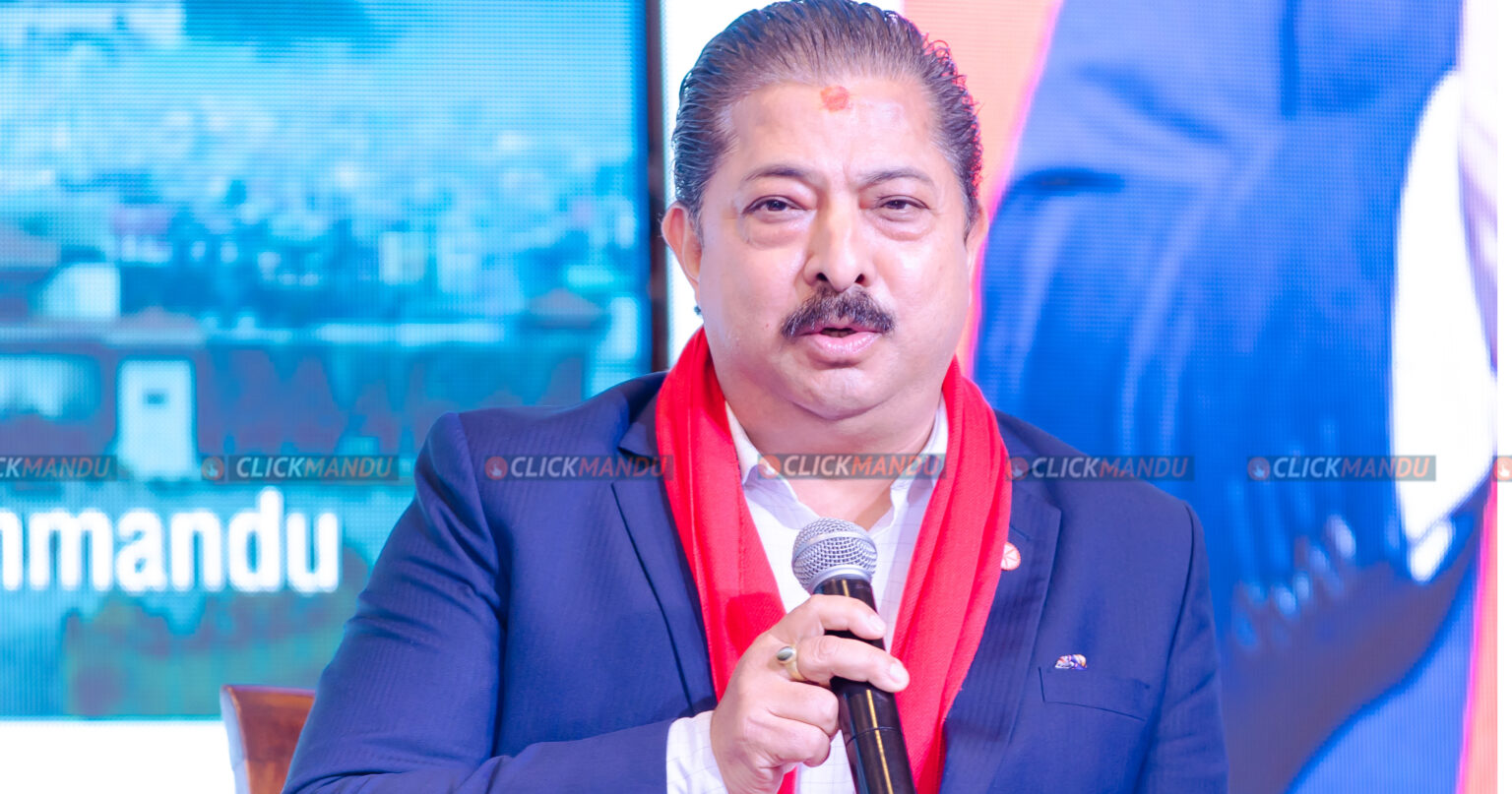
Remarks delivered by Anjan Shrestha, President of the Federation of Nepalese Chambers of Commerce and Industry (FNCCI), during the ‘Policy Dialogue’ budget review programme for Fiscal Year 2026/27. This statement constitutes the Federation’s official position on the budget.

Comment Here