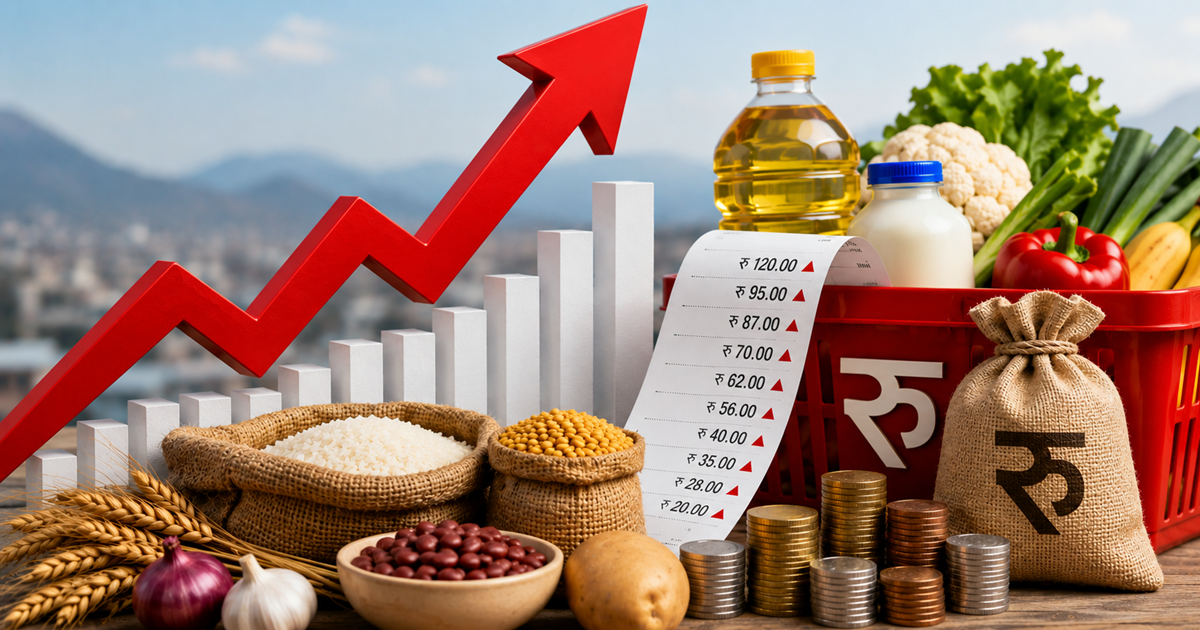

Kathmandu: Nepal’s annual point-to-point consumer price inflation surged to 5.04 percent in the month of Baishakh (mid-April to mid-May 2026), according to the latest macroeconomic report from Nepal Rastra Bank.
This represents a significant jump from the same period in the previous fiscal year, when inflation stood at a much lower 2.77 percent. This spike marks the first time in sixteen months that the inflation rate has crossed the 5 percent mark; the last such instance was in January 2024, when it hit 5.41 percent. Since then, the rate had steadily declined to as low as 1.11 percent before reversing course. Economists attribute this renewed inflationary pressure largely to the ongoing tensions in the Middle East that began in February, which have caused ripples across global supply chains and energy markets.
The increase was felt across both food and non-food categories, with food and beverage inflation rising to 4.63 percent and non-food and services reaching 5.26 percent. Within the food basket, the price of fruits saw a dramatic increase of 18.60 percent, while ghee and oil followed with a 13.99 percent rise. In the non-food sector, the impact of volatile global oil prices was evident as transportation costs climbed by 15.30 percent. Other essential services also became more expensive, with education costs rising by over 5 percent and miscellaneous goods and services seeing a sharp increase of nearly 20 percent. Conversely, a few items offered minor relief, as the prices of pulses and spices saw slight decreases during the same period.
Geographically, urban areas are experiencing higher cost-of-living pressures compared to rural regions, with urban inflation recorded at 5.29 percent. On a provincial level, Koshi Province emerged as the most expensive region in the country with an inflation rate of 5.64 percent, while Bagmati Province recorded the lowest at 4.55 percent.
The Terai region witnessed the highest geographical price hike at 5.59 percent, followed by the Kathmandu Valley at 4.90 percent. Despite the current month’s surge, the average inflation for the first ten months of the fiscal year remains at a relatively modest 2.66 percent, a figure that is significantly lower than the 4.39 percent average recorded during the same period last year.
The wholesale market has not been immune to these pressures either, as annual point-to-point wholesale inflation rose to 5.96 percent from the 3.95 percent recorded a year ago. A closer look at wholesale trends reveals a stark contrast between different types of goods; while the wholesale prices of consumption goods actually fell by 8.63 percent, the cost of intermediate goods surged by a staggering 15.59 percent.
Additionally, capital goods and construction materials became more expensive, which could lead to higher costs for future infrastructure projects. This divergence suggests that while some finished products are cheaper at the wholesale level, the rising cost of raw and semi-finished materials is putting immense pressure on the production side of the economy.
When compared with neighbouring India, the data reveal that Nepali consumers are facing a much steeper rise in the cost of living. While Nepal’s consumer inflation reached 5.04 percent, India’s inflation for the corresponding period was significantly lower at 3.48 percent. This widening gap indicates that Nepal is struggling more acutely with external economic shocks and domestic supply issues than its neighbour. As global geopolitical uncertainties persist, the central bank’s findings underscore a challenging period ahead for domestic price stability and the purchasing power of the general public.

Comment Here