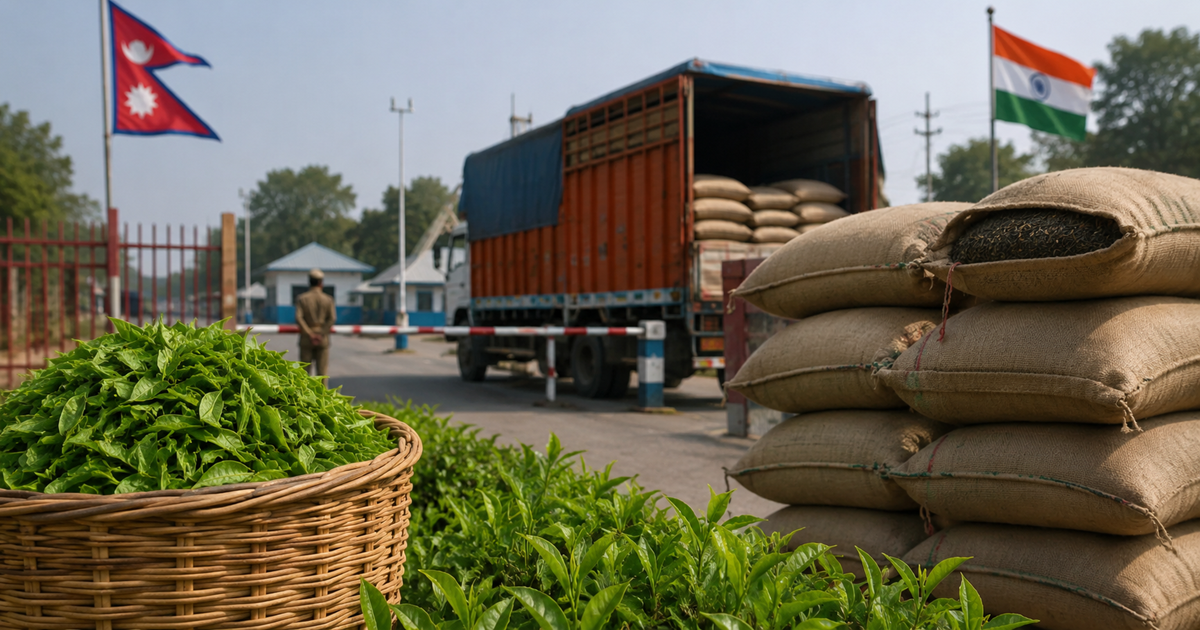

Kathmandu: Tea producers across Nepal have announced an indefinite shutdown of their factories following a month-and-a-half-long export deadlock caused by India’s disruptive quality testing protocols. The decision comes as finished tea begins to rot in warehouses due to a lack of market access, forcing 56 tea estates in Ilam to close this Monday, with 30 more in Jhapa set to halt operations by Wednesday.
The industry shutdown directly impacts the livelihoods of approximately 100,000 labourers and 30,000 farming households.
According to Aditya Parajuli, President of the Nepal Tea Producers Association, Ilam and Jhapa collectively produce over 26 million kilograms of tea annually, with the Indian market accounting for nearly 90 percent of all exports. The current stalemate has left the sector in a state of paralysis, threatening the economic backbone of eastern Nepal.
Producers have expressed deep frustration over the Indian Tea Board’s recent actions, noting that roughly 200,000 kilograms of tea are currently stranded in Indian warehouses, while more than a million kilograms remain stuck in Nepali factories. Industry leaders claim they were forced to take this drastic step because the Nepali government has failed to initiate diplomatic efforts to ease the blockade, even as massive quantities of tea are on the verge of spoiling.
The Suryodaya Orthodox Tea Producers Association in Ilam issued a formal statement confirming that all orthodox tea factories within the municipality would cease operations from mid-June. They highlighted that while the industry has faced various hurdles over the years, the new Standard Operating Procedure (SOP) recently issued by the Tea Board of India has created an insurmountable barrier for Nepali exports.
The association described the current quality testing regime as risky and opaque, noting that laboratory results often take months to be released. Furthermore, they pointed to new, impractical regulations that mandate the destruction of tea consignments within Indian warehouses if they fail to meet specific quality marks. These complications have not only halted trade but have also left factory owners unable to pay farmers for their green leaf harvests.
To pressure the government into action, farmers, labourers, and entrepreneurs are preparing for a series of protests. This includes plans to block the Kakarbhitta border crossing to prevent Indian goods from entering Nepal. Association President Dilli Shrestha emphasized that despite the tea industry contributing billions to the national economy annually, the government’s silence during this six-week crisis has left them with no choice but to take to the streets.
The export crisis began in early May when India made laboratory testing mandatory for all Nepali tea shipments. Although there was a brief resumption of trade after Indian authorities agreed to random sampling, the situation worsened when officials began collecting samples directly from importer warehouses and banning the movement of tea until reports were finalized. Trade data reveals a significant decline in exports, with current fiscal year figures showing a sharp drop compared to the 15,600 tons exported in the previous year.

Comment Here