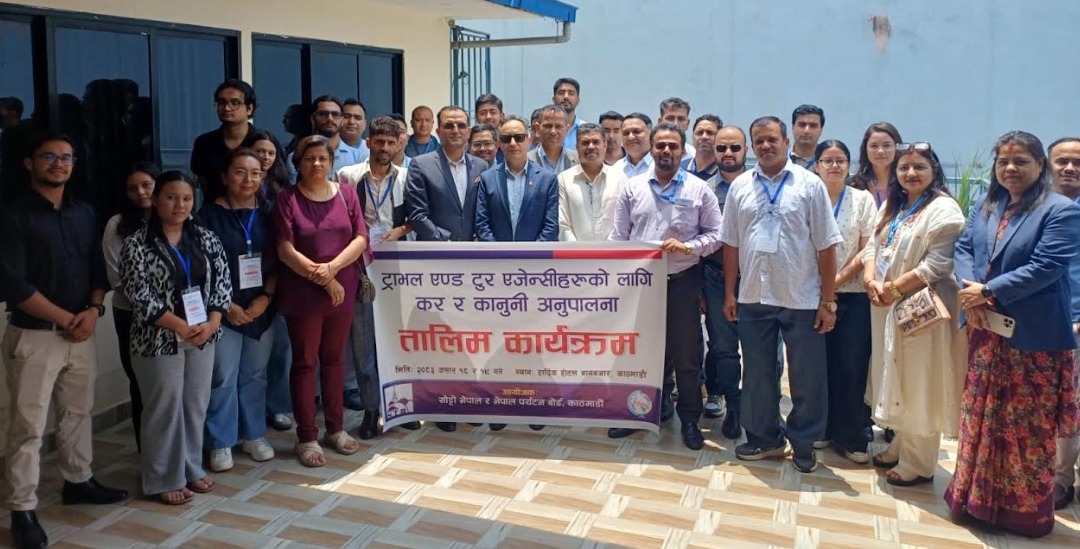

Kathmandu: The Nepal Tourism Board, in a strategic partnership with the Society of Travel and Tour Operators Nepal (SOTTO-Nepal), has launched a comprehensive training program focused on taxation and legal compliance for the travel and tour sector.
The two-day workshop commenced this Thursday in Kathmandu, drawing the participation of approximately 50 entrepreneurs and representatives from various travel agencies. This initiative is part of a broader effort to professionalize the industry and ensure that local businesses can navigate the complexities of the national fiscal framework without falling into avoidable legal traps.
The curriculum of the workshop is designed to cover a wide spectrum of essential topics, including the various types of taxes applicable in Nepal, specific levies unique to the tourism industry, and the meticulous details one must consider during the tax filing process. Beyond just the numbers, participants are being educated on the legal provisions granted by the state and the practical behavioural aspects of compliance. By focusing on both the letter of the law and its real-world application, the training aims to provide agency heads with a holistic understanding of their administrative responsibilities.
A primary motivation for this session is the observation that small-scale tourism entrepreneurs often face significant financial penalties and administrative hurdles due to a simple lack of awareness regarding Value Added Tax (VAT) and general tax laws. The training is specifically tailored to provide practical knowledge that can prevent such setbacks. Many businesses operate with high integrity but find themselves penalized because they are unfamiliar with the evolving procedural requirements of the tax office, a gap that this collaboration seeks to bridge.
Man Bahadur Shahi, the President of SOTTO-Nepal, emphasized that the core objective is to eliminate the unnecessary stress businesses experience regarding tax issues. He noted that while tax laws may undergo specific changes every year through the national budget, the fundamental principles of taxation remain relatively stable. Mastery of these basics is vital for the long-term sustainability and viability of any travel agency. Furthermore, Shahi believes that such education will naturally lead to increased financial discipline and transparency, ensuring that entrepreneurs do not suffer from heavy fines just because they lack theoretical or procedural guidance.
The Nepal Tourism Board also highlighted the severity of the consequences resulting from ignorance or negligence in the tax payment process. They pointed out that the state often imposes strict penalties for non-compliance, which can be devastating for small and medium-sized agencies. By partnering with SOTTO-Nepal, the Board aims to foster a more informed and cautious business community. This proactive approach to education is seen as a necessary safeguard for the private sector, helping to maintain a healthy and legally sound tourism environment.
The workshop, featuring specialized sessions led by experts in law and finance, is scheduled to wrap up this Friday. This initiative marks just one step in a series of planned capacity-building activities. Looking toward the future, the Nepal Tourism Board and SOTTO-Nepal have announced that they will continue their collaboration by hosting a training session next month on the integration of Artificial Intelligence (AI) within the tourism and travel agency business, aiming to keep Nepali entrepreneurs competitive in an increasingly digital global market.

Comment Here